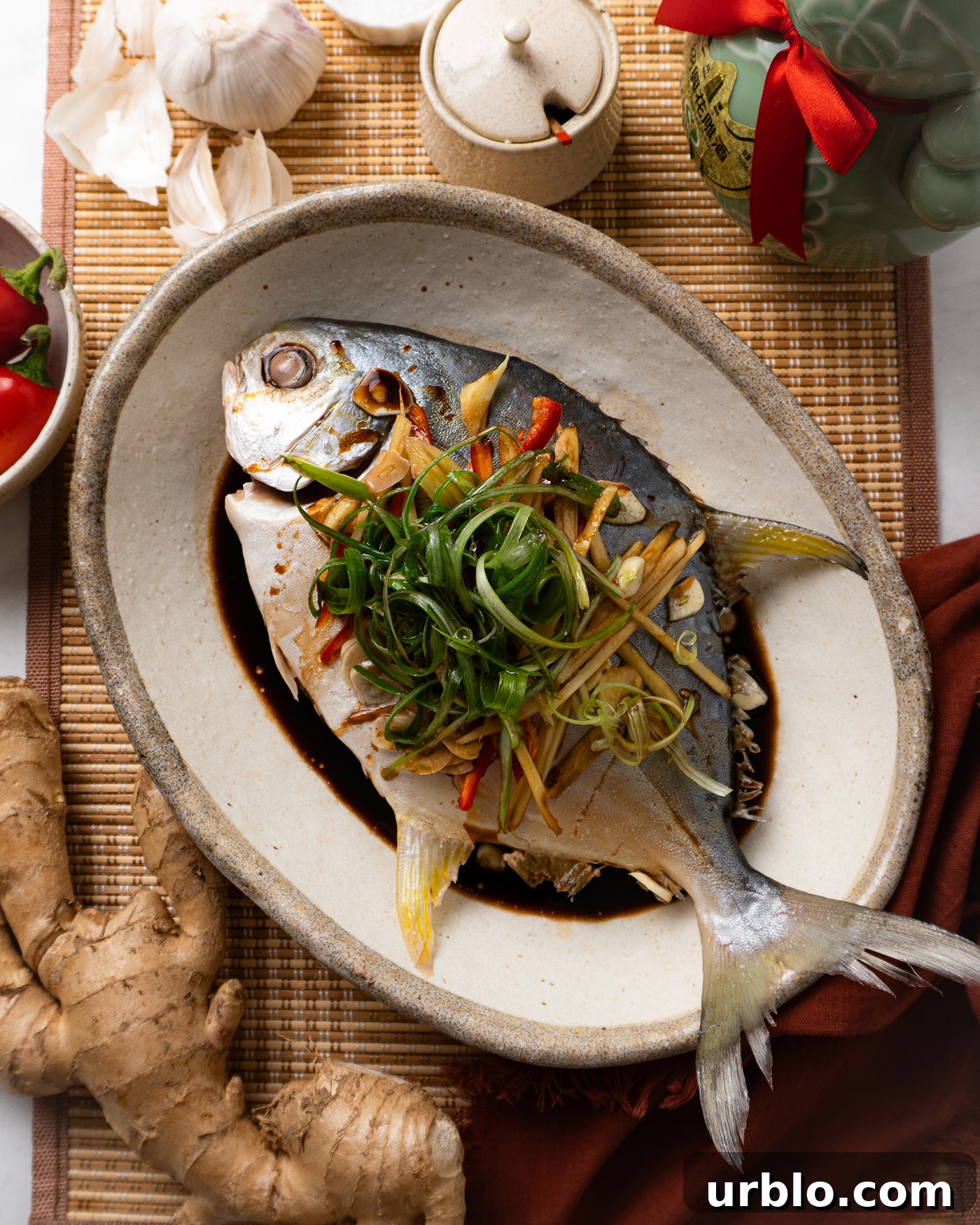
Steaming a whole fish is an easy way to create an impressive centerpiece that looks beautiful and cooks quickly—often in under 15 minutes.
Steamed Pompano makes a gorgeous focal dish for Lunar New Year and other celebrations. The fish steams until tender and flaky, then is finished with an aromatic ginger-scallion topping and sizzling hot oil for fragrance and texture. Although it looks restaurant-quality, the recipe comes together very fast.
Below you’ll find clear, practical steps to prepare this crowd-pleasing dish, along with background on the Filipino-Chinese tradition and serving suggestions.
Table of Contents
- Steamed Pompano: A Dish Made for Gatherings
- Lunar New Year Traditions in the Philippines
- A Filipino American Story of Lunar New Year
- Benefits of Eating Steamed Pompano
- What To Serve with Steamed Pompano
- Equipment
- Ingredients
- Steamed Pompano
- Ginger Scallion Sauce
- Recipe
- Steam the Pompano
- Combine Sauce and Serve
- Final Thoughts
- More Recipes You’ll Love
- References & Further Reading
Steamed Pompano: A Dish Made for Gatherings
Serving a steamed whole fish offers an elegant presentation and a flavorful experience. While commonly associated with Lunar New Year, this preparation suits birthdays, family gatherings, dinner parties, or a special weeknight meal.
Pompano is a widely enjoyed white fish in Filipino cooking. It has a mild, non-fishy taste and a tender, flaky texture. Despite its size, pompano yields a satisfying amount of meat with relatively few bones, making it approachable and affordable.
The sauce in this recipe combines xiaoxing wine and tamari (or soy sauce) with sliced garlic, matchstick ginger, chilies, and long green onions. Pouring hot oil over the aromatics just before serving releases a burst of fragrance and creates an enticing sizzle that elevates both flavor and aroma.
Lunar New Year Traditions in the Philippines
Lunar New Year is observed in many Filipino communities due to historical Chinese influence. Chinese traders and migrants from Fujian and other areas have shaped Filipino culture and cuisine over centuries, resulting in a blend of Filipino and Chinese culinary traditions.
Dishes that reflect this cultural exchange include lumpia, pancit, and whole steamed fish like this Steamed Pompano. Traditional Chinese whole-fish preparations often use sea bass, carp, or catfish; in the Filipino context, pompano, lapu-lapu, or tilapia are common choices.
A Filipino American Story of Lunar New Year
Many Filipino-American families incorporate Lunar New Year customs into their holiday gatherings. Growing up in a Filipino household often meant a mix of cultural traditions—food, clothing like qipaos at celebrations, and social rituals such as playing mahjong—woven together across holidays.
At family events, it was common to exchange angpao (red envelopes), enjoy lucky foods like pancit and whole fish, and share desserts such as tikoy (nian gao). Those blended customs reflect the long-standing influence of Chinese culture in the Philippines and the ways families adapt traditions across generations.
More Than Just Good Luck: Benefits of Eating Steamed Pompano
Here are a few reasons to make this Steamed Pompano:
- Symbolic meaning: Serving a whole fish during Lunar New Year signifies abundance and good fortune for the coming year.
- Healthy cooking method: Steaming preserves nutrients and requires little added fat, making it a wholesome choice. Pompano is a lean source of protein and provides vitamins and healthy fats.
- Easy to prepare: This recipe is forgiving for home cooks—steam the fish and heat a small pan of oil to finish the aromatics. The final tableside pour is dramatic and simple.
What To Serve with Steamed Pompano
Steamed Pompano pairs beautifully with steamed rice and simple vegetables, or as one dish among a festive spread. Complement it with these classic Lunar New Year or Filipino favorites:
- Tikoy (Nian Gao)
- Pancit (noodle dishes)
- Lumpia (spring rolls)
- Dumplings
Equipment
- Steamer (bamboo or metal)
- Saucepan for heating oil
- Mixing bowl for the sauce
- Sharp knife and cutting board
Ingredients
Steamed Pompano
- 1 pompano (400–600 g), cleaned and gutted
- Kosher salt, for seasoning
Note: Frozen pompano are often sold cleaned and gutted, so once thawed they’re ready to cook. If buying fresh, ask the fishmonger to clean and gut it for you.
Ginger Scallion Sauce
- 2 tbsp xiaoxing wine
- 2 tbsp tamari or low-sodium soy sauce
- 4 cloves garlic, thinly sliced
- About 20 g ginger (2 knobs), cut into matchsticks
- Red chili peppers, sliced into matchsticks (adjust for spice preference)
- 2 stalks green onions, sliced lengthwise
- 3–4 tbsp canola oil, plus a little extra for seasoning
Note: For an attractive presentation, cut green onions into thin ribbons and soak briefly in ice water to make them curl; this is optional and purely decorative.
Recipe
Steam the Pompano
- Score 2–3 diagonal slits on each side of the fish, from the dorsal fin to the belly. This helps the steam penetrate and the fish cook evenly.
- Brush a thin layer of oil over the fish and season lightly with kosher salt.
- Place the fish in a steamer and steam over simmering water for about 10 minutes, or until the flesh is opaque and flakes easily with a fork. Cooking time may vary slightly with fish size; larger fish may need a minute or two more.
Combine Sauce and Serve
- Mix the xiaoxing wine and tamari (or soy sauce) in a small bowl.
- Arrange the steamed fish on a serving platter. Spoon the sauce over the fish and pile the sliced garlic, ginger, chilies, and green onions on top.
- In a small saucepan, heat 3–4 tbsp canola oil over medium heat until shimmering (about 1–2 minutes). Carefully pour the hot oil over the aromatics on the fish to release their fragrance and create a light sizzle. Serve immediately.
Final Thoughts
This Steamed Pompano recipe is an elegant, fast, and flavorful way to celebrate special occasions. With minimal prep and a dramatic finishing step of hot oil over aromatics, it delivers memorable flavor and presentation in about 15 minutes total.
If you enjoy this recipe, try pairing it with other festive dishes—pancit, lumpia, and tikoy—to create a full Lunar New Year spread.
More Recipes You’ll Love
- Tikoy (sticky rice cake)
- Pancit Bihon (stir-fried rice noodles)
- Quick Pan-Seared Lemon Garlic Butter Salmon Steak
References & Further Reading
Besa, Amy, and Romy Dorotan. Memories of Philippine Kitchens. Stewart, Tabori & Chang.
Chou, Hsiao-Ching and Meilee Chou Riddle. Feasts of Good Fortune: 75 Recipes for a Year of Chinese American Celebrations. Sasquatch Books.
Additional cultural context and ingredient information can be found in published sources on Filipino and Chinese culinary traditions.