Cutting back on screen time sounds simple until you’re standing in the living room on a rainy Saturday with restless kids and no plan. The real challenge is the gap between “less screens” and “what do we do instead.”
Filling that gap requires more than handing over a craft kit or a board game. You need activities that genuinely engage children, not ones they merely tolerate. When those activities work, kids wind down faster, connect with family more easily, and sustain focus longer.
Today’s children average about 21 hours of screen time per week—more than double what many parents consider ideal, according to a Lurie Children’s survey. That gap won’t close on its own. It closes when families offer better, attractive alternatives.
Why the Alternative Matters as Much as the Limit
Imposing a screen time limit without replacing what screens provide—stimulation, entertainment, something to do with their hands—usually ends in a standoff. Kids aren’t glued to devices because they’re lazy; screens are extremely effective at delivering novelty, instant feedback, and low-effort reward. Any successful screen-free alternative must deliver at least some of those elements, but through different experiences.
The good news: the most engaging alternatives are also linked to better outcomes. Hands-on play builds fine motor skills, creative activities support self-expression and problem-solving, physical play helps regulate mood and expend energy, and social games teach reading cues and adapting in real time. None of these require expensive tech—often they cost very little.
Games That Involve the Whole Family Without Anyone Checking Out
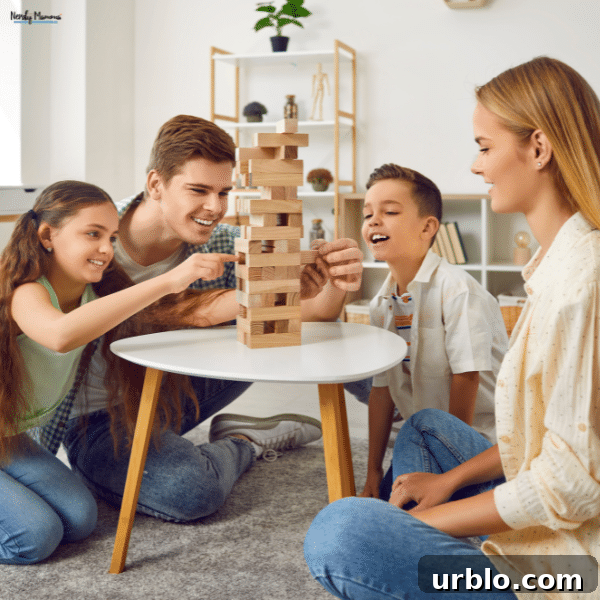
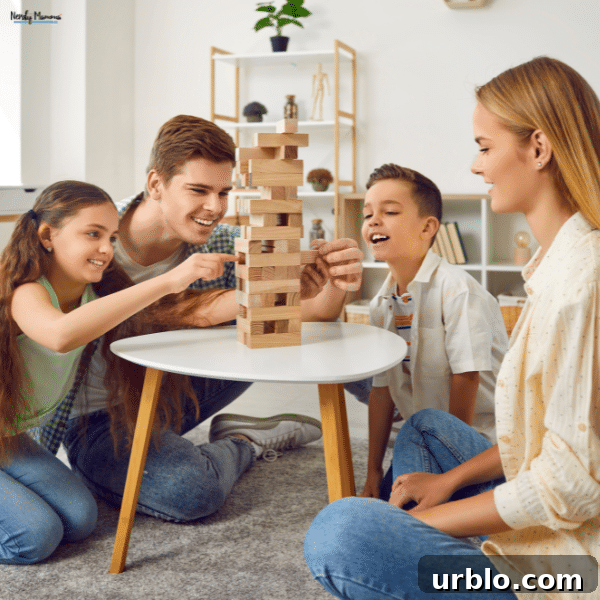
Board and card games aren’t old-fashioned when you pick the right ones. They keep all ages engaged because success requires active participation—players can’t zone out and still win. Choose games that fit your family’s energy and ages.
Strategy games like Ticket to Ride or Catan suit older kids and teach planning, negotiation, and friendly competition, while still allowing younger siblings to join in. For mixed-age groups, cooperative games—where the family plays against the game—prevent younger kids from losing repeatedly and getting discouraged; examples include Pandemic and Forbidden Island.
Card games are great for low setup and quick rounds. Uno, Rook, and Spite & Malice are simple to learn and create lively table dynamics. Storytelling card games like Rory’s Story Cubes shift the focus from competition to collaboration, sparking imagination and group creativity.
Pool and billiards also work across ages once children can hold a cue. They teach geometry, patience, and turn-taking while feeling like competitive fun rather than “educational.”
Creative Activities That Sustain Attention for More Than Ten Minutes
Many craft projects fizzle because they end too quickly or need constant adult help. The most lasting activities are open-ended, lack a single correct outcome, and involve tangible making.
Air-dry clay is an excellent investment: unlike Play-Doh, it yields durable pieces children can paint and keep. Giving each child a defined project—like a small sculpture, a patterned tile, or a keepsake bowl—adds structure without curbing creativity.
Painting with decent-quality watercolors or acrylics makes a big difference; cheap paints can frustrate kids, while better supplies respond as expected and boost satisfaction. Set up a small permanent art corner with a drop cloth so projects can remain in progress between sessions—this continuity encourages kids to return to their work voluntarily.
Model building, using kits or recycled materials, offers problem-solving challenges that keep older children engaged: how to make something stand, attach parts, or improve stability. That ongoing puzzle often sustains interest longer than a single-use craft.

Physical Play That Works Indoors
Bad weather doesn’t eliminate energy, and indoor options are more varied than many families use. A cleared living room is often enough space for very active play.
- Obstacle courses built from couch cushions, pillows, and painter’s tape. Kids enjoy designing the course as much as running it, which doubles engagement time.
- Balloon games like keeping the balloon off the ground or balloon tennis with paper plate paddles. These games need little space but produce lots of movement.
- Yoga and stretching challenges framed as games—who can hold a pose the longest or copy a shape—appeal to kids who reject traditional exercise.
- Indoor scavenger hunts with written clues for older kids and picture prompts for younger ones. They combine physical activity with cognitive challenges.
- Dance and freeze games using a playlist: freeze dance, dance-offs, or “guess the decade” music games require no prep and work for many ages.
Building Things Together
Construction play lets children of different ages play alongside each other at their own levels. Younger kids stack blocks while older siblings build complex structures with the same materials, allowing parallel play without constant adult mediation.
LEGO sets offer structured goals, but free-building with a large mixed-brick collection often encourages more creativity and longer sessions. Wooden blocks, magnetic tiles, and K’Nex provide similar opportunities for different interests and ages.
For older children, hands-on building projects—assembling flat-pack furniture, making a raised garden bed, or constructing a simple birdhouse—add real-world purpose. Creating something functional gives a different sense of achievement than purely decorative crafts, and many kids rise to that challenge when given the chance.
Why Cooking Together Belongs on This List
Cooking with kids can be messy and slower than cooking alone, so many parents skip it. Yet it’s one of the most educational at-home activities: it involves math, chemistry, sequencing, and fine motor skills—and everyone eats the result.
Match tasks to age: young children can tear herbs, stir, measure dry ingredients, and shape dough; school-age kids can handle basic knife skills with supervision and follow recipes; teenagers can often lead entire meals if given autonomy.
Start with high-success, fast-payoff recipes: homemade pizza with premade dough, pancakes, simple pasta sauces, and cookies let kids see immediate results. The quicker the feedback loop between effort and outcome, the more children link participation with reward.
Final Thoughts
The aim isn’t to ban screens forever but to offer a variety of genuinely satisfying alternatives so screens become one option among many instead of the default. The best screen-free activities are neither elaborate nor expensive—they’re engaging enough to compete with devices and present enough opportunity for connection that families choose them naturally.

Table of Contents