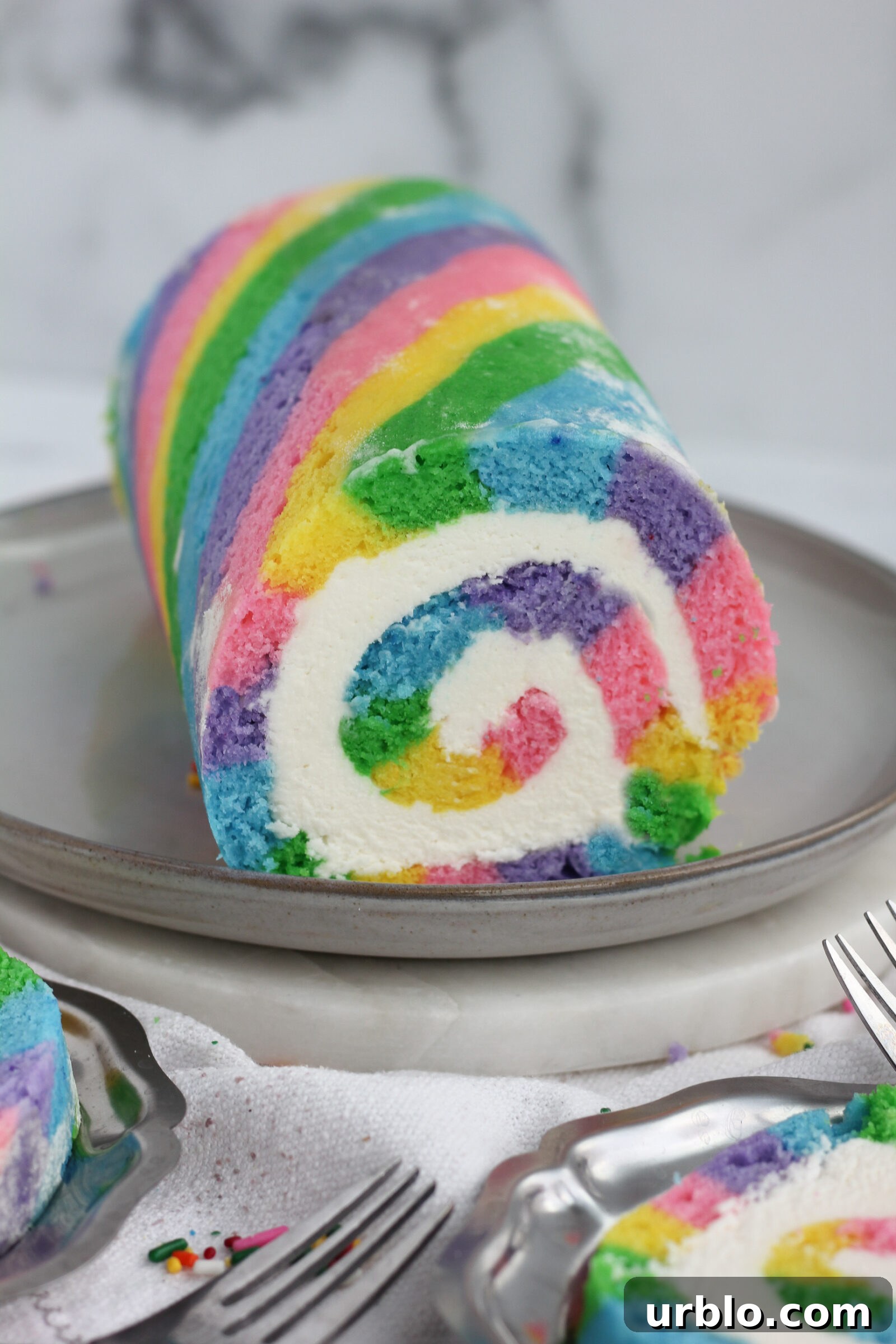
Soft white buttercream folded into a multi-colored white cake has never looked brighter. This rainbow roll cake nods to classic retro desserts while adding a playful, modern twist.
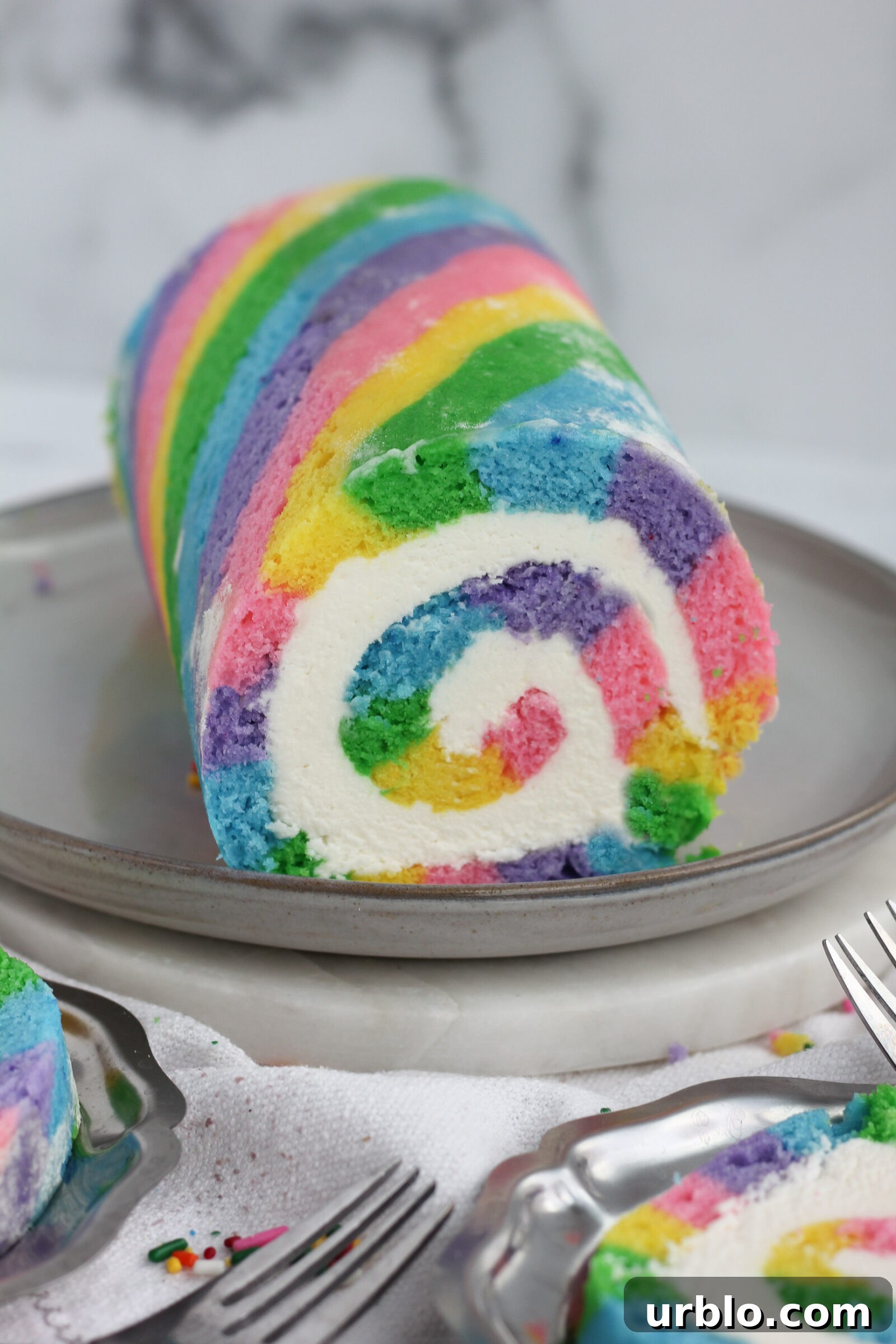
This cake was as fun to make as it was to eat. The idea began when I tested the same white cake batter across six different baking methods (post coming soon). Turning the batter into a cake roll was high on the list and it worked beautifully. I experimented with rolling it in sprinkles for another version and loved the result. For this cake, I wanted bright stripes in the sponge itself. Trying new things pushes us to grow as bakers—sometimes we learn from failures, and sometimes we discover new favorites.
Cake rolls can be temperamental, especially when rolling and unrolling. Be patient and follow the tips below for the best chance of success.
I’ve included a few steps from my funfetti roll cake to help visually guide you through the process.
Stripe cake batter
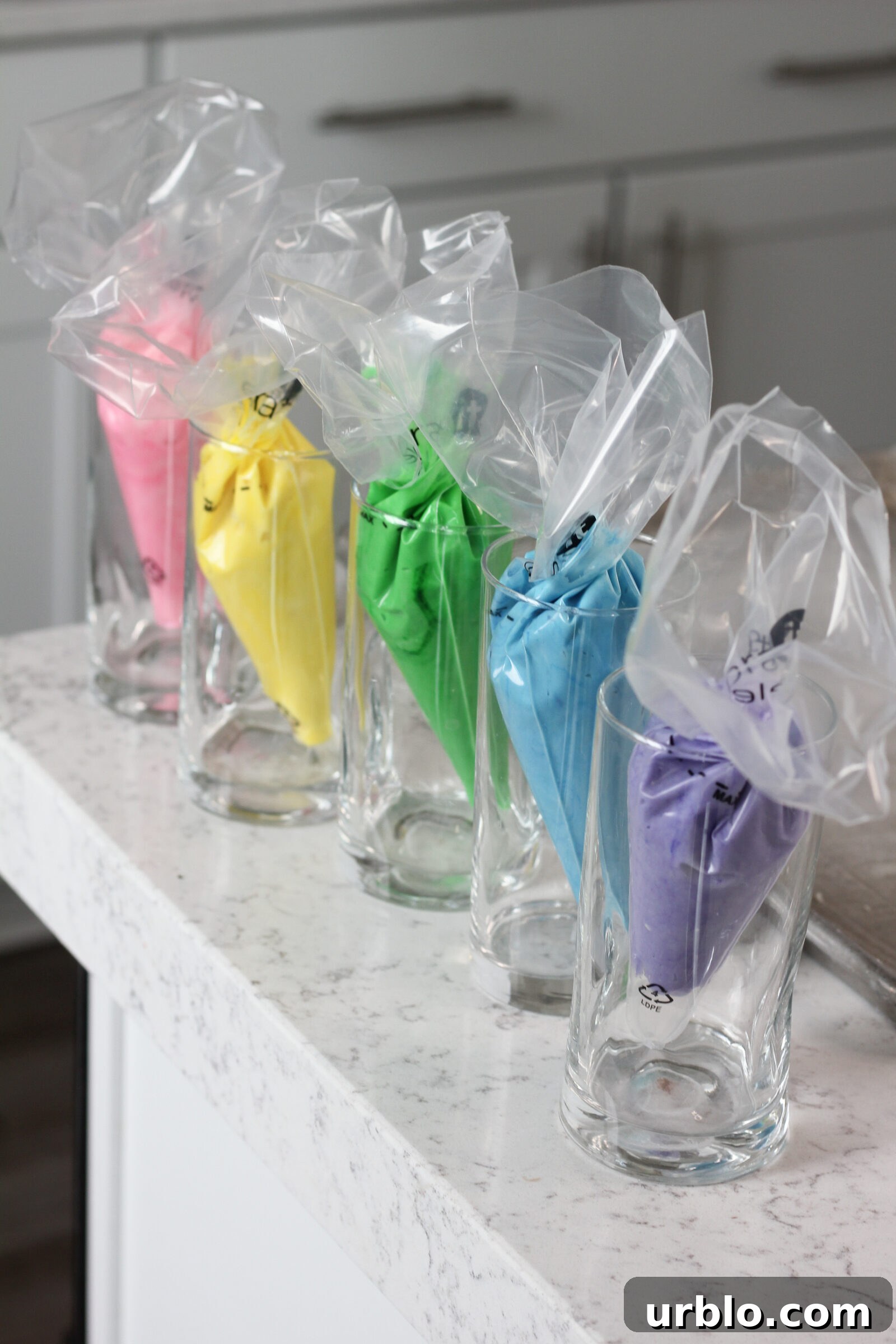
Step 1: Prepare a batch of white cake batter (recipe referenced below). Divide the batter into five bowls and color each portion using gel food coloring—I used Wilton and Americolor gels. Transfer each colored batter into a piping bag. Tip: don’t cut the piping bag tips until you are ready to pipe—cake batter is slightly runny and keeping the bags closed reduces mess.
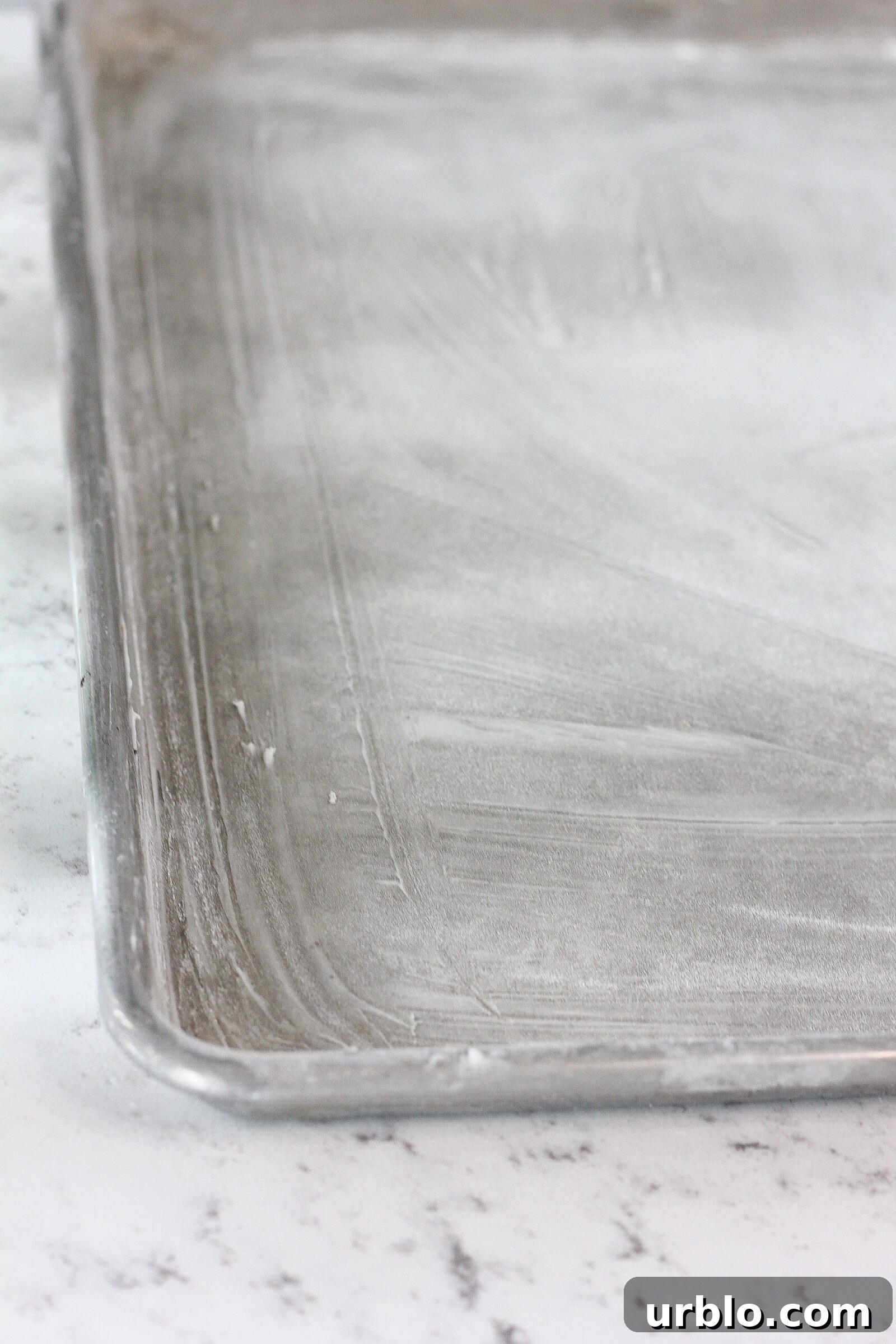
Step 2: Prep a jelly roll or light-colored cookie sheet with a thin layer of shortening and a dusting of flour. This release step is essential to help the cake flip out cleanly after baking. The neater the batter placement, the crisper your stripes will appear.
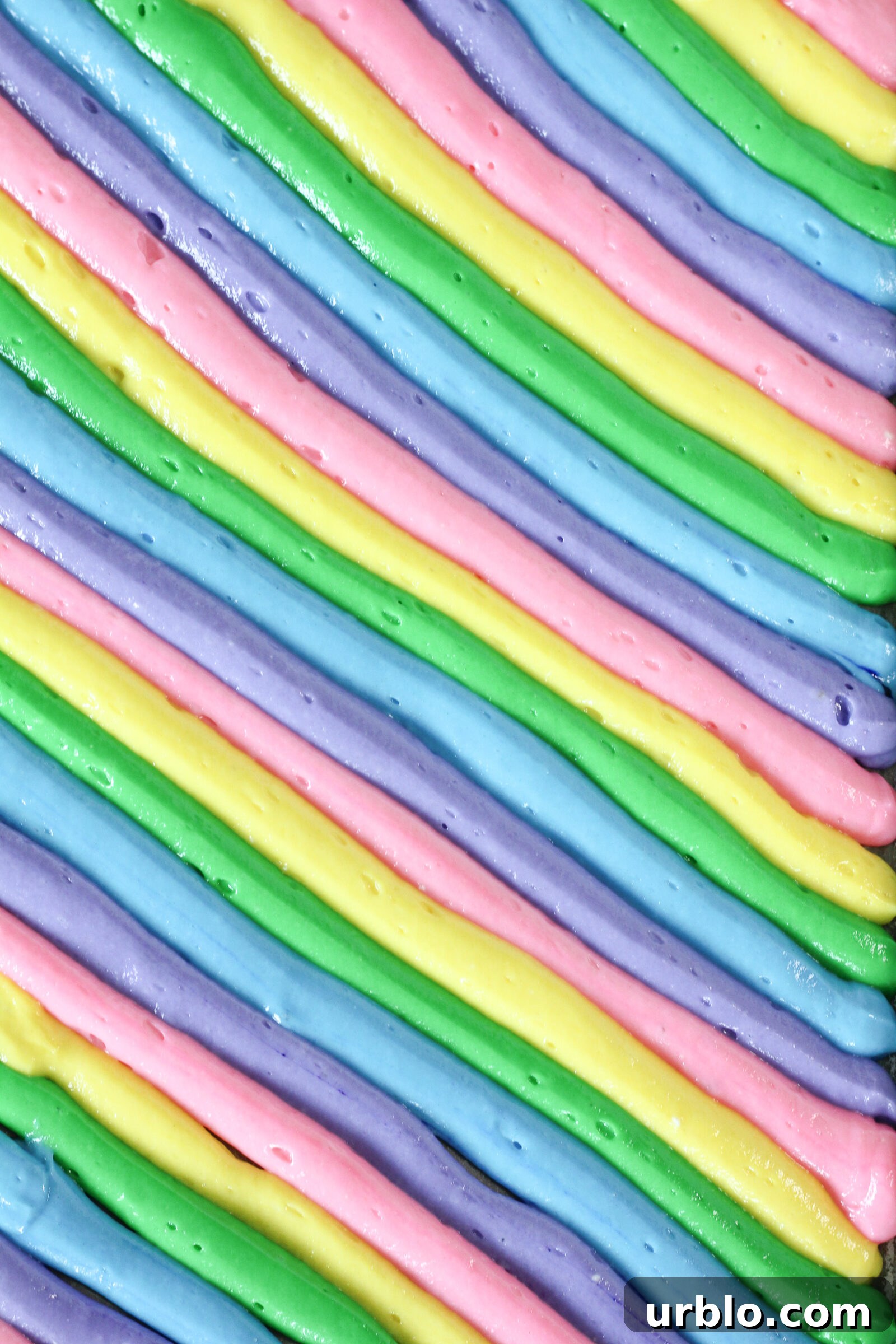
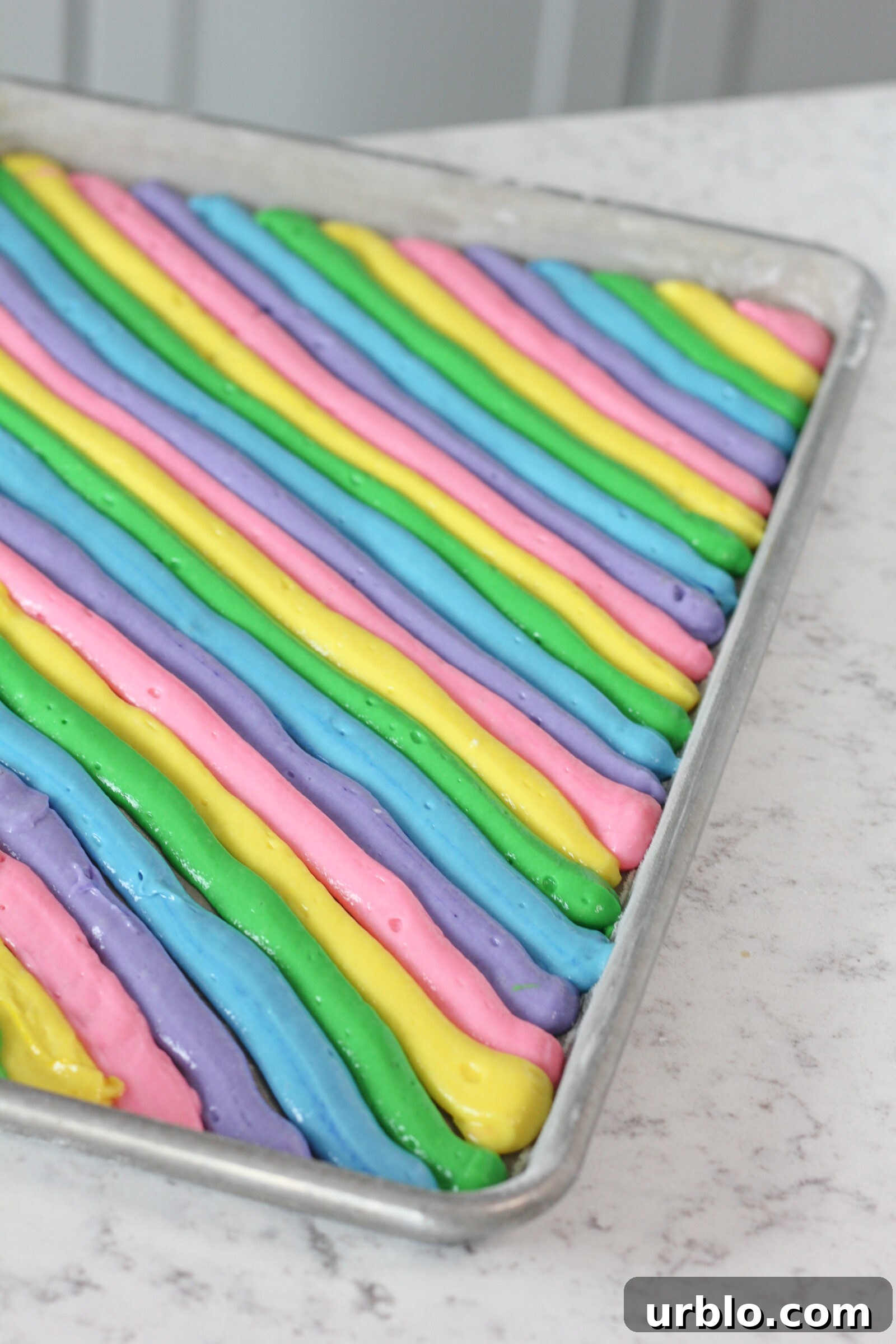
Step 3: Pipe thin stripes of colored batter across the pan. Pace yourself so you don’t run out of any color before covering the sheet. You can always add another thin pass if you have extra batter. Once piped, gently tap the baking sheet on the counter to release air bubbles, then place it in the oven.
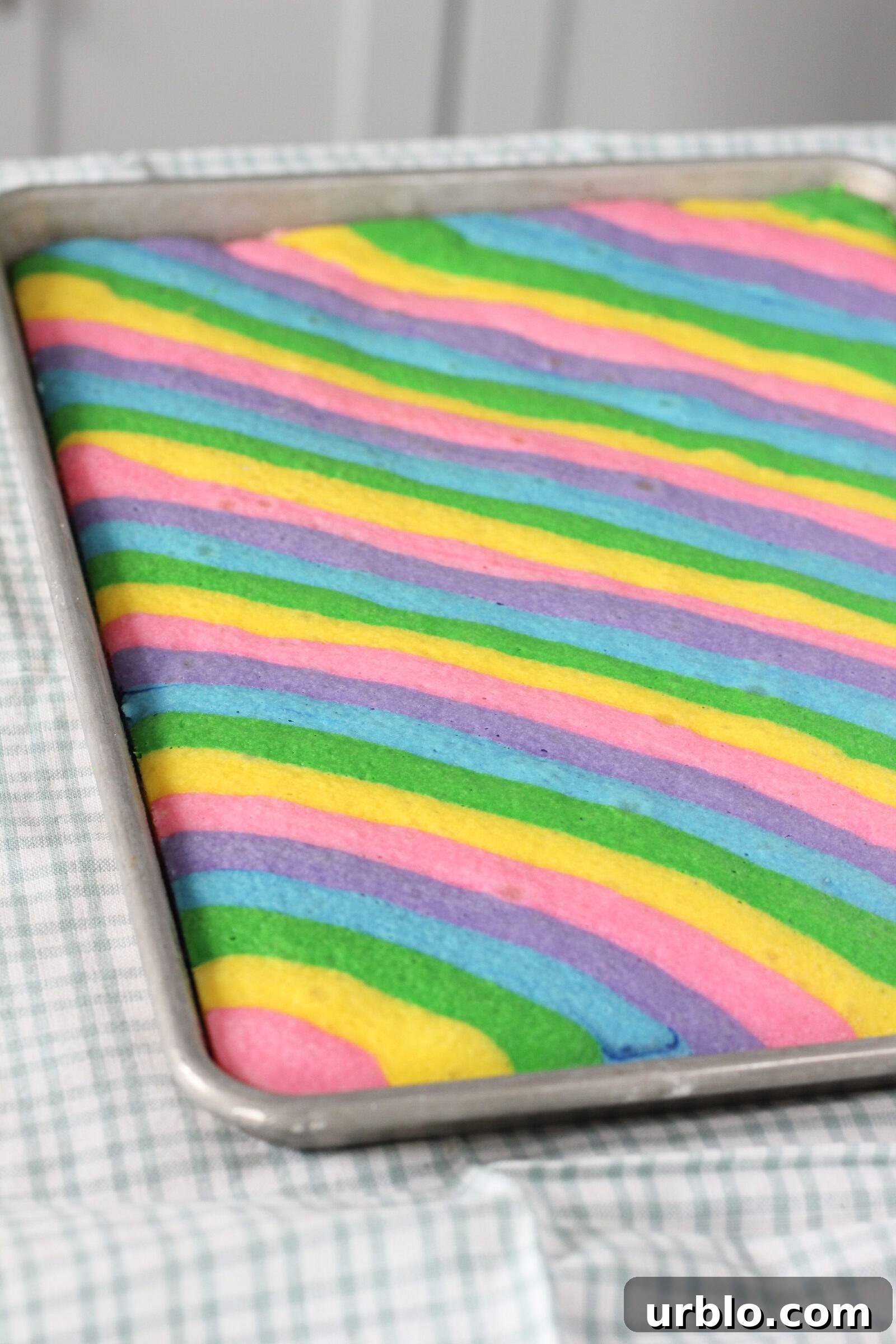
Step 4: Bake at 325°F using convection for about 17 minutes, or until the cake is fully set and passes the touch test.
Step 5: Let the cake rest on the counter for 2–4 minutes. It’s very soft and spongy right out of the oven, so a short rest lets it firm up enough to handle. Different kitchens and temperatures affect timing, so adapt this to what feels right in your space.
Step 6: Flip the cake onto a floured fabric napkin. The flour prevents sticking and the fabric helps you roll the sponge smoothly. Place a second floured napkin on top, then carefully roll the cake from the short side of the rectangle. Let it cool completely at room temperature while rolled.
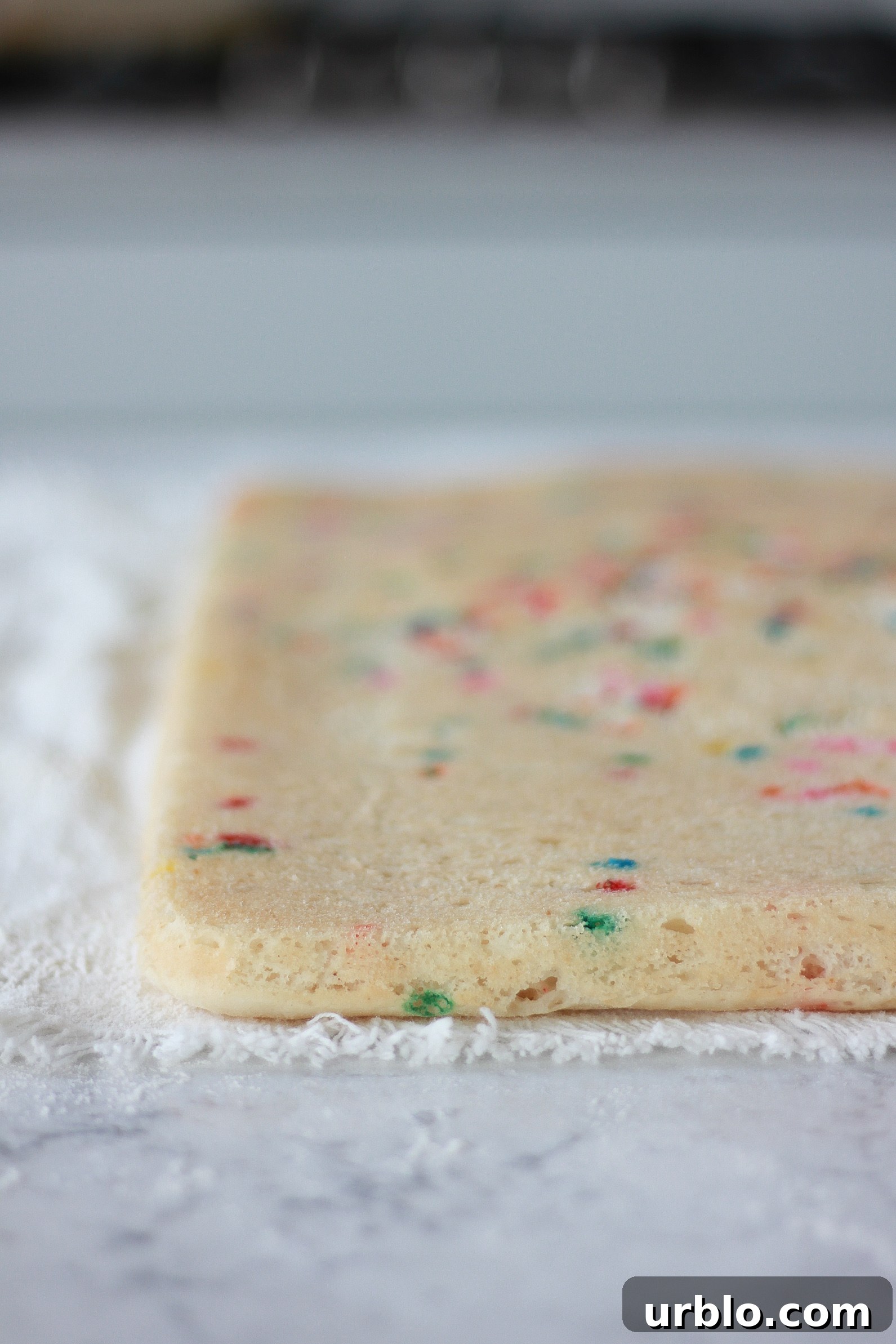
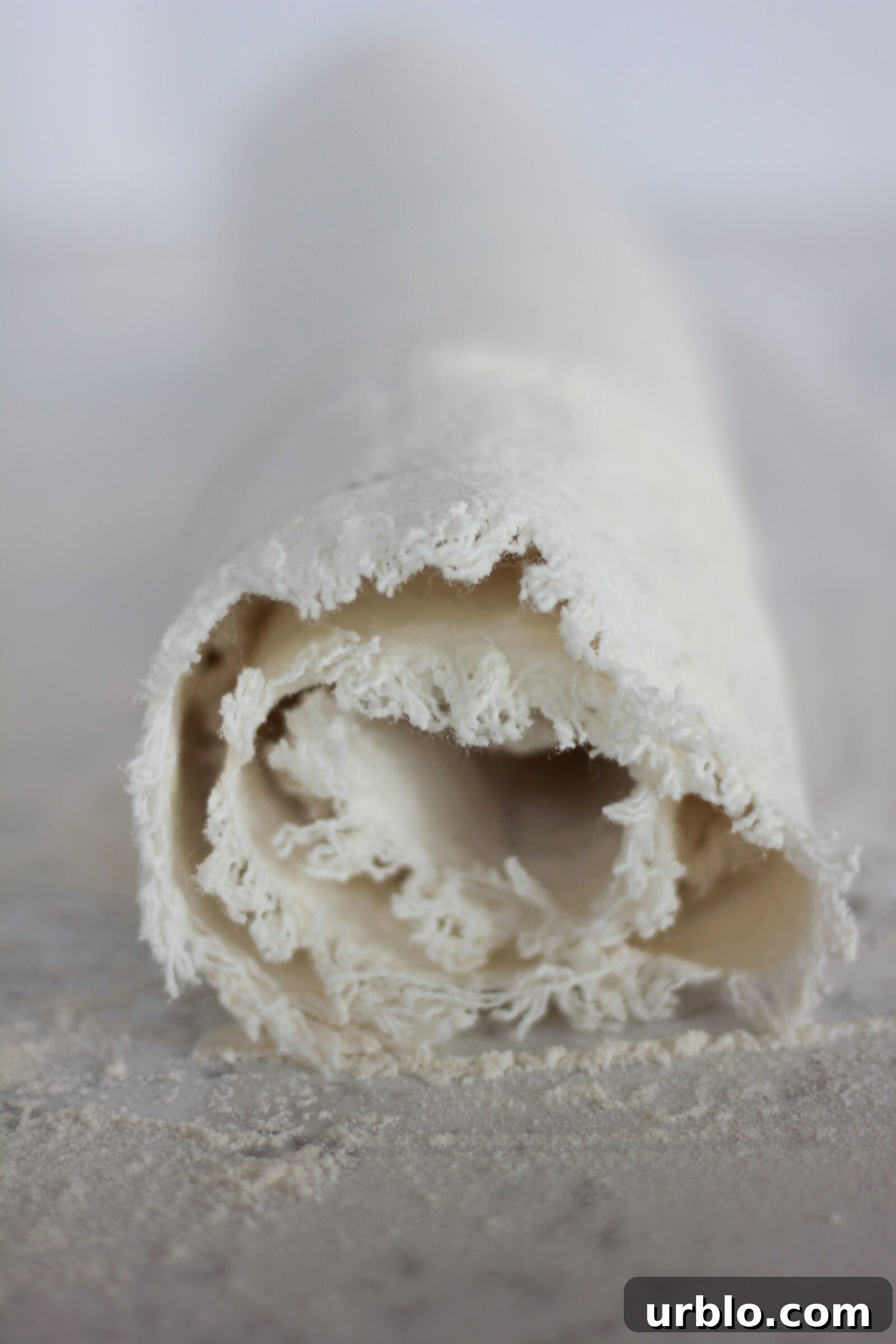
Step 7: Unroll the cooled cake gently. Small cracks are not a disaster—they often mean the cake might have been slightly over- or under-rested, or influenced by kitchen temperature. Spread an even layer of buttercream over the surface; using a cookie scoop to place dollops and then smoothing with an offset spatula works well. Re-roll the cake snugly, wrap it in plastic, and chill—freeze for 1 hour or refrigerate for several hours—until firm. Working with a chilled cake makes trimming and slicing neater.
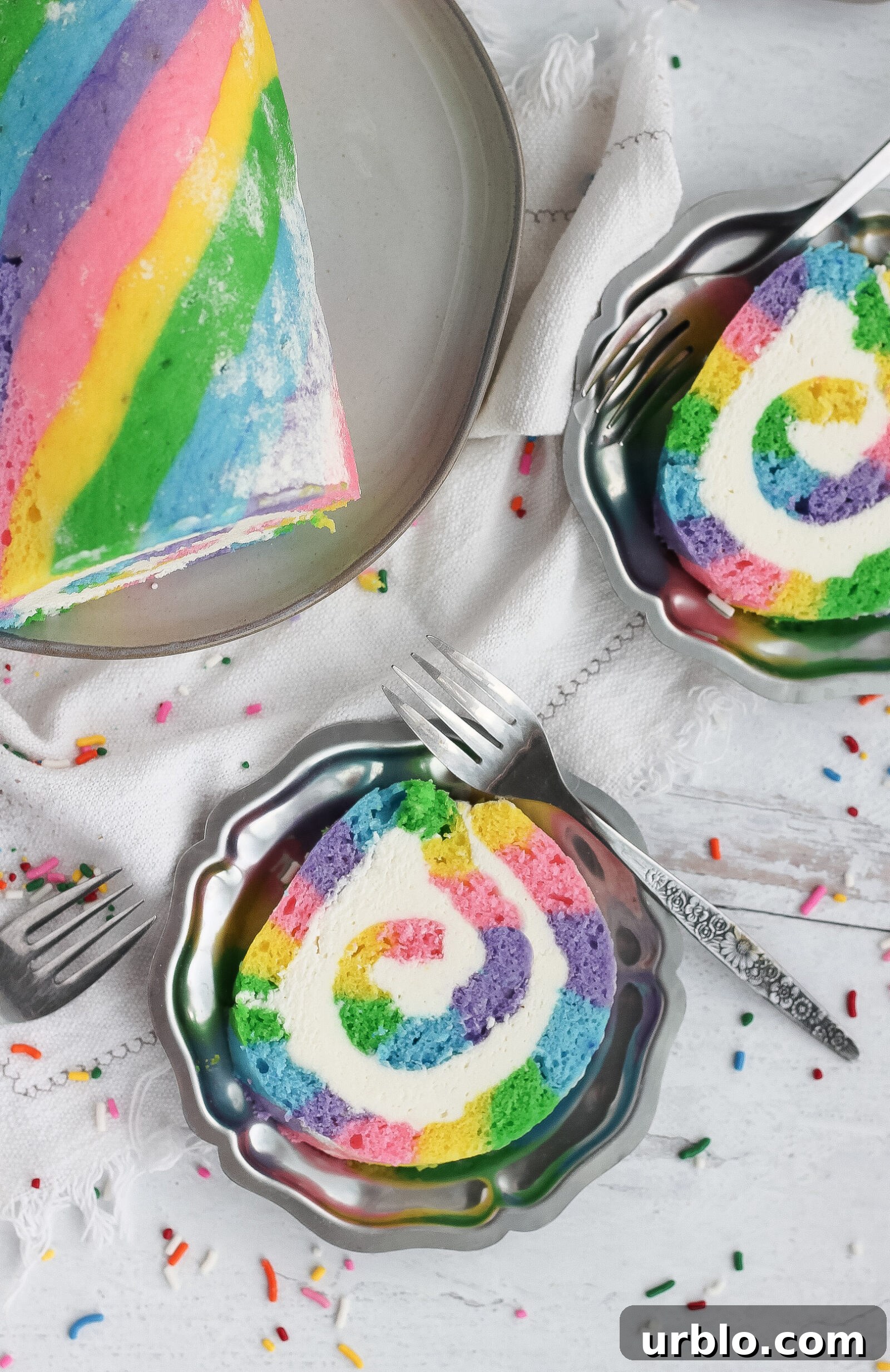
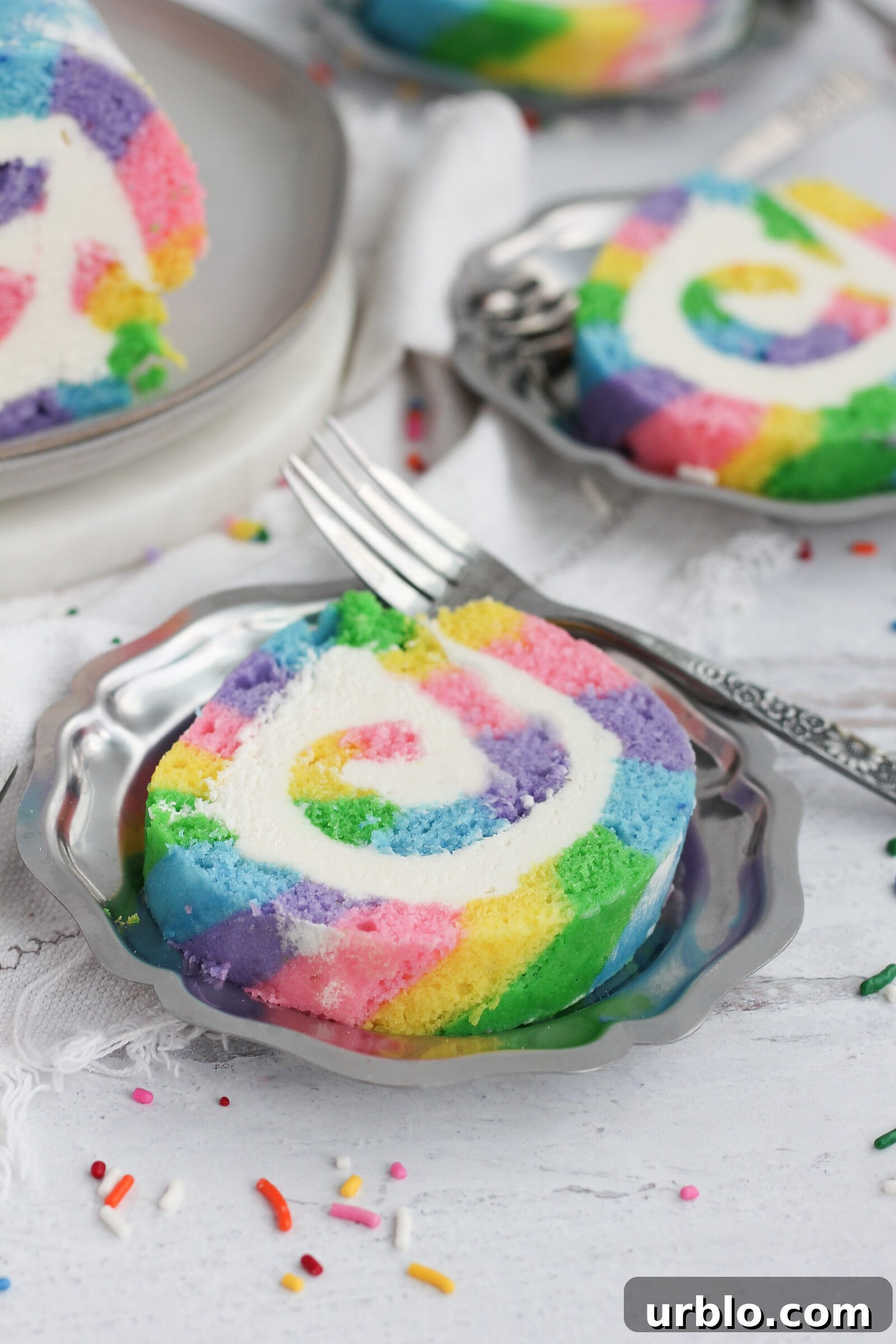
Step 8: For clean slices, use a hot knife and cut while the cake is cold. Each slice will show a similar spiral pattern with unique variations, which is part of the charm.
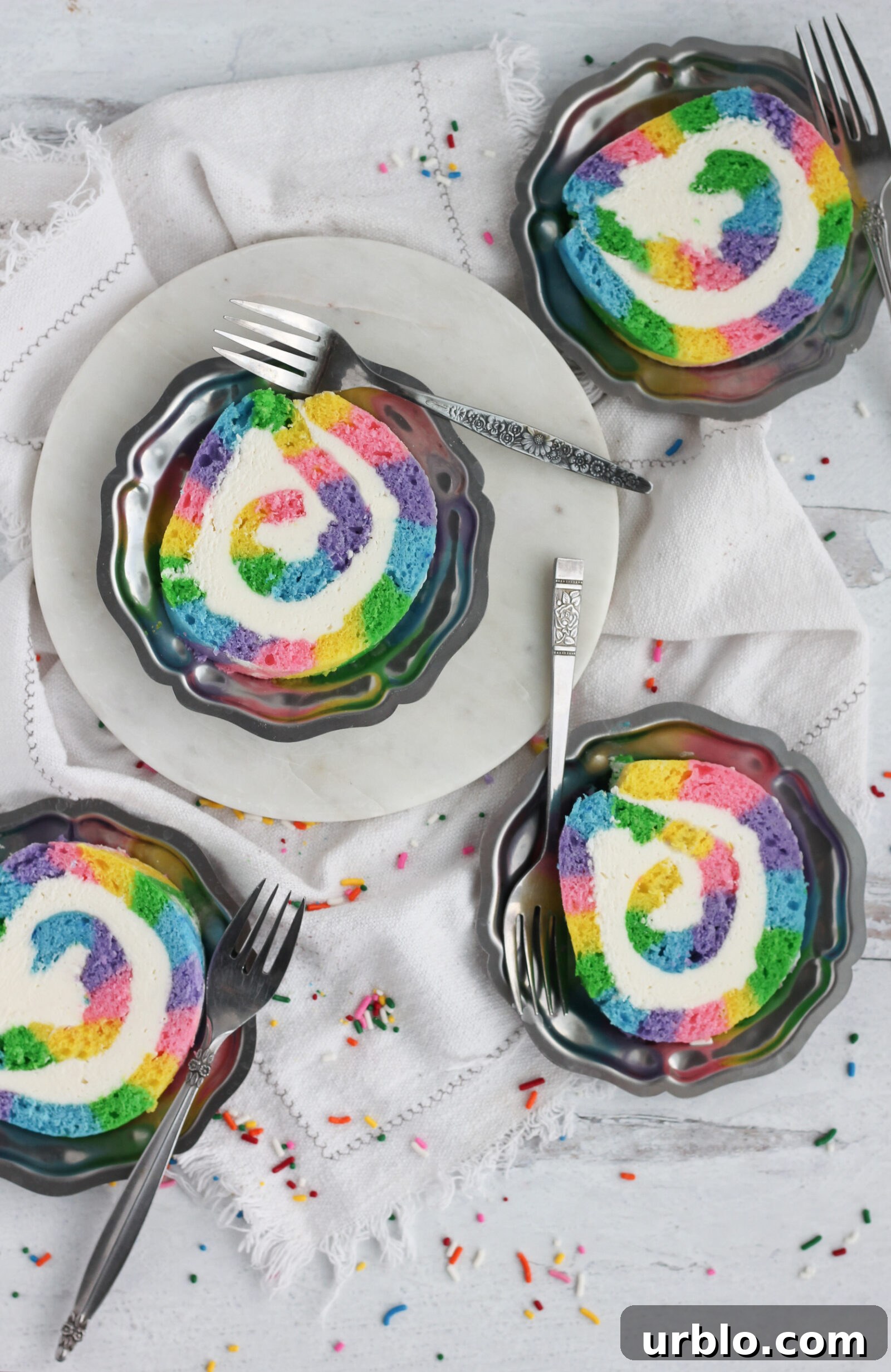
My white cake and vanilla buttercream recipes are linked below in the original source for anyone who wants the exact formulas.
Here’s a short video that walks through the full process:
That’s it—simple steps for a colorful, retro-inspired roll cake. They’re addictive to make, and every slice reveals a little surprise. If you try one, tag me so I can see your creation.
xo,
Mandy