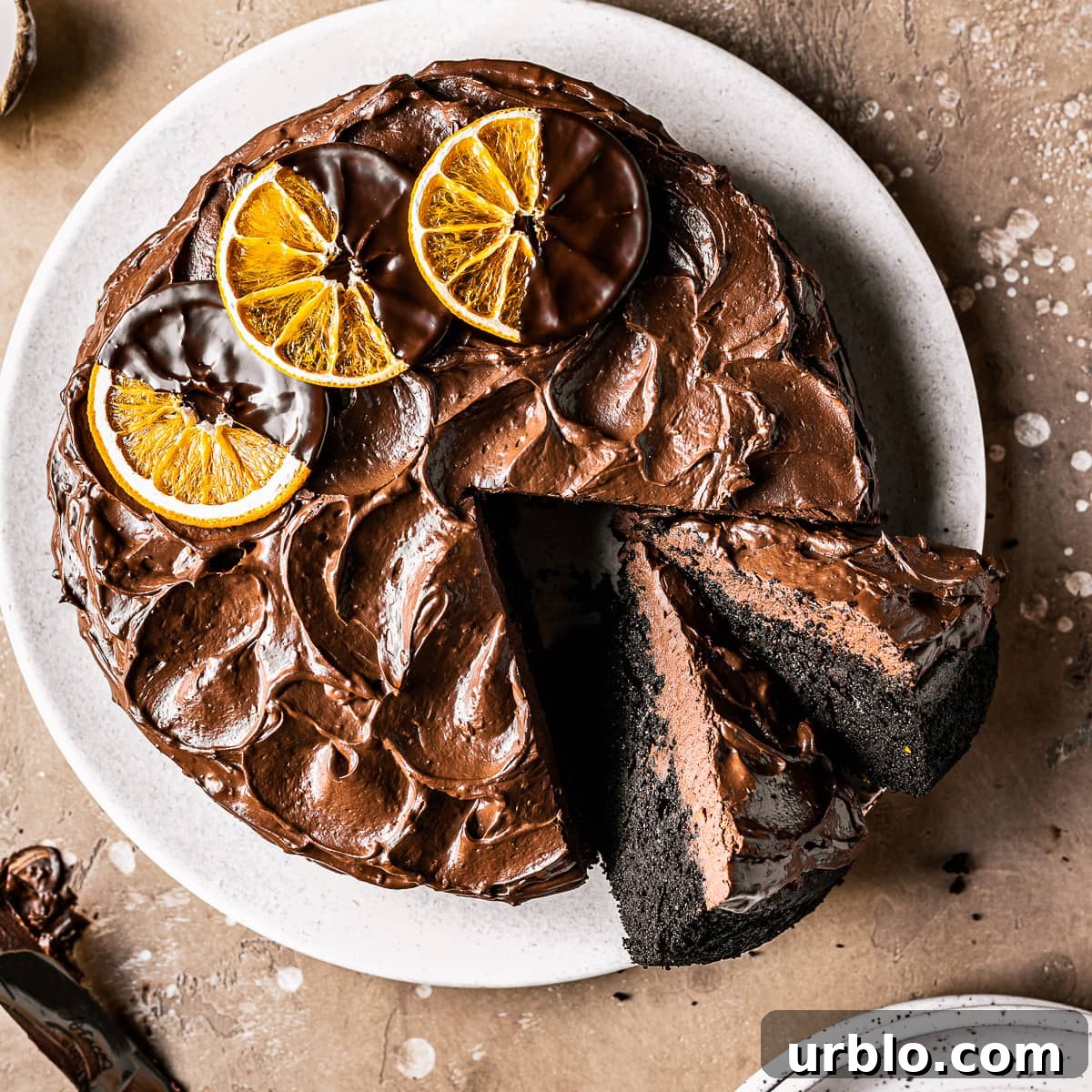
This easy chocolate orange cake pairs bright citrus with deep chocolate for a moist, fudgy single-layer cake. Fresh orange juice, abundant orange zest, and buttermilk give the crumb a lively, tender bite, while a quick chocolate–orange ganache finishes the cake with glossy, creamy chocolate and a hint of citrus.
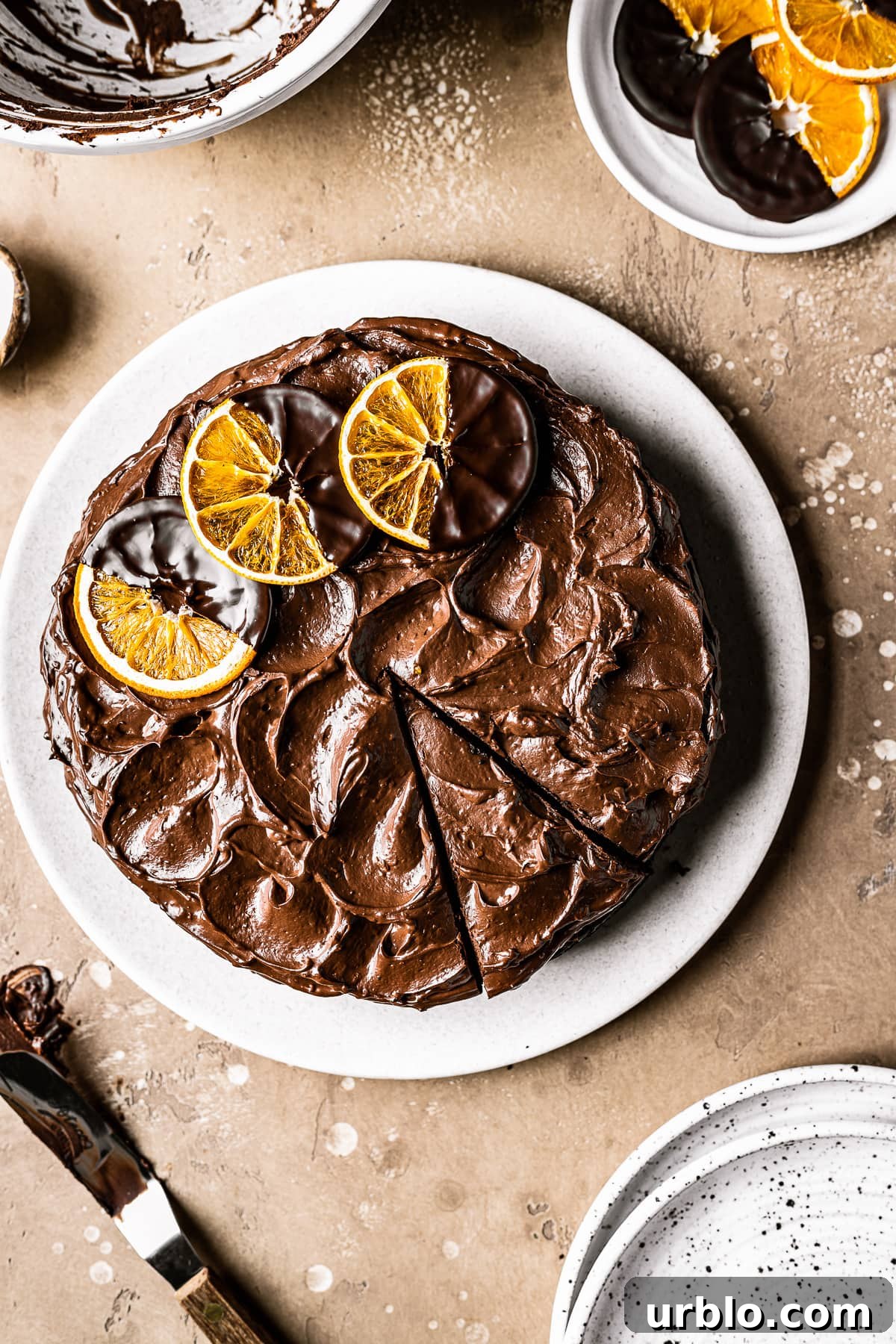
Simple to prepare and striking to serve, the cake is finished with swirls of sour cream–based ganache and optional chocolate-dipped dried orange slices for decoration. Because it’s a single-layer cake with an uncomplicated ganache, it’s a low-fuss dessert that delivers bold flavor.
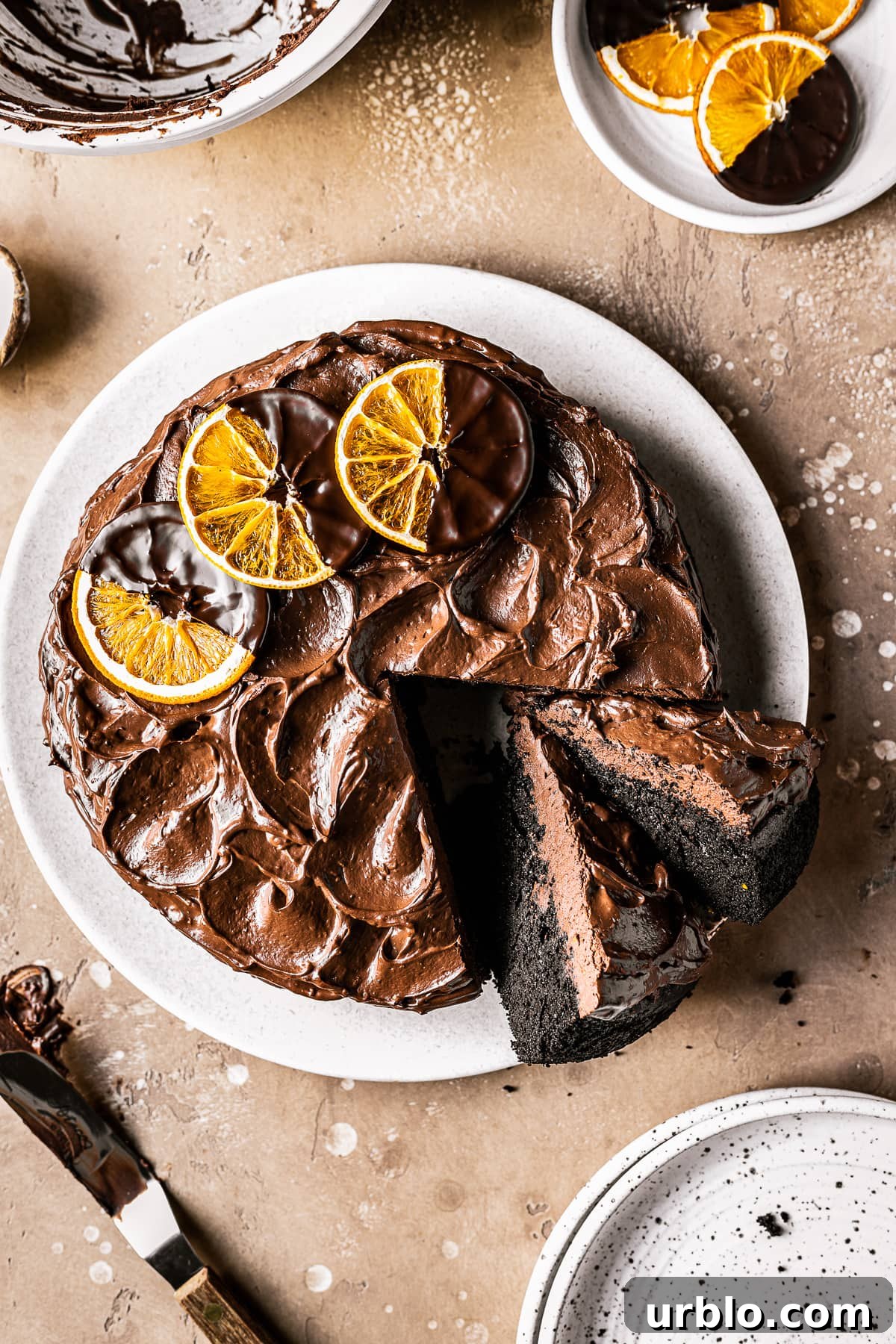
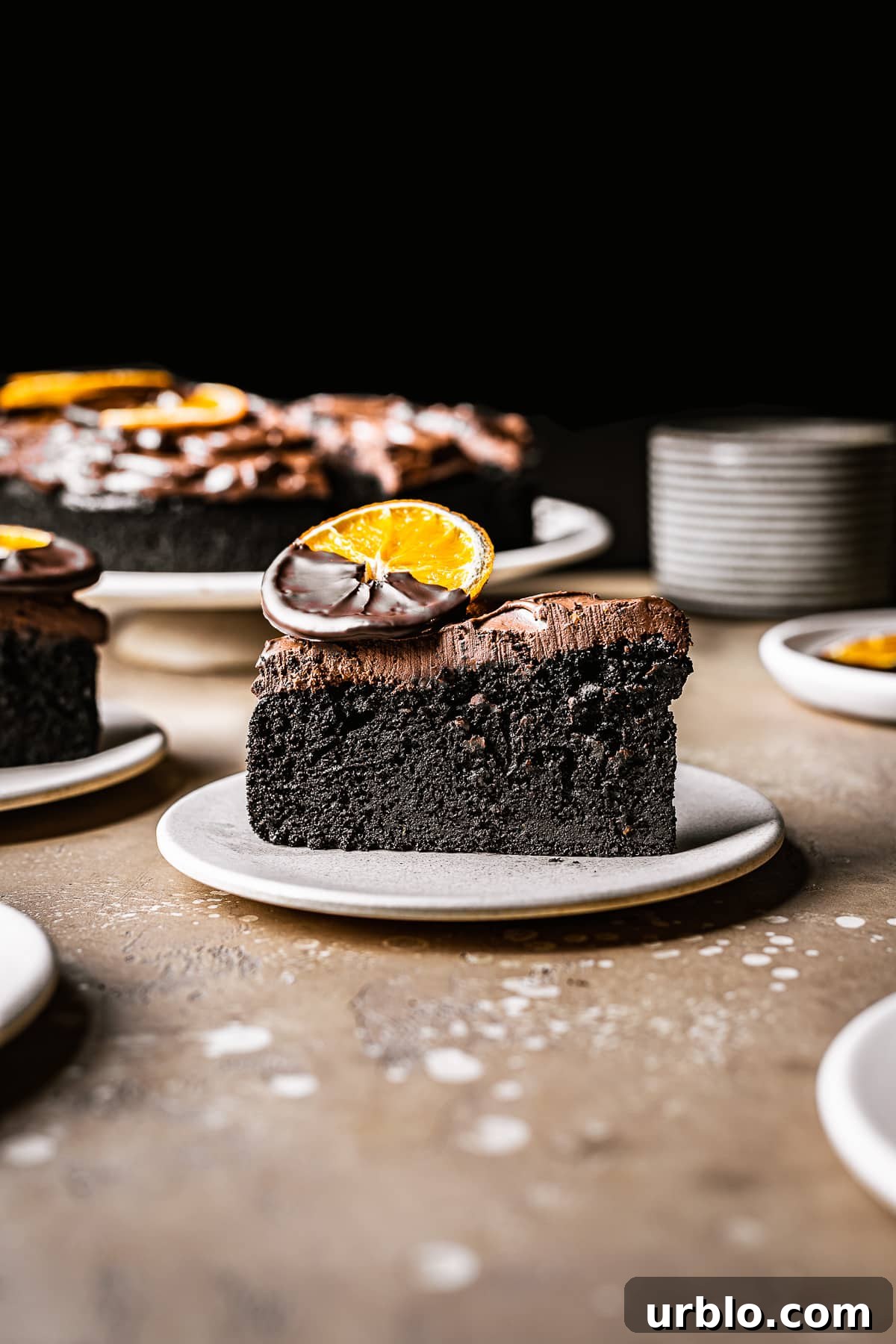
This recipe evolved from an earlier chocolate orange cheesecake idea but kept things simpler: a single-layer cake inspired by a chocolate olive oil bundt variation. The goal was a darker, more intensely chocolatey cake with an ultra-moist, fudgy texture. Using Dutch-process cocoa along with a bit of black cocoa deepens both color and flavor, while plenty of orange zest and fresh juice punch up the citrus notes.
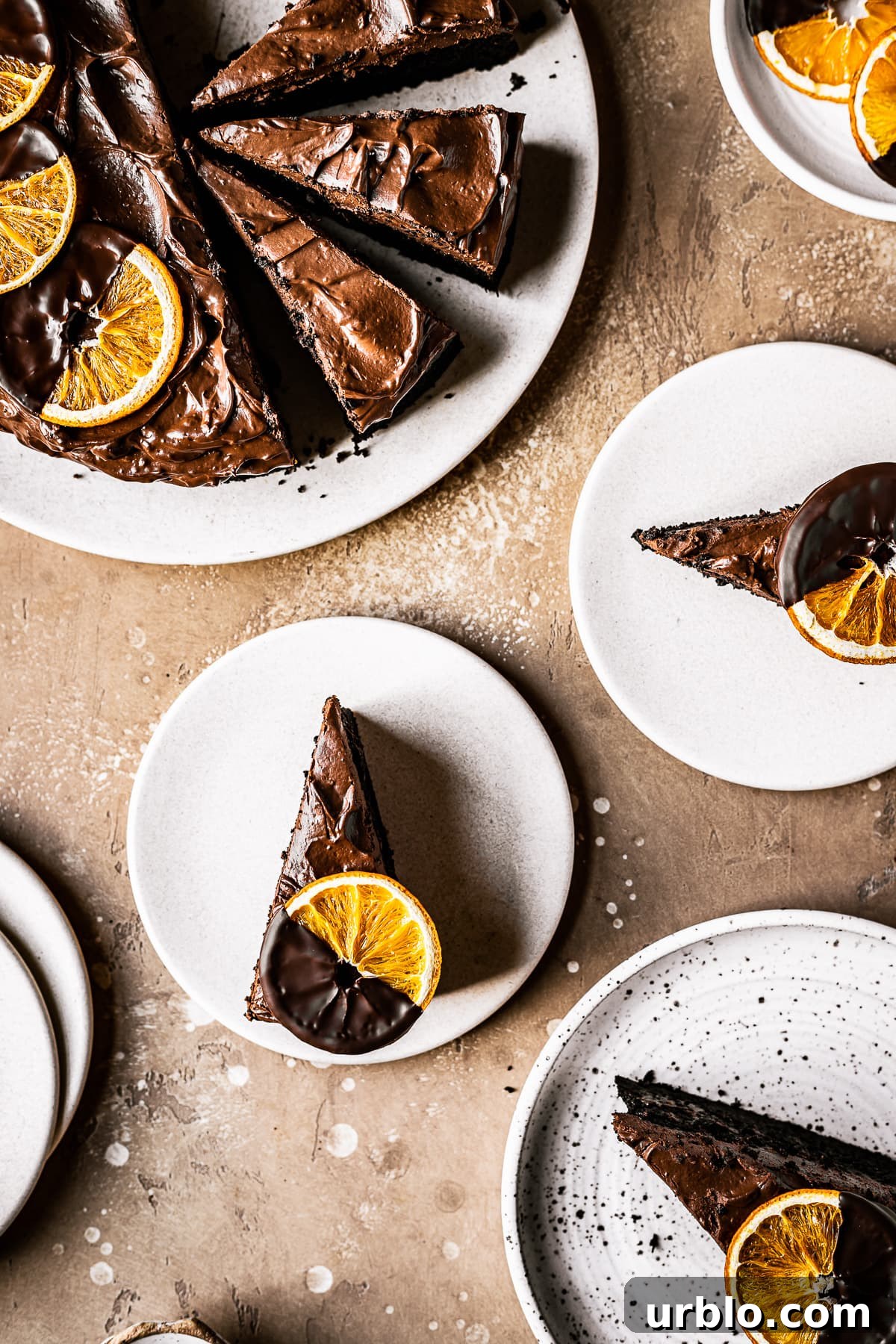
The finished cake is tender and moist with a vivid orange aroma. The ganache—made with full-fat sour cream, high-quality dark chocolate, and a touch of orange zest—creates a glossy, tangy chocolate topping that complements the crumb. Chocolate-dipped dried orange slices make an attractive, seasonal garnish.
This chocolate orange cake is ideal for holidays, gatherings, or anytime you want a dessert that balances intense chocolate with fresh citrus brightness.
[feast_advanced_jump_to]
Ingredients
* See the recipe card below for precise quantities and measurements.
FOR THE CAKE
Dutch-process cocoa powder – provides a deep chocolate flavor and rich color. Not interchangeable with natural cocoa for this recipe.
Black cocoa powder – optional, very dark alkalized cocoa that intensifies color and adds a rounded, almost cookie-like chocolate note.
Vegetable oil – use a neutral oil such as canola, grapeseed, or avocado oil.
Eggs – large eggs at room temperature for best emulsion and volume.
Buttermilk – adds tenderness and a subtle tang that pairs nicely with orange.
Orange zest – the zest of a navel orange offers concentrated citrus aroma and flavor.
Orange juice – freshly squeezed is preferred; plan on roughly 2–3 medium oranges for the amount called for.
FOR THE EASY GANACHE
Sour cream – full-fat sour cream creates a glossy ganache without heavy cream.
Orange zest – grate finely and mince so it blends smoothly into the ganache.
Dark chocolate – a bar between 50–72% cocoa works well; finely chop before melting.
FOR THE DECORATION
Chocolate-dipped dried orange slices are recommended as a simple, elegant garnish.
Substitutions
Black cocoa powder – if you can’t find black cocoa, substitute an equal amount of Dutch-process cocoa. The cake will be slightly less dramatic in color but still very chocolatey.
Sour cream – full-fat Greek yogurt or crème fraîche can replace sour cream in the ganache for similar texture and flavor.
Equipment
8-inch round (3-inch deep) cake pan—lined and greased for easy release.
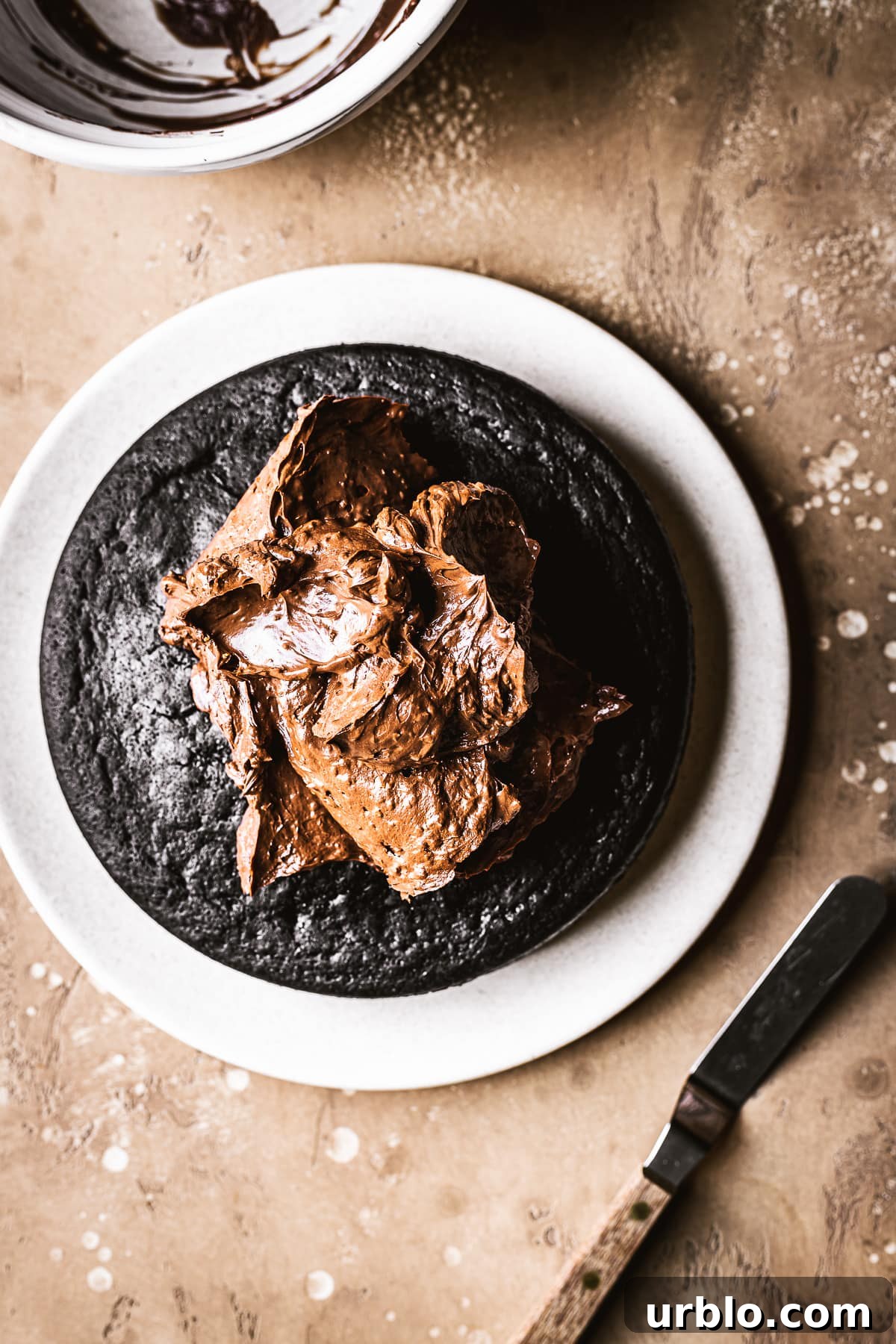
Small offset spatula or the back of a spoon to spread and swirl the ganache.
Storage
Keep the cake at room temperature for the first 2–3 hours. After that, store in an airtight container in the refrigerator for up to 3 days because the ganache contains sour cream. Bring the cake to room temperature before serving for the best texture and flavor.
To freeze: wrap tightly in plastic wrap, place in an airtight container, and freeze for up to 2 months. Thaw in the refrigerator, then bring to room temperature before serving.
Recipe Tips
Make sure the cake is completely cool before applying the ganache so the topping stays glossy and smooth.
Spread the ganache while it is still soft; it will thicken as it cools. If it firms up too much, warm the bowl briefly over a pan of hot water and stir until spreadable again.
Test the cake for doneness at about 40 minutes: a toothpick should come out with a few moist crumbs attached but not wet batter—avoid overbaking to preserve the fudgy texture.
More recipes
- Chocolate Orange Cheesecake
- Chocolate Ganache Cake
- Chocolate Olive Oil Bundt Cake
- Chocolate Walnut Cake
Love this recipe? Please
leave a comment and star rating.
★★★★★ Your feedback and adaptations help other bakers!
📖 Recipe

Print Recipe
Pin Recipe
Chocolate Orange Cake
INGREDIENTS
Chocolate Orange Cake
- 150 grams all-purpose flour
- 52 grams Dutch-process cocoa powder
- 32 grams black cocoa powder (optional)
- ½ teaspoon kosher salt
- 1½ teaspoons baking powder
- 83 mL vegetable oil
- 200 grams granulated sugar
- 2 large eggs
- 187 mL buttermilk
- orange zest (from 1 navel orange)
- 7.5 mL vanilla extract
- 187 mL fresh orange juice
Chocolate orange ganache
- 240 grams full-fat sour cream
- orange zest (from 1 navel orange)
- 200 grams dark chocolate, finely chopped
Dried orange decoration
- dried orange slices (see dried orange recipe)
INSTRUCTIONS
Chocolate orange cake
-
Preheat the oven to 350°F (177°C) and position a rack in the center.
-
Line the base of an 8-inch x 3-inch cake pan with parchment and grease the sides.
-
Whisk together the flour, Dutch-process cocoa, black cocoa (if using), salt, and baking powder in a medium bowl and set aside.
-
In a large bowl, whisk the oil and sugar until combined. Add the eggs one at a time, beating well after each addition.
-
Whisk in the buttermilk, orange zest, and vanilla until smooth.
-
Add one-third of the dry ingredients and mix until combined. Add half the orange juice and mix. Continue alternating remaining dry ingredients and orange juice, ending with the dry ingredients. Whisk until just combined.
-
Pour the batter into the prepared pan and bake for 40–45 minutes, or until the top springs back slightly and a toothpick shows a few moist crumbs but not wet batter. Cool in the pan for 10 minutes, then invert onto a rack to finish cooling completely.
Chocolate orange ganache
-
Place sour cream and very finely chopped orange zest in a bowl and whisk to combine. Set aside while you melt the chocolate.
-
Melt the chopped dark chocolate in short bursts in the microwave, stirring between intervals, or melt gently over a double boiler until smooth.
-
Whisk the melted chocolate into the sour cream mixture until fully combined and glossy. Scrape the bowl to incorporate any chocolate from the sides and bottom. Spoon the ganache onto the cooled cake and spread with a small offset spatula or the back of a spoon, creating gentle swirls. Top with chocolate-dipped dried orange slices if desired.
EQUIPMENT
- 8-inch round cake pan
- Small offset spatula
NOTES
Cake
- Black cocoa is optional but adds dramatic color and a slightly different chocolate character. If unavailable, replace with an equal amount of Dutch-process cocoa.
- This cake is intentionally moist and fudgy. When testing for doneness, look for a few moist crumbs on a toothpick rather than glossy batter. Check at 40 minutes since ovens vary.
Ganache
- Be sure the cake is completely cool before adding ganache so it sets properly and remains glossy.
- Spread the ganache while it is still soft; it will thicken as it cools. If it becomes too firm, warm the bowl briefly over hot water and stir until spreadable.