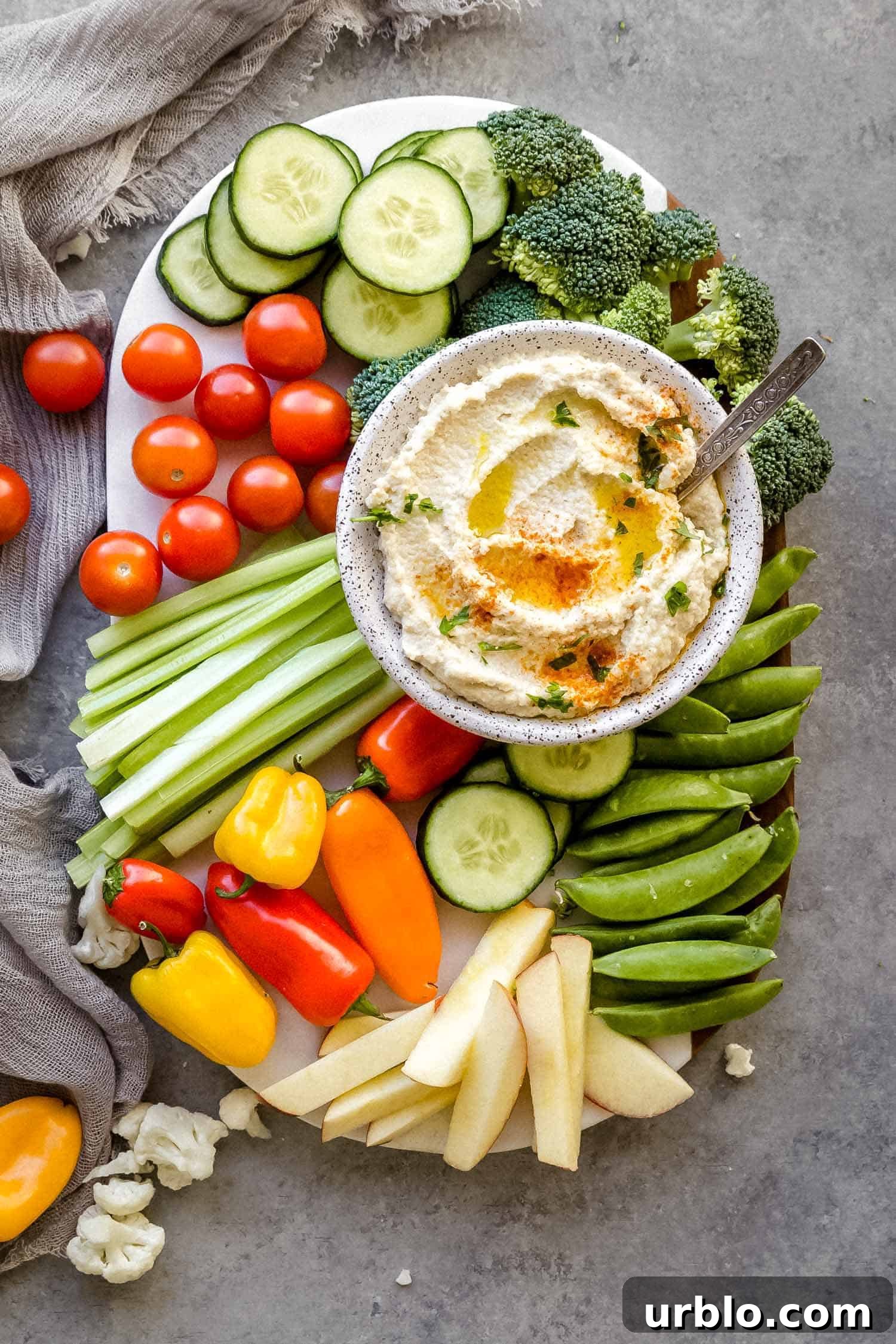
This low-carb cauliflower hummus is a flavorful, chickpea-free alternative to traditional hummus. Entirely dairy-free and suitable for Paleo and Whole30 plans, this version can also be made vegan. It delivers a creamy texture and nutritious profile while reducing carbohydrates, making it an ideal dip for anyone seeking a light, satisfying appetizer or snack.
Do I need to roast cauliflower for this cauliflower hummus to turn out?
Yes — roasting the cauliflower is important. Roasting develops a deeper, slightly caramelized flavor and softens the florets, which gives the hummus its characteristic creaminess. Raw cauliflower won’t break down the same way and is unlikely to yield the smooth, silky texture you expect from hummus.
You can roast the cauliflower ahead of time to save effort the day you plan to serve it. Once roasted and cooled, store the florets in the refrigerator overnight. Bring them to room temperature before blending so they puree more evenly in the food processor.
Preparing the cauliflower in advance makes assembly quick and easy: simply combine the roasted florets with the other ingredients and process until smooth. This approach is perfect for entertaining, potlucks, or busy weeknight dinners when you want a fresh dip without last-minute prep.
More low-carb recipes like this:
One Pan Shrimp Fajitas
Whole30 Greek Salmon
Broiled Barramundi with Citrus Salsa
The Best Paleo One Pan Breakfast
Whole30 Shakshuka with Cauliflower Rice
I’m excited to share this chickpea-free hummus recipe because it offers all the satisfaction of traditional hummus without the legumes. Some people experience bloating or sluggishness after eating chickpeas, and even if you tolerate them well, it’s nice to have a delicious alternative on hand. This cauliflower hummus is a great option for variety and works well as a dip, spread, or condiment.
Can I make this cauliflower hummus vegan?
Absolutely. The original recipe uses bone broth to boost the nutrient content and add depth of flavor, but you can easily make a vegan version. Replace the bone broth with extra oil or low-sodium vegetable broth to maintain a rich texture and balanced taste. If you choose extra oil, add it gradually until the hummus reaches your desired creaminess.
If you prefer to avoid additional oil, use a splash of water or a few tablespoons of vegetable broth instead. Taste and adjust seasoning, keeping in mind that tahini and lemon juice contribute much of the savory, tangy profile.
Whether made with bone broth or vegan-friendly liquids, this cauliflower hummus turns out smooth and delicious — try both ways to see which you prefer.
How to make cauliflower hummus
Start by preheating your oven to 400°F (about 200°C) and placing the oven rack in the middle position. Line a baking sheet with parchment paper for easy cleanup.
Toss cauliflower florets with 2 tablespoons of oil so each piece is lightly coated. Spread the florets in a single layer on the baking sheet and roast for about 20 minutes, turning once halfway through. Roast until the edges are browning and the florets are tender. Allow them to cool slightly before processing.
In a food processor, pulse garlic a few times to mince it. Add the roasted cauliflower, tahini, cumin, salt, and the liquid of your choice (bone broth for Paleo/Whole30 or vegetable broth/water for vegan). Pulse on high until the cauliflower is well broken down and the mixture is thick and clumpy.
With the processor running on high and the lid slightly ajar, drizzle in the remaining oil very slowly — a teaspoon at a time — to form an emulsified, creamy hummus. Once incorporated, reduce the speed and add freshly squeezed lemon juice. Taste and adjust salt, lemon, or oil as needed.
If the hummus feels too dry or gritty, add another tablespoon of oil. To thin it slightly, add a tablespoon or two of water or broth until the texture is smooth and spreadable. Aim for a thick, creamy consistency that still scoops easily.
To keep the recipe Whole30-compliant, serve the cauliflower hummus with fresh vegetable slices instead of chips or crackers. Great dippers include apple slices, cucumber rounds, cherry tomatoes, broccoli florets, celery sticks, snap peas, and mini bell peppers.
This cauliflower hummus makes an impressive appetizer and is an excellent alternative to traditional hummus — flavorful, versatile, and kinder to sensitive stomachs. I hope you enjoy it as much as I do.
Low Carb Cauliflower Hummus (Dairy Free, Paleo, Whole30)
Ingredients
- 1 large head of cauliflower, chopped into florets
- 2 tablespoons avocado oil or extra virgin olive oil (for roasting)
- 2 garlic cloves
- ½ cup creamy tahini
- 1 teaspoon kosher salt
- ½ teaspoon cumin
- ¼ cup bone broth (or low-sodium vegetable broth/water for vegan)
- 3–4 tablespoons avocado oil (for blending)
- 3 tablespoons freshly squeezed lemon juice
Instructions
- Preheat the oven to 400°F and position the rack in the middle. Line a baking sheet with parchment paper.
- Toss the cauliflower florets with 2 tablespoons of oil until evenly coated. Spread in a single layer on the baking sheet and roast for about 20 minutes, turning once, until edges brown. Let cool slightly.
- Place garlic in the bowl of a food processor and pulse until minced. Add the roasted cauliflower, tahini, salt, cumin, and bone broth or substitute. Pulse on high until the mixture is broken down into a thick, clumpy base.
- With the processor running on high, slowly drizzle in the oil a teaspoon at a time to emulsify. Once fully incorporated, reduce speed and add the lemon juice. Taste and adjust salt, lemon, or oil until creamy and well seasoned.
- Transfer the hummus to an airtight container and refrigerate. If made with frozen bone broth, store up to 3 days; otherwise it will keep about one week.
Notes
- To make this recipe vegan or if you don’t have bone broth, substitute extra oil or low-sodium vegetable broth. Add oil a tablespoon at a time until you reach a creamy texture.
- Use freshly squeezed lemon juice for the best flavor. Bottled lemon juice can introduce an off taste in this recipe.