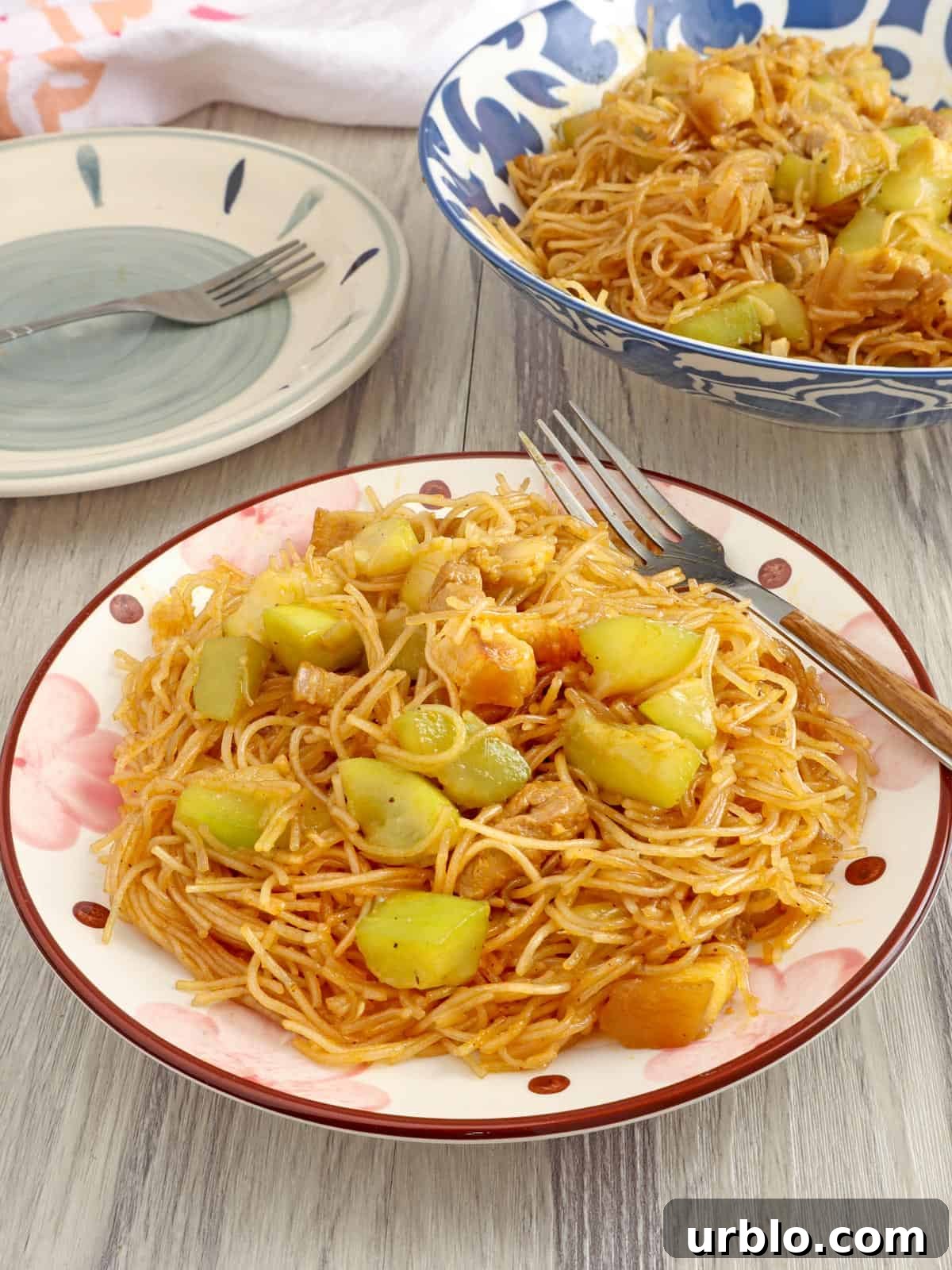
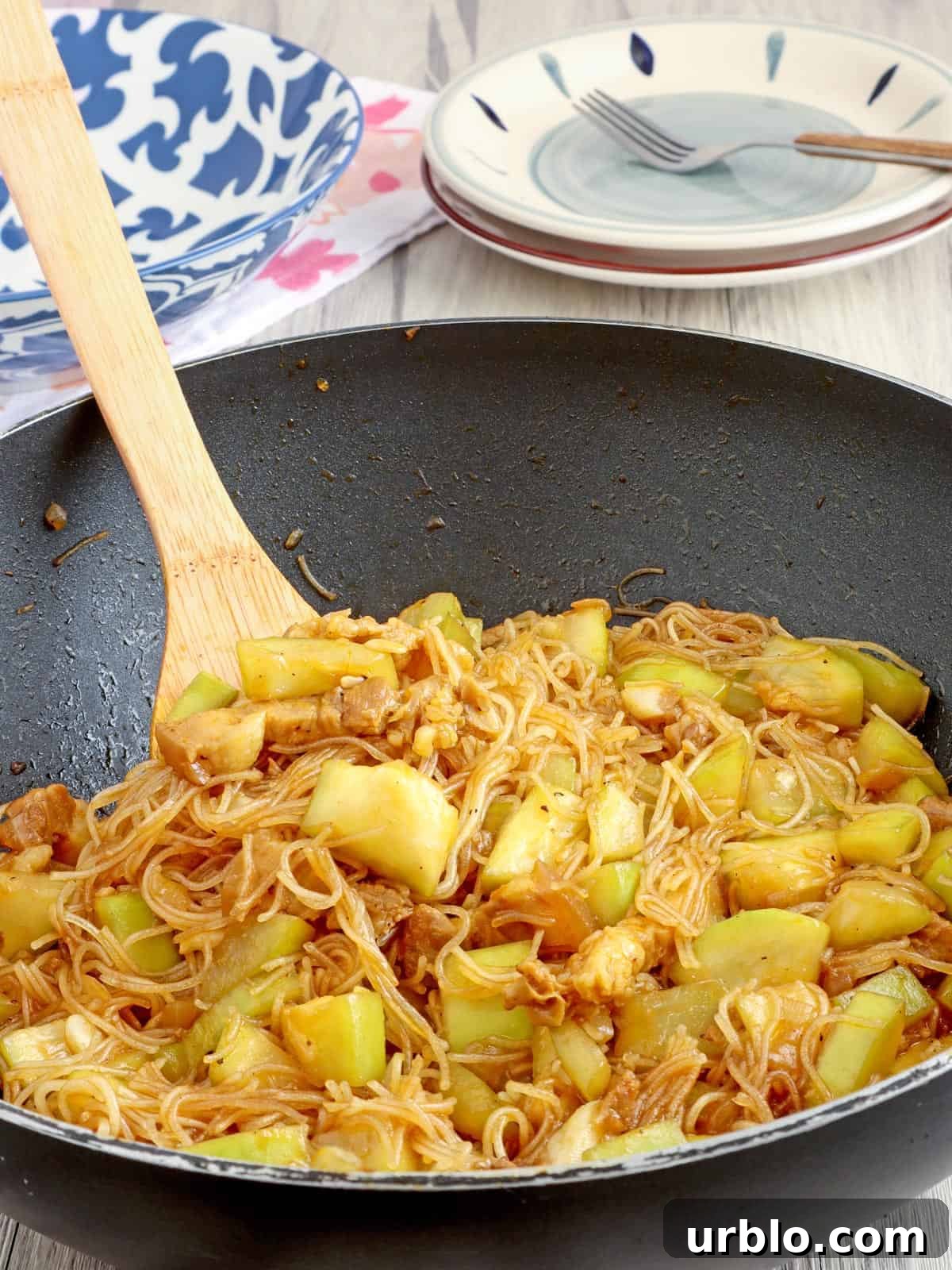
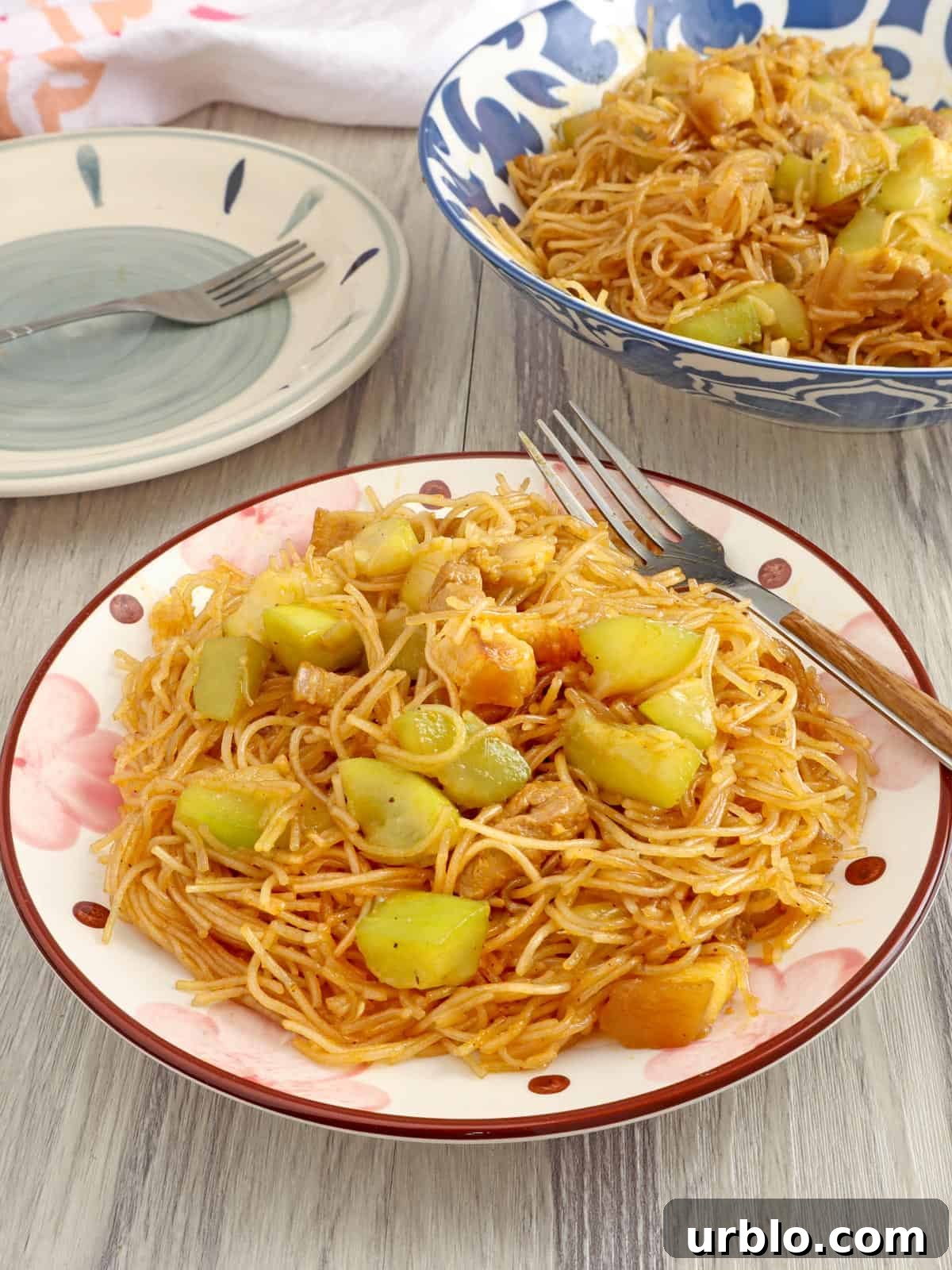
Pancit Upo combines tender pork and bottle gourd (upo) with rice noodles to create a flavorful, economical stir-fry. Simple to prepare and satisfying to eat, this dish makes an excellent weeknight dinner or a crowd-pleasing addition to family gatherings.
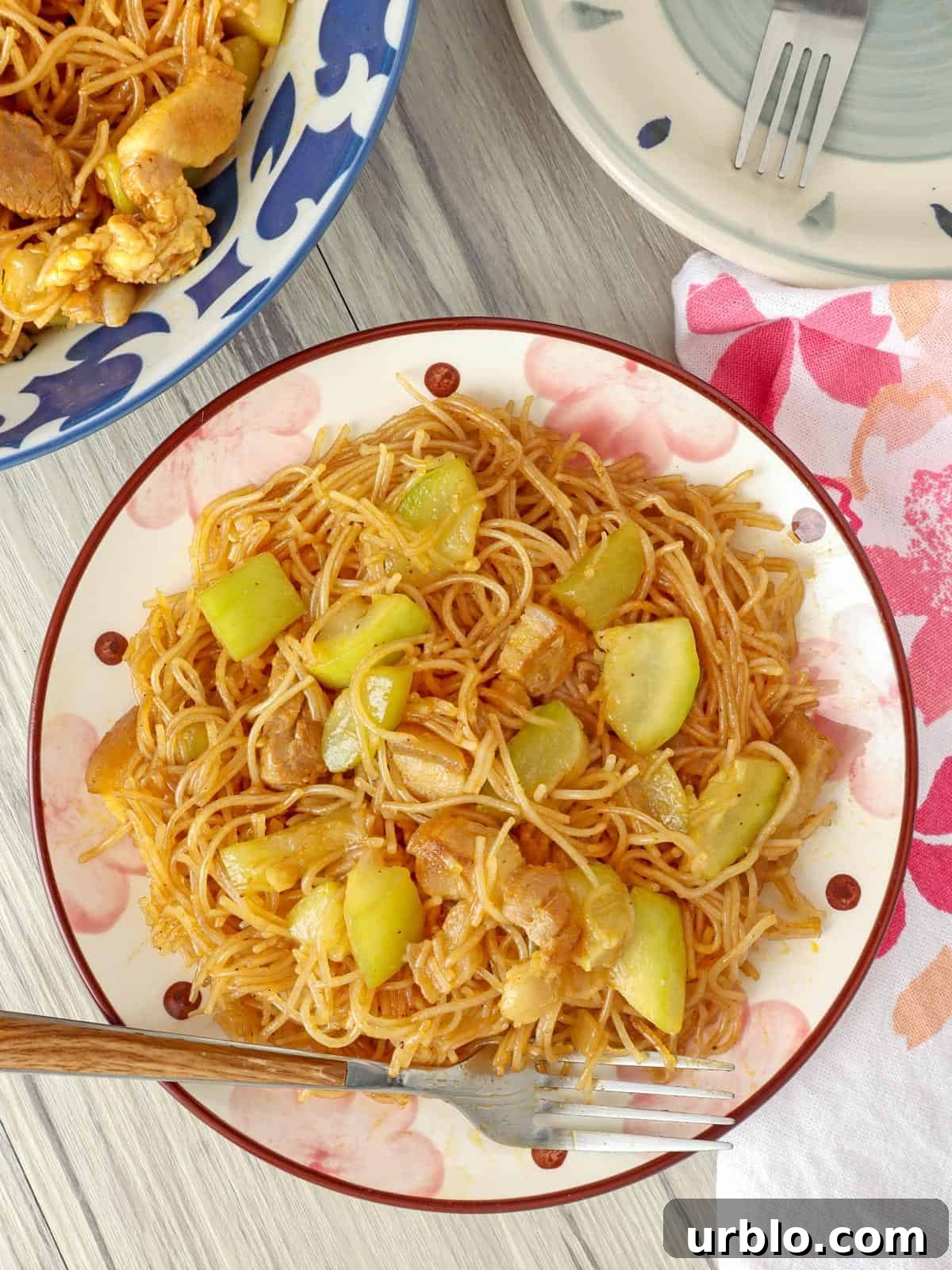
I first tried pancit upo during a visit to the Philippines, and the combination of soft rice noodles and lightly crisp upo immediately caught my attention. The dish is straightforward, comforting, and budget-friendly — a great example of how simple ingredients can deliver satisfying results when cooked the right way.
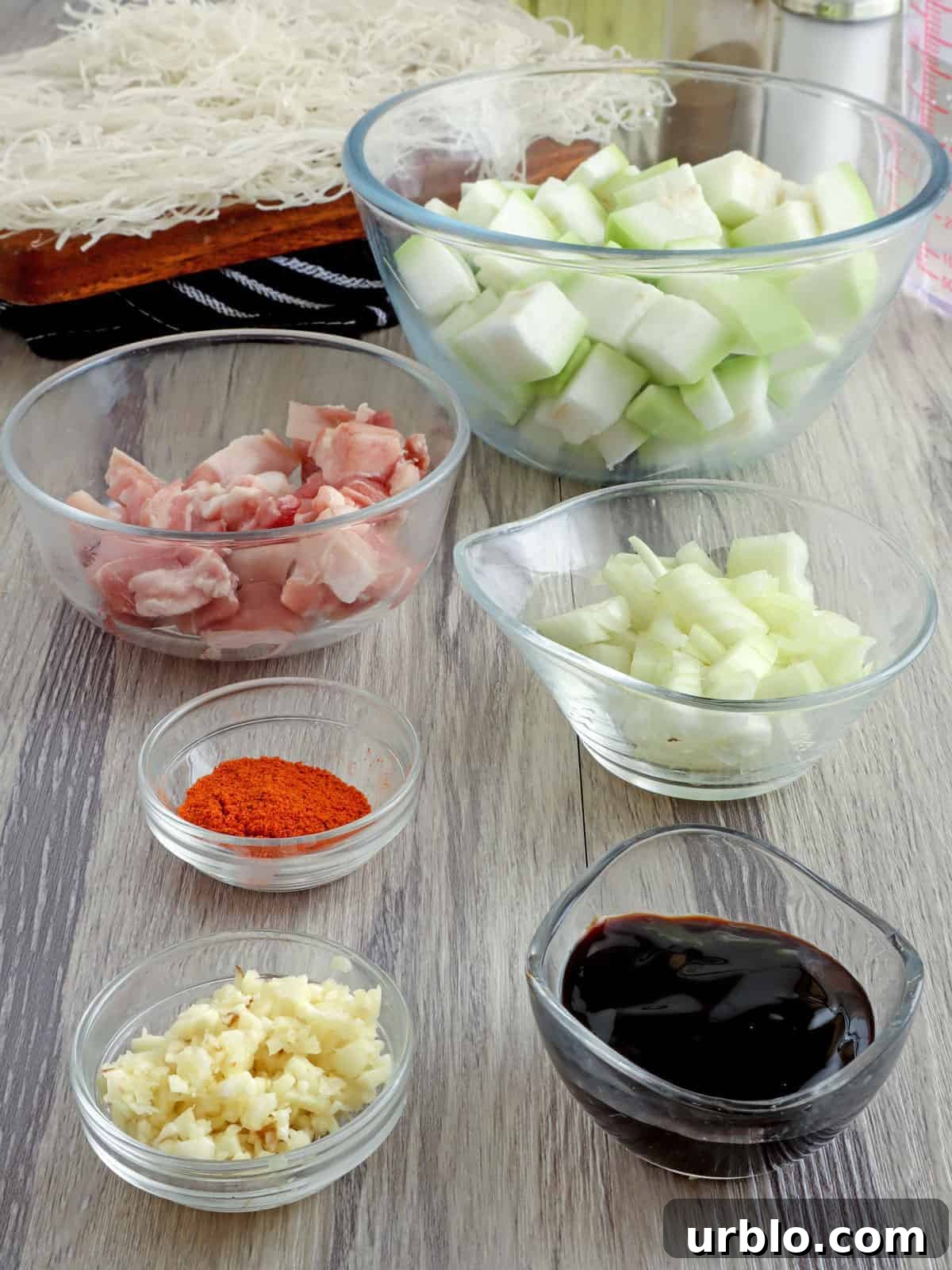
What is Pancit Upo
Pancit Upo is a simple pancit guisado made with pancit bihon (rice vermicelli) and upo, the Philippine bottle gourd. Traditionally, the dish can include a modest amount of meat or seafood — commonly diced pork, shredded chicken, tinapa flakes, canned mackerel, or shrimp — but the defining feature is the generous use of upo. In some regions it’s called Pancit Maklak, sometimes referred to colloquially as “deaf noodles” for its pared-down mix of add-ins.
This Kapampangan-style preparation is valued for being economical and filling. With modest portions of protein and an abundance of vegetable, it stretches well to feed several people without sacrificing flavor. For color and depth, I prefer adding a touch of annatto powder and a couple of spoonfuls of oyster sauce; these small adjustments enhance the dish’s appearance and taste while keeping the recipe approachable.
The texture contrast between silky bihon and the mildly crisp upo is one of the highlights. Upo cooks quickly and absorbs the sauce flavors, giving a light, refreshing bite that balances the richer pork. Adjust the amount of oyster sauce and salt to suit your taste, and squeeze fresh calamansi or lemon at the end to brighten the overall flavor.
Cooking tips
- Cut the pork and any other proteins to uniform sizes so they cook evenly and absorb flavors consistently.
- Soak the rice noodles a few minutes longer than the package directions if you prefer them to finish cooking quickly in the pan. Add the softened noodles when the upo is about halfway done so both finish at the same time.
How to serve
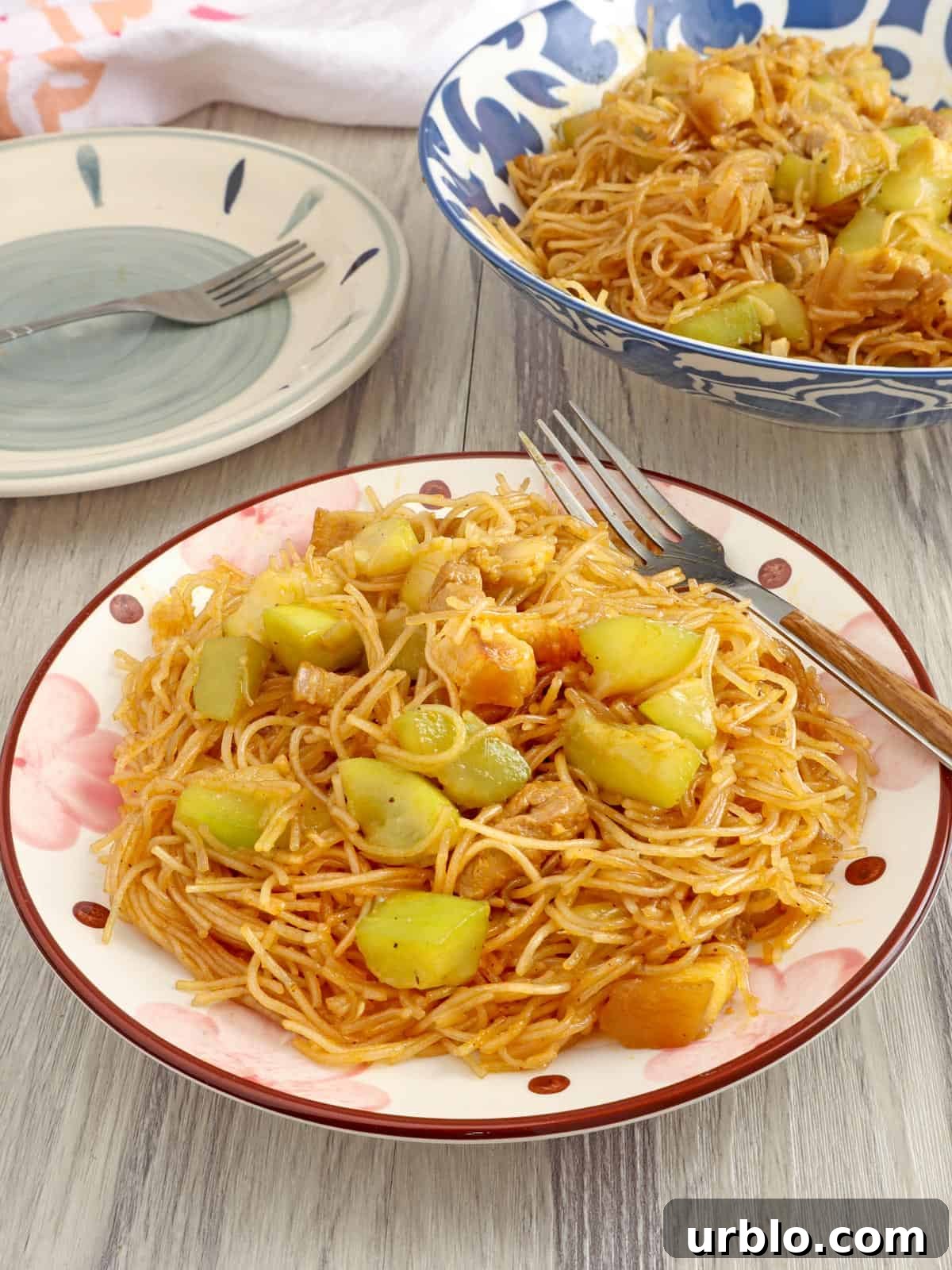
- Pancit Upo works well as a main dish or as part of a larger spread. It’s hearty enough for a simple family meal yet versatile enough to serve at gatherings and celebrations.
- Brighten each serving with a drizzle of fresh calamansi or lemon juice before eating. Serve alongside Filipino bread like pandesal or with steamed rice cakes (puto) for a satisfying combination.
How to store leftovers
- Store leftovers in a covered container and refrigerate for up to three days. Because rice noodles lose their ideal texture after freezing, freezing is not recommended.
- Reheat gently in the microwave in short intervals, or rewarm in a covered pan over low heat with a splash of water to prevent drying and to restore softness.
More pancit recipes to try
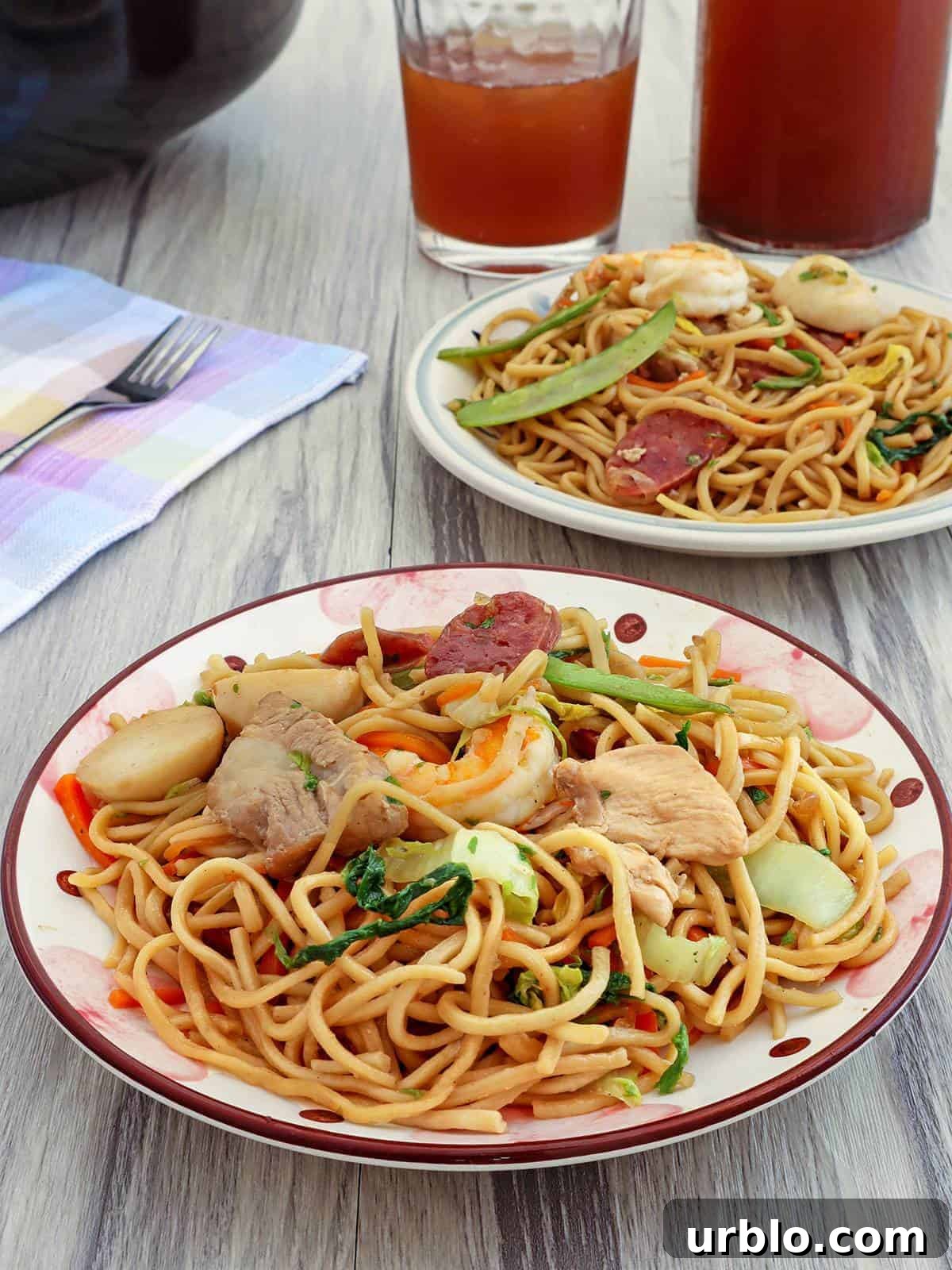
Pancit Canton
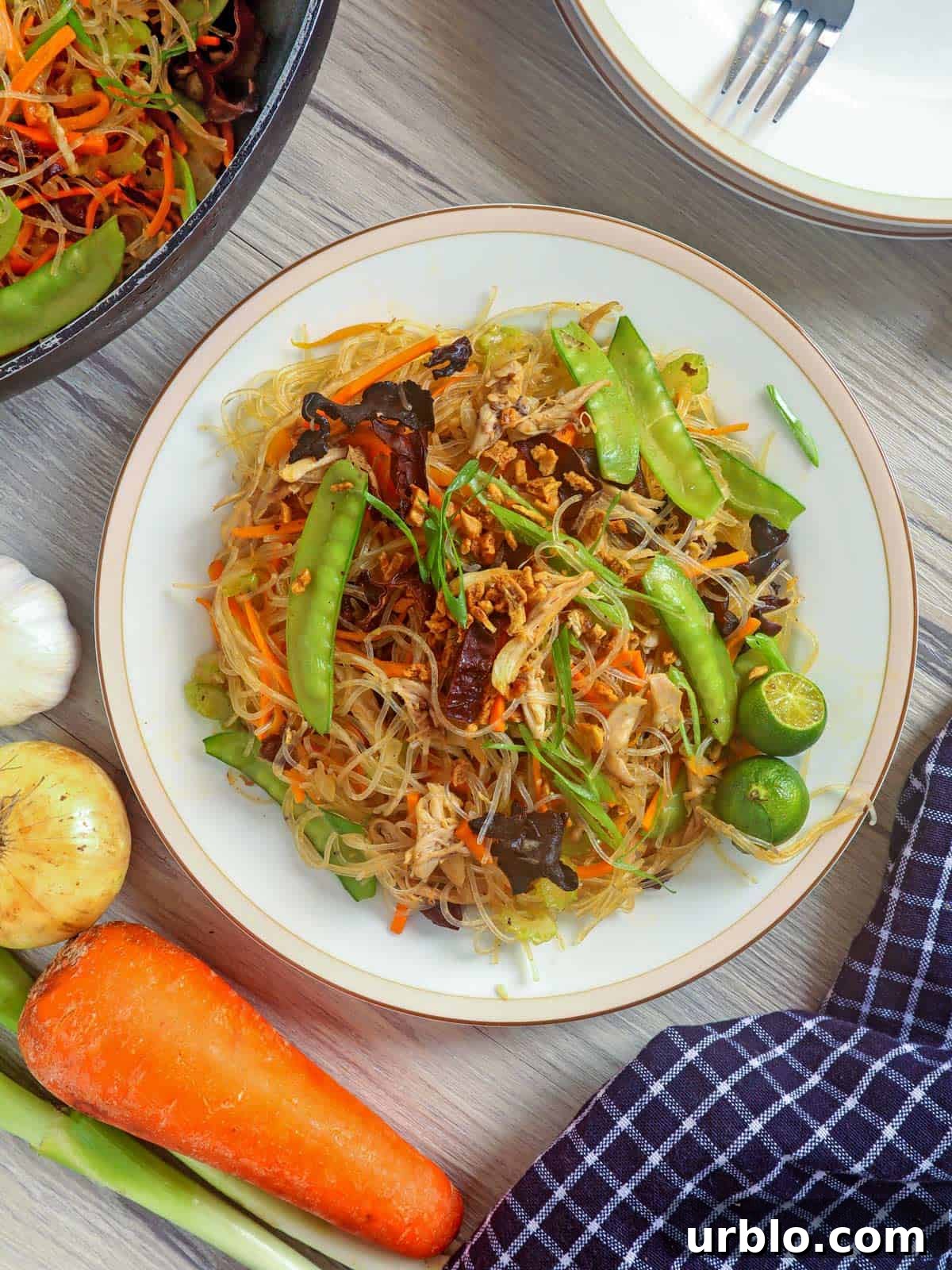
Pancit Sotanghon
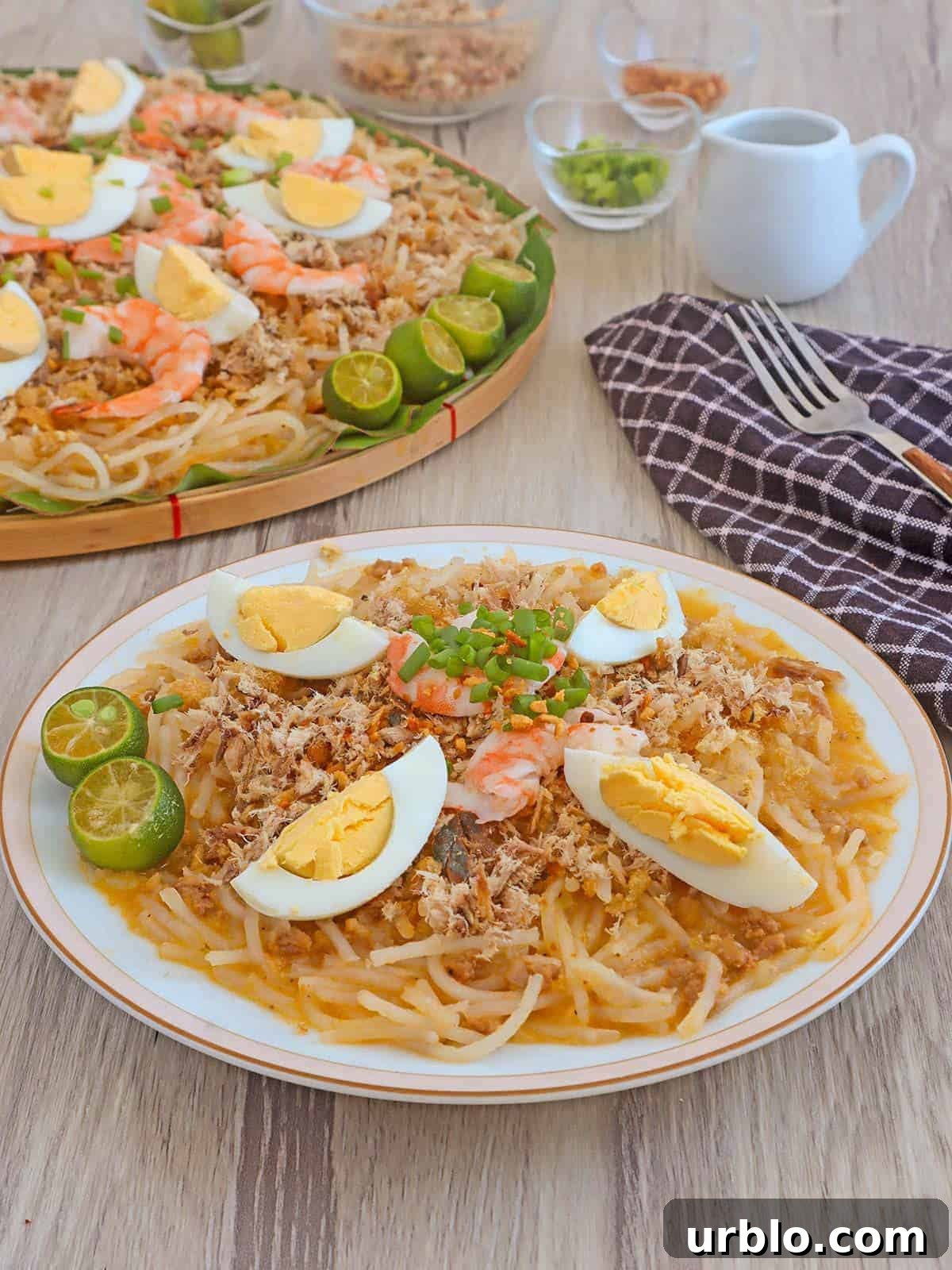
Easy Pancit Luglug
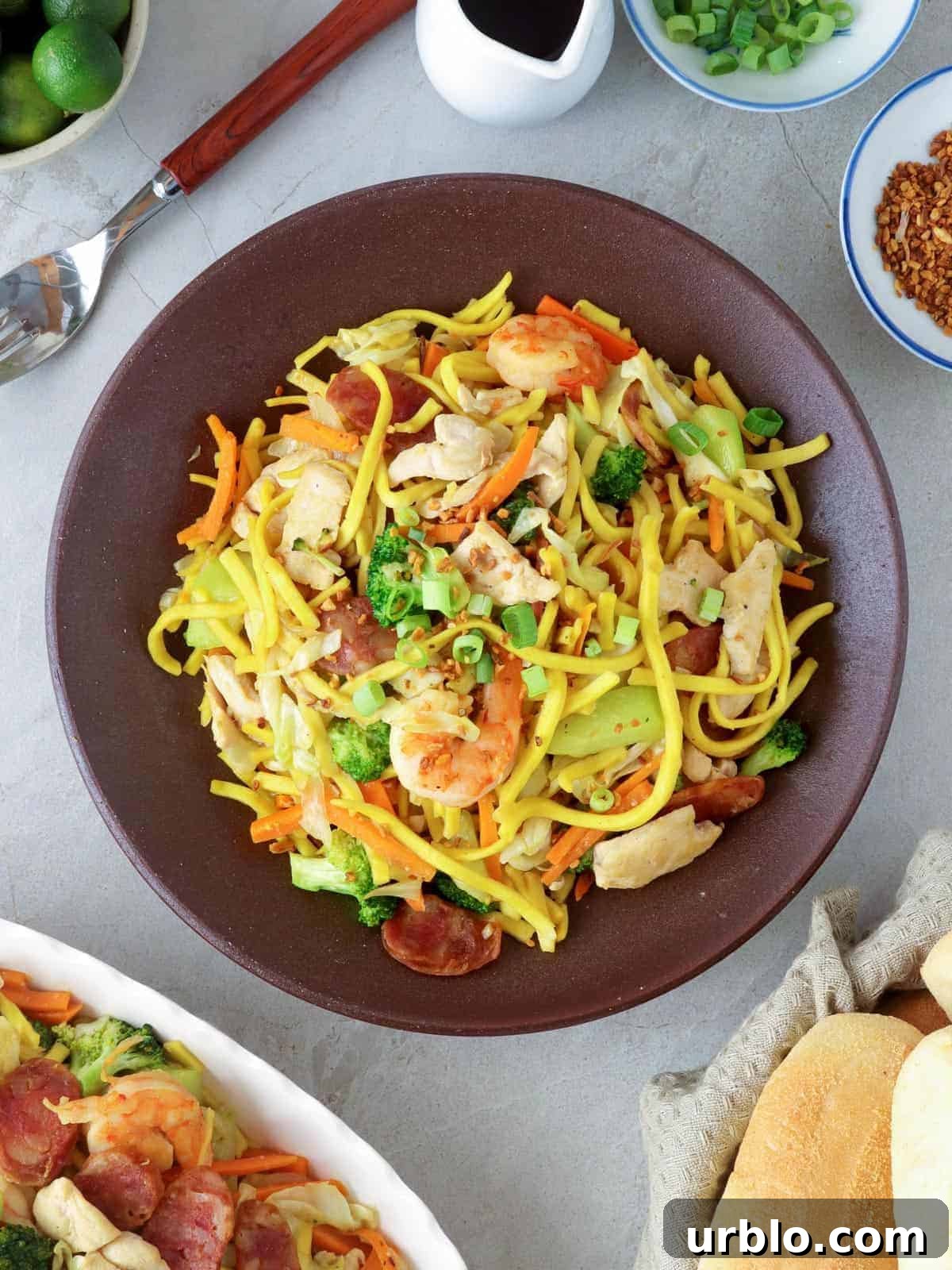
Pancit Lomi Guisado
Pancit Upo
10 mins
20 mins
30 mins
Lalaine Manalo
Main Entree
Ingredients
- 1 tablespoon canola oil
- 1 onion, peeled and chopped
- 2 cloves garlic, peeled and minced
- ½ pound pork belly, cut into thin strips
- ½ teaspoon annatto powder
- 2 cups water
- 1 large upo, peeled and cut into strips (about 2 cups)
- 8 ounces pancit bihon (rice noodles)
- 2 tablespoons oyster sauce
- salt and pepper to taste
Instructions
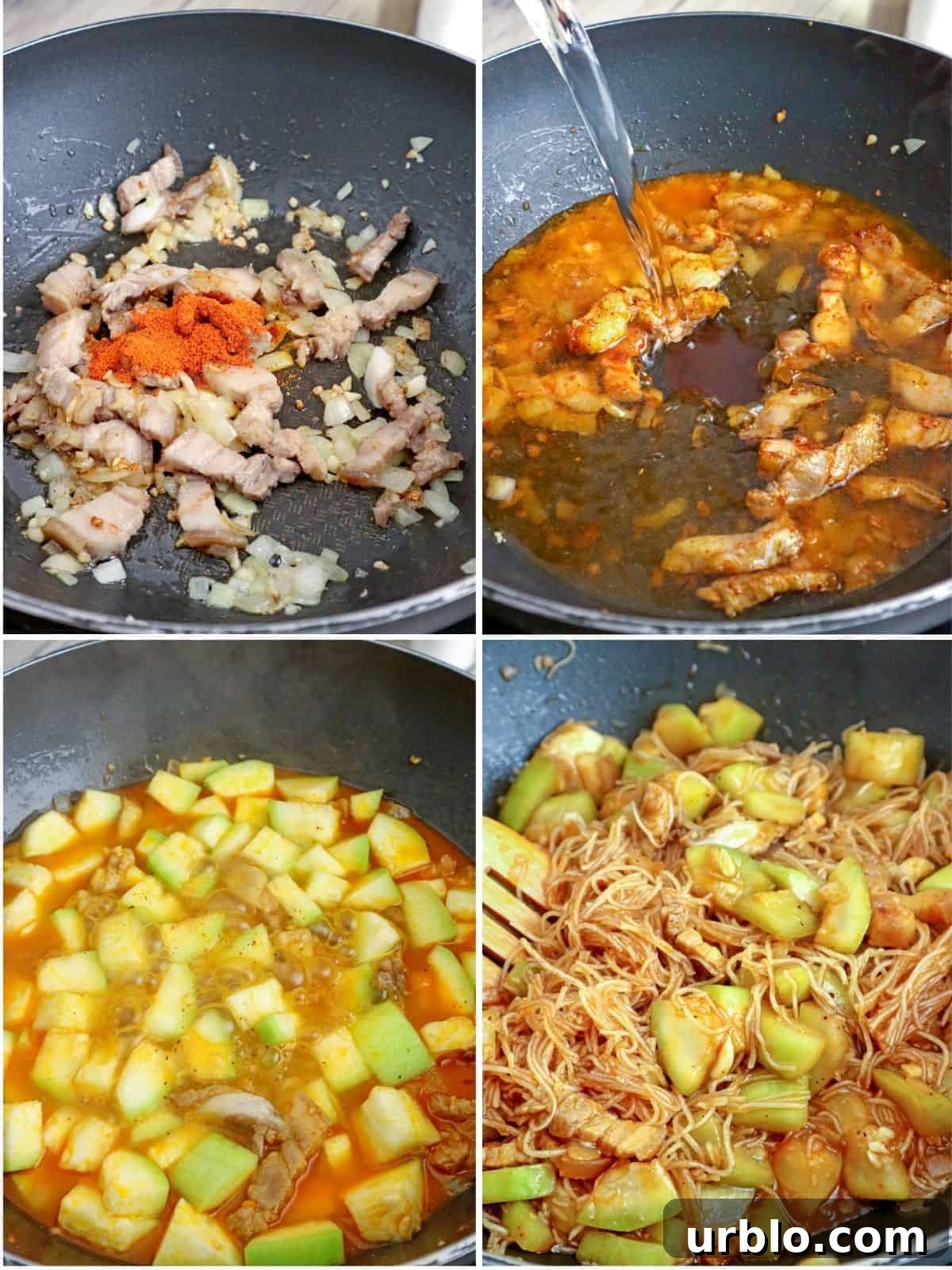
- In a wide pan or wok over medium heat, warm the oil. Add the chopped onion and minced garlic and cook until softened and fragrant.
- Add the pork strips and cook, stirring occasionally, until the meat is lightly browned.
- Sprinkle the annatto powder over the meat and stir to coat. The annatto adds a warm color and slight earthiness.
- Pour in the water and bring to a boil. Reduce the heat, cover the pan, and simmer until the meat is tender and the liquid has reduced to about 1 cup.
- Increase the heat to medium and add the upo strips. Cook for about 1 to 2 minutes, until the upo is halfway tender but still slightly crisp.
- Add the soaked or softened rice noodles and toss gently to separate and combine with the other ingredients.
- Stir in the oyster sauce, distributing it evenly. Season with salt and pepper to taste.
- Continue cooking, stirring regularly, for about 3 to 5 minutes or until the noodles are cooked through, the upo is tender but not mushy, and most of the liquid has been absorbed.
- Serve hot, finishing each plate with a squeeze of fresh calamansi or lemon if desired.
Notes
- Trim and cut meat into uniform pieces for even cooking.
- Soak the rice noodles a bit longer than package instructions to ensure they finish cooking when added to the pan; add them when the upo is about halfway done.
Nutrition Information
,
Carbohydrates: 34 g
,
Protein: 5 g
,
Fat: 22 g