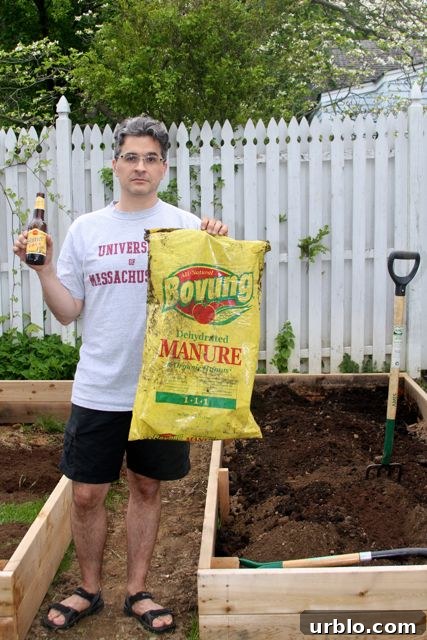
Paleo gardening, for me, means building raised vegetable beds and reconnecting with practical, hands-on work. I’ve always found working with my hands calming and satisfying. While I can handle small household repairs, larger projects that require carpentry and power tools used to intimidate me. Growing up as a suburban homeowner meant I was more used to calling in experts—carpenters, plumbers, repairmen—when something needed fixing.
Everything changed the day my garage door fell apart. Predictably, I called a carpenter who showed up the next day and gave me a $9,000 estimate. I decided then and there to try the job myself. Armed with a pencil, paper, a tape measure and some basic math, I drew a plan, bought materials and, with a friend’s help on a sunny Saturday, built a simple barn-style door for under $200. It wasn’t complicated, and six years later that door still works perfectly.
More important than the cost savings was the confidence I gained. For the first time I felt genuinely handy. I enjoyed the entire process—from planning and purchasing to assembly—so when my wife asked me to build several raised garden beds in our backyard, I dove into the project eagerly.
I began with a blueprint. After finding a simple, sturdy design online, I measured the yard and calculated the lumber needed for three 10′ x 4′ x 1′ raised planter boxes. We chose cedar for durability and because it resists rot; important note: never use pressure-treated wood for food-growing beds, as chemicals can leach into the soil. The lumber cost about $500 from a local yard.
When the cedar arrived, I sorted the planks by size and moved everything to the backyard. I checked the cuts first and discovered several pieces were not cut to the correct length. Using my neighbor’s mitre saw I trimmed them to the proper dimensions.
I started assembling the frames right away, but made the common beginner’s mistake of not pre-drilling and countersinking all the screw holes. Instead I drilled and countersank one hole at a time while holding the planks in position, repeatedly switching bits on the drill. It was slower and more tedious than necessary, but I managed to finish the first bed within a couple of hours while working on a pair of sawhorses.
Applying lessons learned from the first box, I pre-drilled and countersunk the holes for the remaining two beds before assembly. That simple step cut the time dramatically—beds two and three went together in about the same time it took to complete the first one.
With the boxes assembled, the next task was setting them in place. I initially measured and dug post holes using a post-hole digger, carefully spacing the centers of the 4″x4″ corner posts. Digging those holes was hard work and, frustratingly, I discovered one hole was a few inches off when I tried to lower a bed into place. I had to widen and adjust the hole. For the remaining beds I positioned the assembled boxes, sprayed bright yellow paint around the post locations to mark exact spots, and then dug. That approach worked perfectly and saved time and effort.
An experienced carpenter might not have made those small errors, but the mistakes were valuable learning experiences. I gained practical skills, improved my technique, and ended up with three sturdy raised beds that my wife and I are both pleased with.
You may wonder what makes this project “Paleo.” To me, several aspects fit that description. First is the back-to-basics satisfaction of working with your hands. Doing physical, purposeful work connects you to more traditional ways of living. Working with wood is especially gratifying: it’s a natural, versatile material that has served people for millennia—tools, shelters, fires, and countless other uses—and cedar also smells great.
There’s also the physical benefit. Paleolithic people didn’t exercise in gyms; their daily tasks were laborious, functional and physically engaging. The best kind of exercise, in my view, is the kind that doesn’t feel like exercise because it’s useful and absorbing. Working close to the soil and creating a structure to grow organic food ties the project directly to nourishing the body. Finally, the creative challenge—figuring things out, measuring, adjusting and improving—stimulates the mind and builds confidence.
All of that together—the manual labor, the use of natural materials, the practical purpose and the creative learning—feels very much in line with a Paleo approach to living. The raised beds are practical, personal and rooted in simple craftsmanship.