
This Honey Butter Sourdough Focaccia Bread combines the tender, buttery layers of dinner rolls with the crisp edges of focaccia. The result is a flaky, rich interior with a crunchy exterior—that irresistible combination makes it a family favorite.
Inspired by a sourdough croissant loaf, this focaccia gets laminated with grated butter during bulk fermentation for layered texture, then finished with a warm honey drizzle. Serve it warm, tear it apart, and enjoy how quickly it disappears.

Why You’ll Love Honey Butter Focaccia
- Texture – Crispy edges and a soft, buttery center for a perfect contrast.
- Flavor – Rich butter, a hint of honey in the dough, flaky sea salt on top, and a warm honey drizzle finish.
- Simple method – No elaborate shaping required: mix, lamination through stretch-and-folds, proof in the pan, then bake.
- Versatile – Sweet and savory balance makes it a great base for additions or variations.
New to sourdough? If you’re starting out, make a sourdough starter and follow a beginner guide to learn the basics. Naturally fermented sourdough takes longer but adds depth of flavor and fermentation benefits.
Important Ingredients
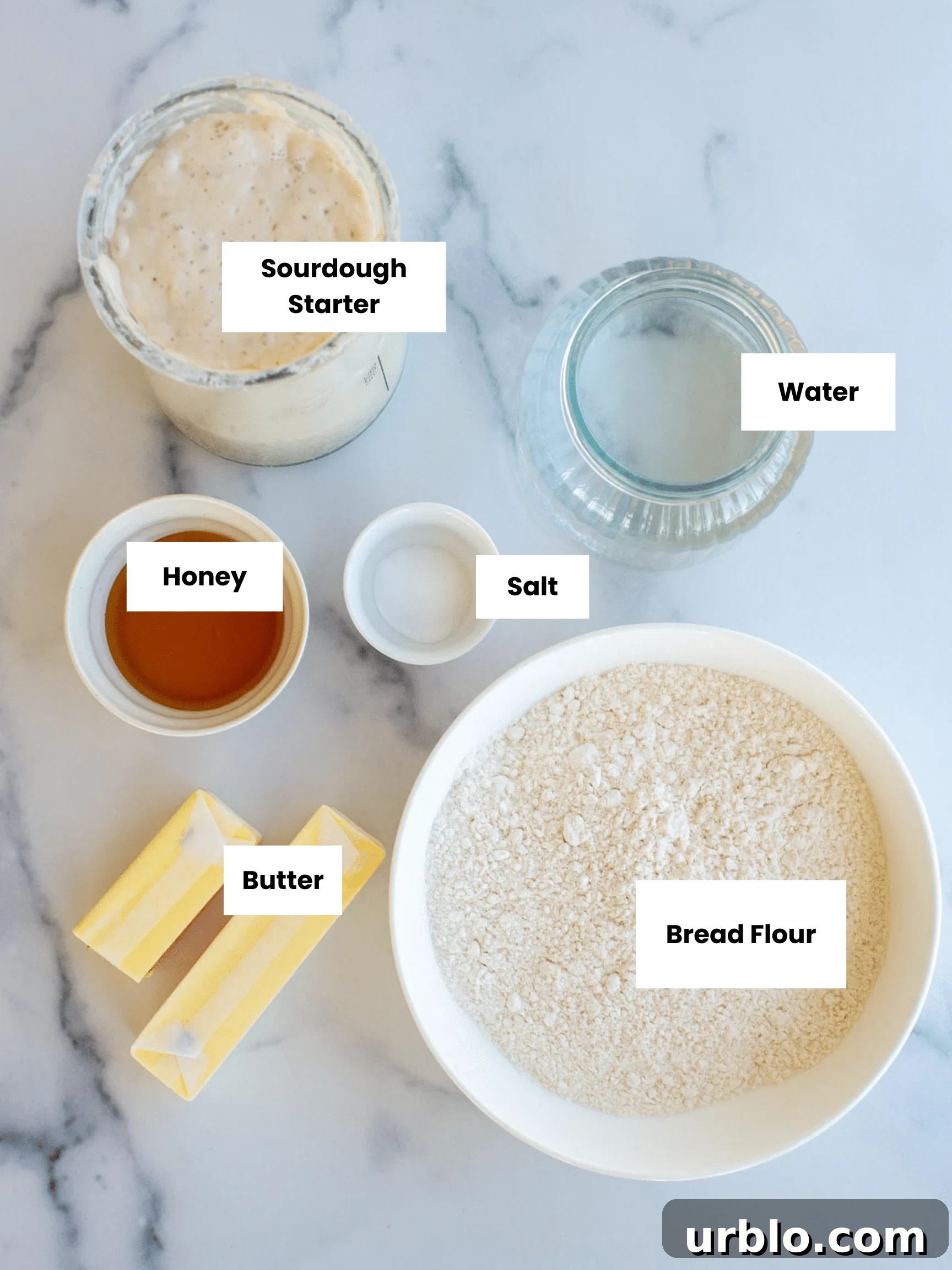
- Levain – A small build of active sourdough starter, flour, and water that ferments until bubbly and ripe.
- Unsalted butter – Chilled or frozen and grated into the dough to create flaky layers. Salted butter can be used if preferred.
- Honey – A little in the dough and more for drizzling on the hot focaccia to make a honey-butter glaze.
See the recipe card below for exact quantities and full ingredient list.
Substitutions
- Levain: Substitute equal weight of active, bubbly sourdough starter if you prefer.
- Butter: Salted butter is fine; American and European-style butter both work, with slight differences in texture.
- Flour: All-purpose can replace bread flour—reduce water by about 20 grams when doing so.
- Salt: Finish with flaky sea salt for added texture and flavor if available.
- Honey: Omit if you want a purely savory focaccia; increase water to 375–400 g to compensate.
- Add-ins: This dough is an excellent base for herbs, cheese, or other inclusions added during folds or before shaping.
Sourdough Baker’s Timeline
Sourdough takes longer than commercial yeast bread. The timeline below reflects working at a cool dough temperature to keep butter chilled while allowing the dough to ferment.
Note: Aim for a dough temperature around 70–72°F so the butter stays cold enough to create flaky layers while the dough slowly rises.
| Day 1 | Mix Levain |
| 8:00 PM – 8:00 AM | Mix the levain and let it ferment at 78°F for 10–12 hours until doubled and bubbly. |
| Day 2 | Mix Dough / Bulk Fermentation / Lamination / Proof / Bake |
| 7:00 AM | Mix the dough and begin bulk fermentation. |
| 7:30–9:00 AM | Perform a series of stretch-and-folds and incorporate grated butter in stages. |
| 9:00 AM – 11:00 AM | Continue bulk fermentation at 70–72°F. |
| 11:00 AM – 6:00 PM | Transfer dough to the pan and proof at 70–72°F until puffy and jiggly. |
| 6:00 PM | Dimple the dough and bake. |

How to Make Honey Butter Sourdough Focaccia
Mix the Levain
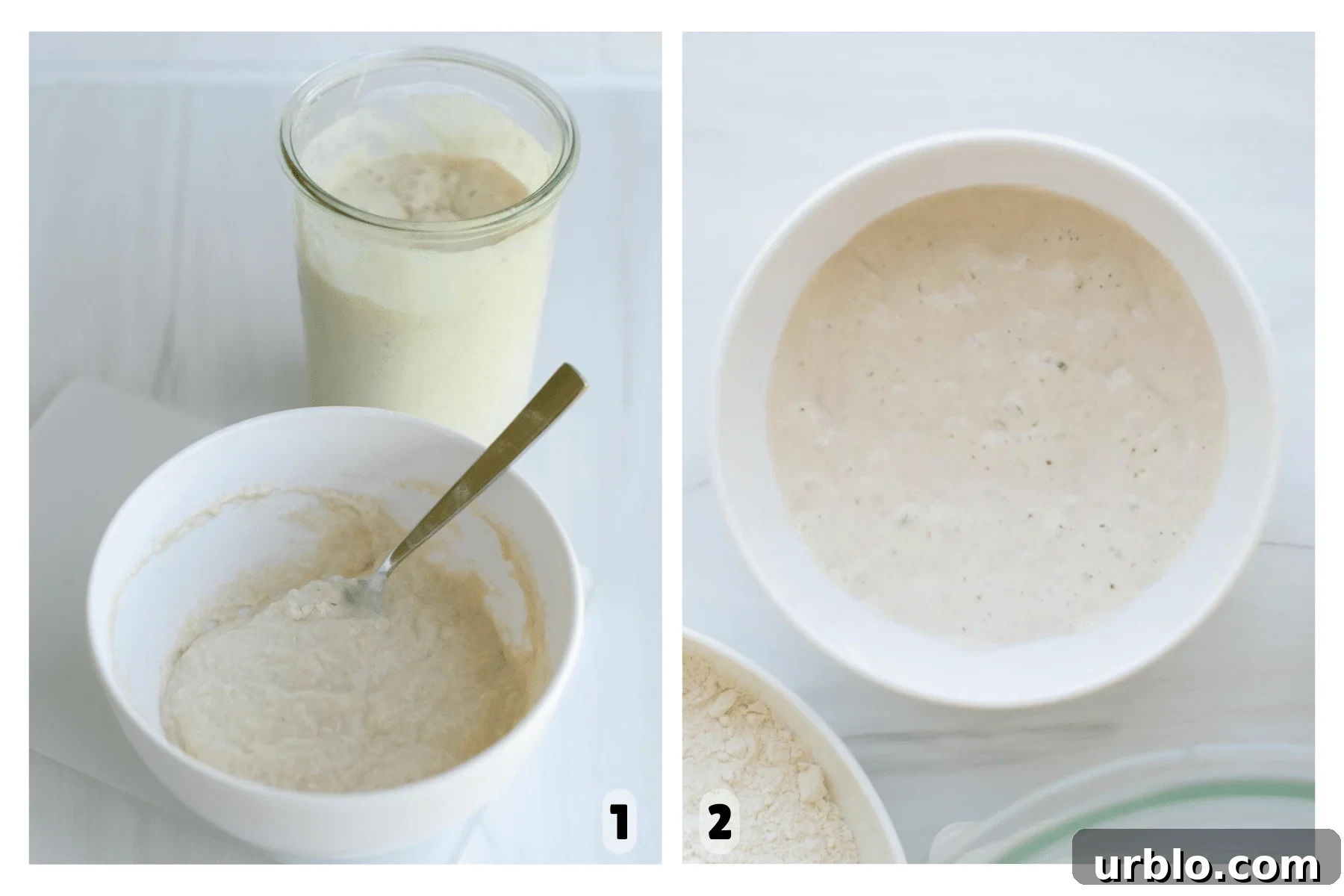
Step 1: Mix the levain. Combine ripe sourdough starter with water and flour. Let it ferment until bubbly and active.
Mix Dough & Bulk Fermentation
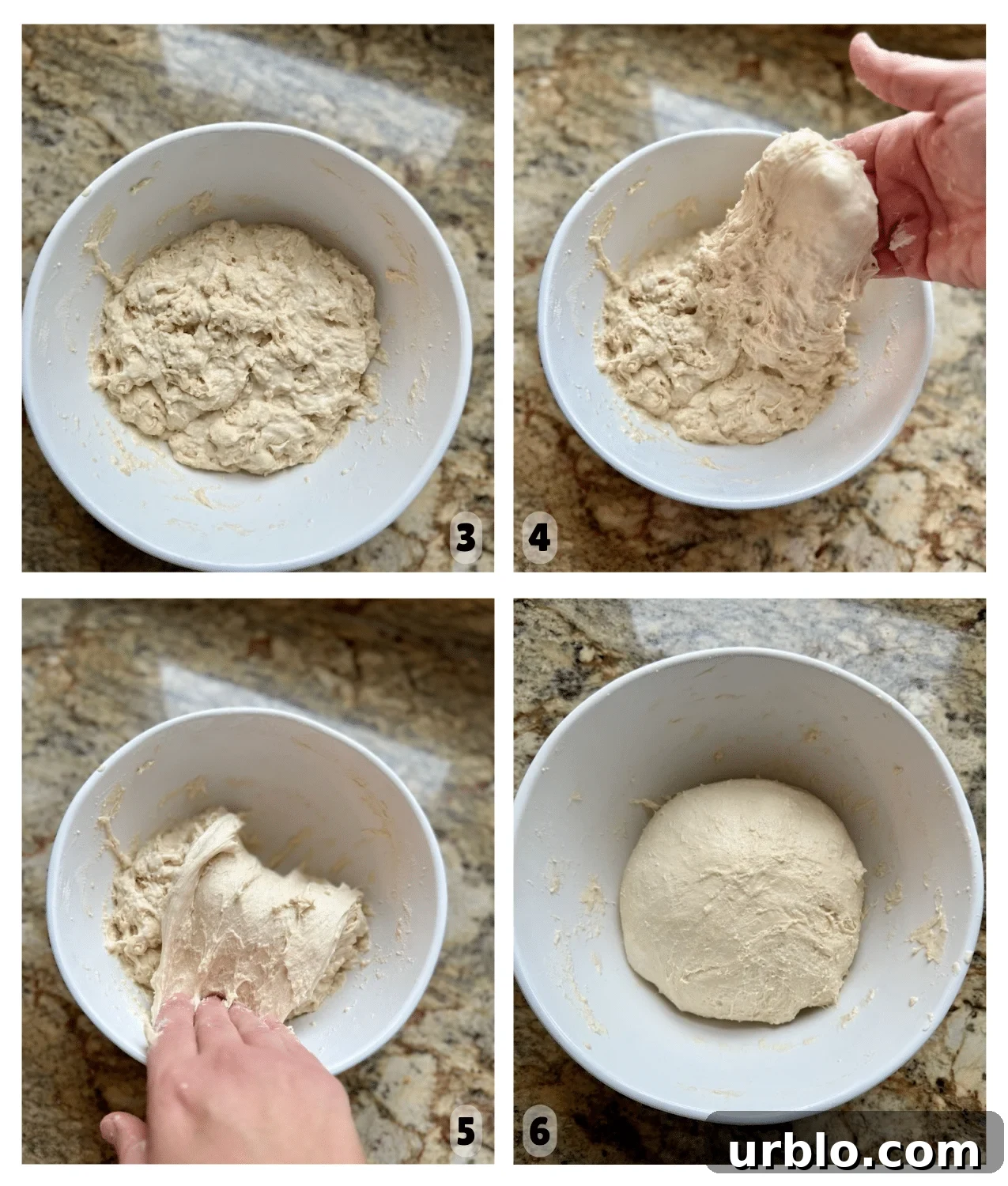
Step 2: Mix dough. Combine levain, water, honey, salt, and bread flour until a shaggy, sticky dough forms. Cover and rest 30 minutes.
Step 3: Strengthen the dough. Over 1½ hours, perform several rounds of stretch-and-folds (or coil folds) every 30 minutes. During the second fold, grate chilled butter and add half; add the remaining butter at the third fold. This disperses butter flakes throughout the dough to create laminations.
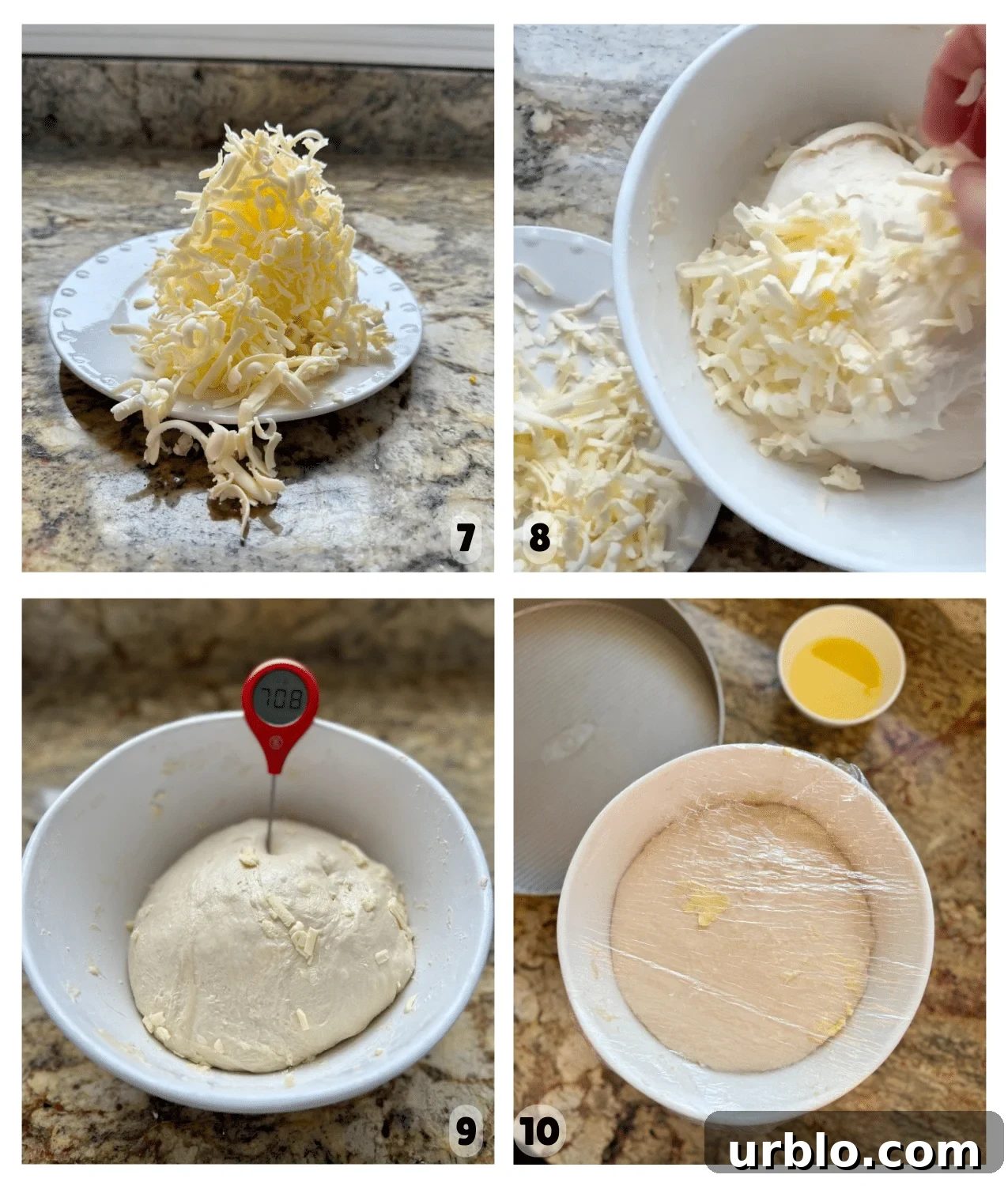
Step 4: After the final folds, let the dough rest for about 2 hours before transferring to the pan. You can refrigerate the dough in the pan for a slow overnight proof if you want to break the process across days.
Shaping the Dough
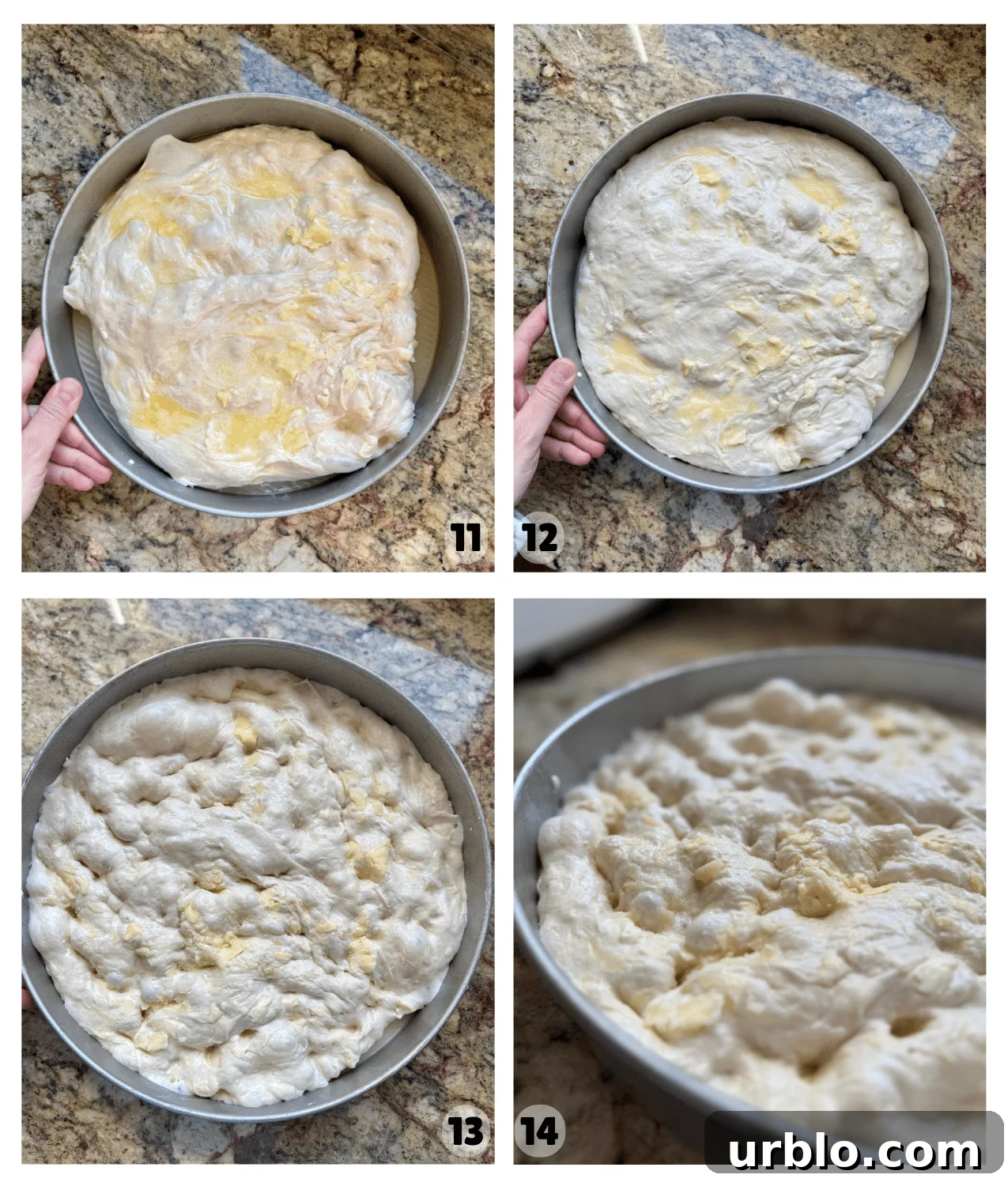
Step 5: Prepare the pan. Pour about 40 g (3 tbsp) melted butter into the pan and spread it across the bottom. Turn the dough into the pan and gently stretch to fit. Drizzle about 30 g melted butter over the top and spread it evenly.
Step 6: Proof. Proof the dough at 70–72°F for 6–8 hours until it fills the pan and feels light and airy. Keep temperatures below 75°F so the butter doesn’t soften and leak. Once proofed, dimple the dough with your fingers.
Bake the Focaccia
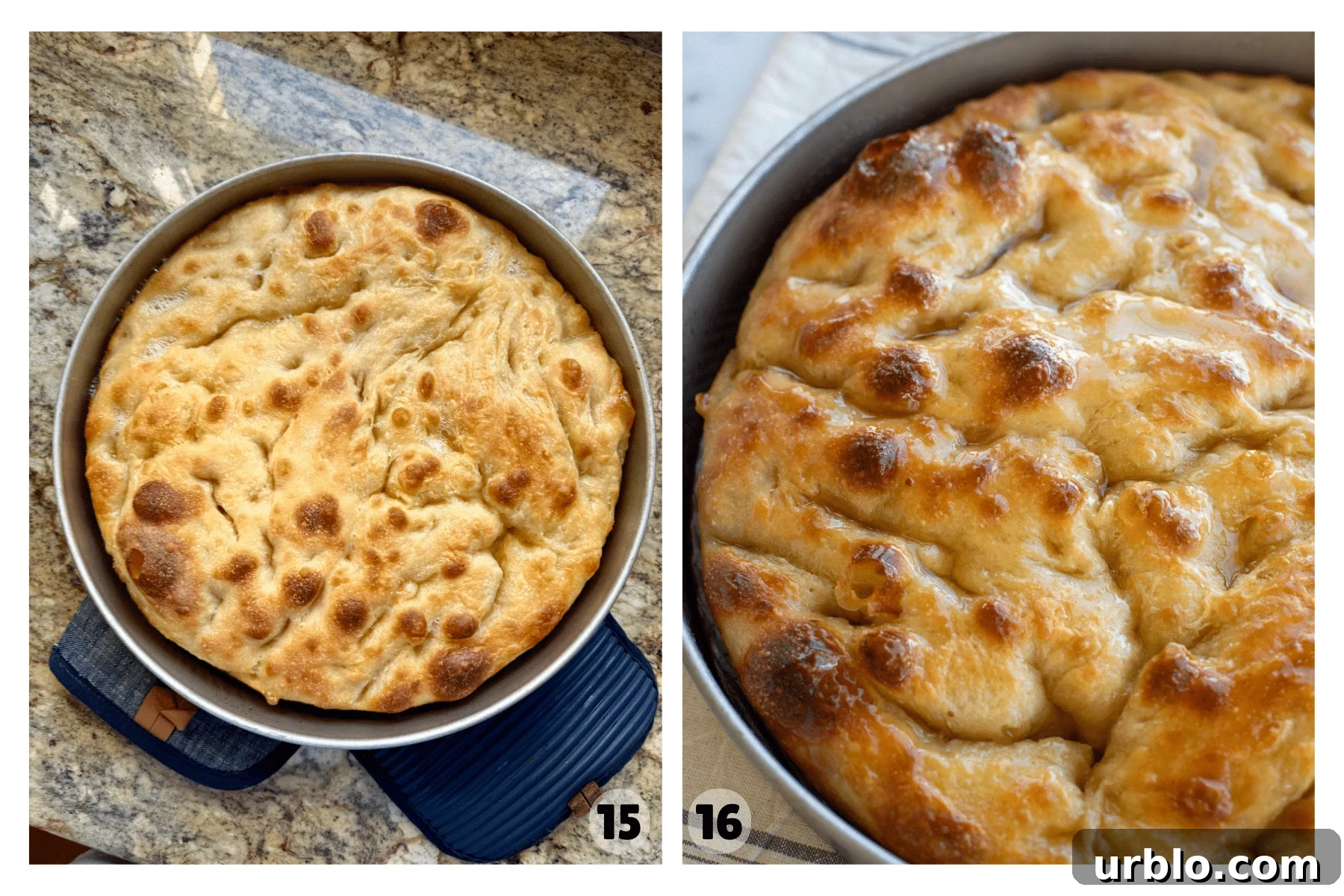
Step 7: Bake. Preheat the oven to 425°F. Bake 25–30 minutes until bubbly and golden with crisp edges. As soon as it comes out, drizzle warm honey over the focaccia and brush it into the melted butter on the surface. Let it sit in the pan 5–10 minutes, then transfer to a wire rack to cool slightly and serve warm.
How to Store Leftovers
Store at room temperature for up to 24 hours. After that, keep in an airtight container or freeze for a couple of months. Reheat slices in the oven to restore crispness before serving.
Amy’s Recipe Tips
- Control temperature: Keep dough around 70–72°F so it rises while the butter remains chilled. Avoid going above 75°F.
- Incorporate butter during folds: Add grated butter during stretch-and-folds so it laminates through the dough; don’t try to laminate it in at the end.
- Be patient with proof: The cooler process takes longer—allow the dough to nearly double in the pan for a light, airy crumb.
- Finish with honey: Drizzling honey right from the oven combines with the melted butter to make a delicious honey-butter topping.
Frequently Asked Questions
This is usually a pan issue. Use a reliable non-stick metal pan, or line the pan with parchment before adding dough. Metal pans help create crisp edges.
Yes. Reduce water by about 20 grams since all-purpose flour absorbs less water than bread flour.
Yes. Add inclusions (herbs, cheese, olives, nuts, etc.) during the 3rd or 4th fold or laminate them in before shaping.
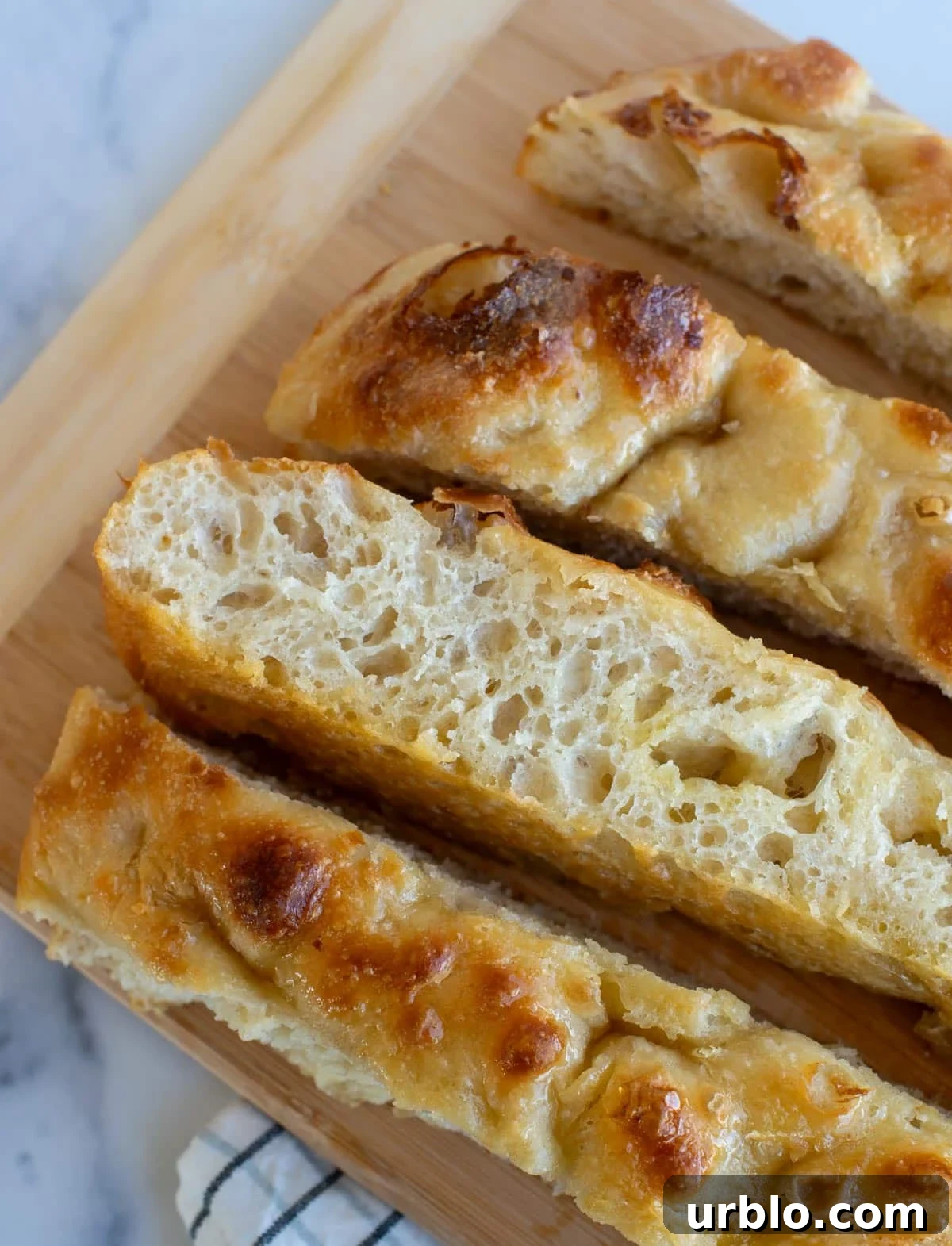
If you try this Honey Butter Sourdough Focaccia Bread, leave a star rating and share how it went in the comments. Happy baking!

Honey Butter Sourdough Focaccia
Equipment
- Kitchen scale
- Grater
- 12-inch metal pan (or 9×13), metal preferred
- Basic sourdough tools (bench scraper, thermometer, etc.)
Ingredients
Levain
- 6 g ripe, active sourdough starter
- 60 g water
- 60 g all-purpose or bread flour
Dough
- 120 g ripe levain (bubbly and active)
- 350 g water
- 50 g honey
- 10 g salt
- 500 g bread flour
- 113 g unsalted butter, chilled or frozen (for laminating)
- 70 g unsalted butter, melted (reserved for pan)
- 40–60 g honey for drizzling
Instructions
Levain
- Mix starter, flour, and water. Cover and let sit 10–12 hours at 78–80°F until doubled and bubbly.
Honey Butter Sourdough Focaccia
- Mix dough: Combine levain, water, and honey. Add salt and bread flour. Mix until homogenous, cover, and rest 30 minutes.
- Folds and butter: Over 1½ hours perform stretch-and-folds every 30 minutes. At the second fold, grate and add half the chilled butter; add the rest at the third fold.
- Bulk rest: After the final fold, let the dough rest about 2 hours, then prepare the pan.
- Prepare pan and proof: Pour 40 g melted butter in the pan, transfer dough, stretch to fit, and drizzle 30 g melted butter on top. Cover and proof at 70–72°F for 7–9 hours until doubled, airy, and jiggly.
- Preheat and dimple: Preheat oven to 425°F. Gently dimple the dough with your fingers.
- Bake: Bake 25–30 minutes until golden and crispy. Immediately drizzle 40–60 g honey over the hot focaccia and brush it into the melted butter. Let rest 5–10 minutes in the pan, then transfer to a rack to cool.
Notes
Temperature: Keep dough around 70–72°F so the butter stays in flaky pieces while the dough ferments. If the dough gets warm, chill briefly in the fridge and resume once it’s cooled.
Levain: If you have a ripe, active starter fed 1:1, it can substitute for the levain by equal weight.
Butter: Expect some butter leakage during baking; proper incorporation and proofing minimize this. Use parchment or a Dutch oven if needed to contain excess butter.
Nutrition
Nutrition info is an approximation.