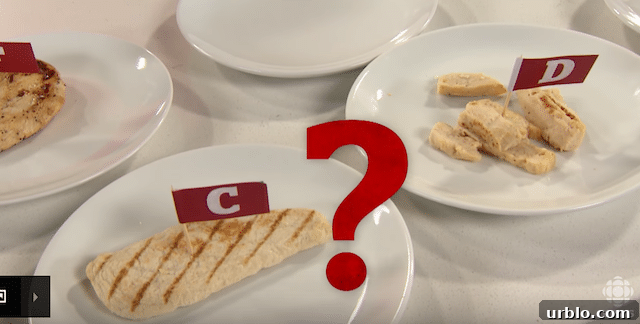
Many people pick grilled chicken sandwiches at fast food restaurants thinking they’re choosing a healthier option. As a dietitian, I’m concerned that consumers don’t always know the risks of eating too much fast food grilled chicken breast. Is fast food grilled chicken truly healthy? What’s actually in it, and how do those ingredients change its nutritional value?
CBC Marketplace investigated seemingly healthy grilled chicken breast at major fast food chains. They sent samples to independent labs for DNA and nutritional analysis, and contacted the restaurants for ingredient lists and nutrition information for their chicken sandwiches. Marketplace also consulted a food scientist to explain why certain ingredients are added during production.
I worked with the Marketplace team as their nutrition expert to flag concerns, interpret the lab results, and guide questions for the food scientist. I was already aware of questionable ingredients used in frozen and food-service chicken, but I wanted to see which chains used the least-processed options.
Is Fast Food Grilled Chicken Healthy?
Fast food grilled chicken often differs significantly from a home-cooked chicken breast. Many chains add ingredients to preserve moisture, improve texture, and withstand freezing and reheating. Those additives change the nutritional profile and can make the product less healthy than it appears.
I also appeared on CBC News Network to discuss the Marketplace grilled chicken investigation and the nutrition findings.
Rubber Chicken, Anyone?
If your fast food chicken has a rubbery texture or seems unusually tender, it’s likely been treated with additives and processes that home-cooked chicken hasn’t. These treatments help the product retain moisture during freezing, storage, and reheating, but they also reduce nutritional quality and often add unwanted ingredients.
Fast Food Companies are Misleading You with “Healthy” and “Natural” 100% Chicken Breast
Labels like “100% white meat” or marketing terms such as “natural” and “fresh” can create a health halo that makes consumers assume the product is wholesome. Legally, however, some regulations allow products with surprisingly low percentages of actual chicken protein to be labeled as chicken. That gap between marketing and reality can mislead people trying to make better choices.
As a dietitian, I find it troubling when well-meaning consumers think they’re choosing healthier options based on marketing rather than ingredient lists and nutrition facts.
Fast food grilled chicken breast is NOT the same as home-cooked chicken.
The “Big 3” Sketchy Ingredients in Fast Food Chicken
Several added ingredients can make fast food grilled chicken less healthy. I call these the “Big 3” to watch for: 1) Sodium; 2) Phosphate additives; 3) Sugars and starches.
1. Sodium
High sodium intake increases the risk of high blood pressure and can stress the kidneys. Compared to the same serving of home-cooked chicken breast, some fast food samples contained seven to ten times more sodium. In some cases, a chicken sandwich had as much sodium as a cheeseburger with fries—around 1,000 mg or roughly two-thirds of the recommended daily limit. That’s far from a heart-healthy choice.
2. Phosphate Additives
Phosphate additives help proteins bind water, making chicken appear juicier and plumper. However, there are growing concerns about potential health effects when consumed in large amounts, including impacts on blood vessels and bone health. Current research shows associations rather than firm cause-and-effect, but the trends are worrying enough to recommend limiting exposure.
Phosphate content is not listed on standard nutrition labels, making it hard to know how much you’re consuming—especially important for people with chronic kidney disease who must limit dietary phosphate.
- In the tested samples, only one of six fast food products did not list phosphate additives. Read ingredient lists carefully.
- Tip to avoid phosphate additives: Any ingredient name containing “phos” (P-H-O-S) is likely a phosphate additive—look for alternatives without these ingredients.
3. Sugars and Starches
Added sugars and starches—maltodextrin, corn starch, sugar, malt, and similar ingredients—show up in many fast food grilled chicken products. While home-cooked chicken contains essentially zero carbohydrates, some fast food samples derived up to 10% of their calories from these added carbs. Placed on a bun with sugary sauces, that chicken becomes the fast-carb equivalent of eating multiple slices of bread in one meal, which can adversely affect blood sugar and insulin levels.
Fast Food Grilled Chicken: Lower in Protein than Home-Cooked
On average, fast food chicken samples provided about three-quarters the protein of a home-cooked chicken breast. Additives, sugars, and starches dilute the protein content, and some chains use soy or other proteins in their marinades to boost numbers. Long ingredient lists and fillers explain much of that difference.
DNA Test Reveals Subway Grilled Chicken is Less Than 50% Chicken
Independent DNA testing in the Marketplace investigation found one chain’s grilled chicken tested at less than 50% chicken by DNA analysis. That result led to public controversy and legal threats. My view: these findings exposed a low-quality product and highlighted the need for clearer standards and more transparent labeling.
Tips For Choosing Healthier Fast Food Grilled Chicken
Given the issues above, you might avoid fast food grilled chicken when possible. But if you need to eat on the go, use these tips to make a better choice:
- Choose grilled, unbreaded chicken to reduce calories, oil, and refined carbs.
- Check ingredient lists and avoid products that include phosphate additives.
- Look at the nutrition facts and aim for meals with under 400 mg of sodium when possible.
Take Action for Healthier Chicken!
If you’re concerned about ingredients or labeling standards, consider contacting fast food companies or your local food regulatory agency to express your desire for clearer labeling and higher standards. The most reliable approach for healthier chicken is to cook at home when you can—prepare batches of plain grilled or roasted chicken breasts to use in sandwiches, salads, pasta, and other recipes throughout the week.
Do you have any surprises or reactions to learning what’s in fast food grilled chicken? Share your thoughts in the comments below.