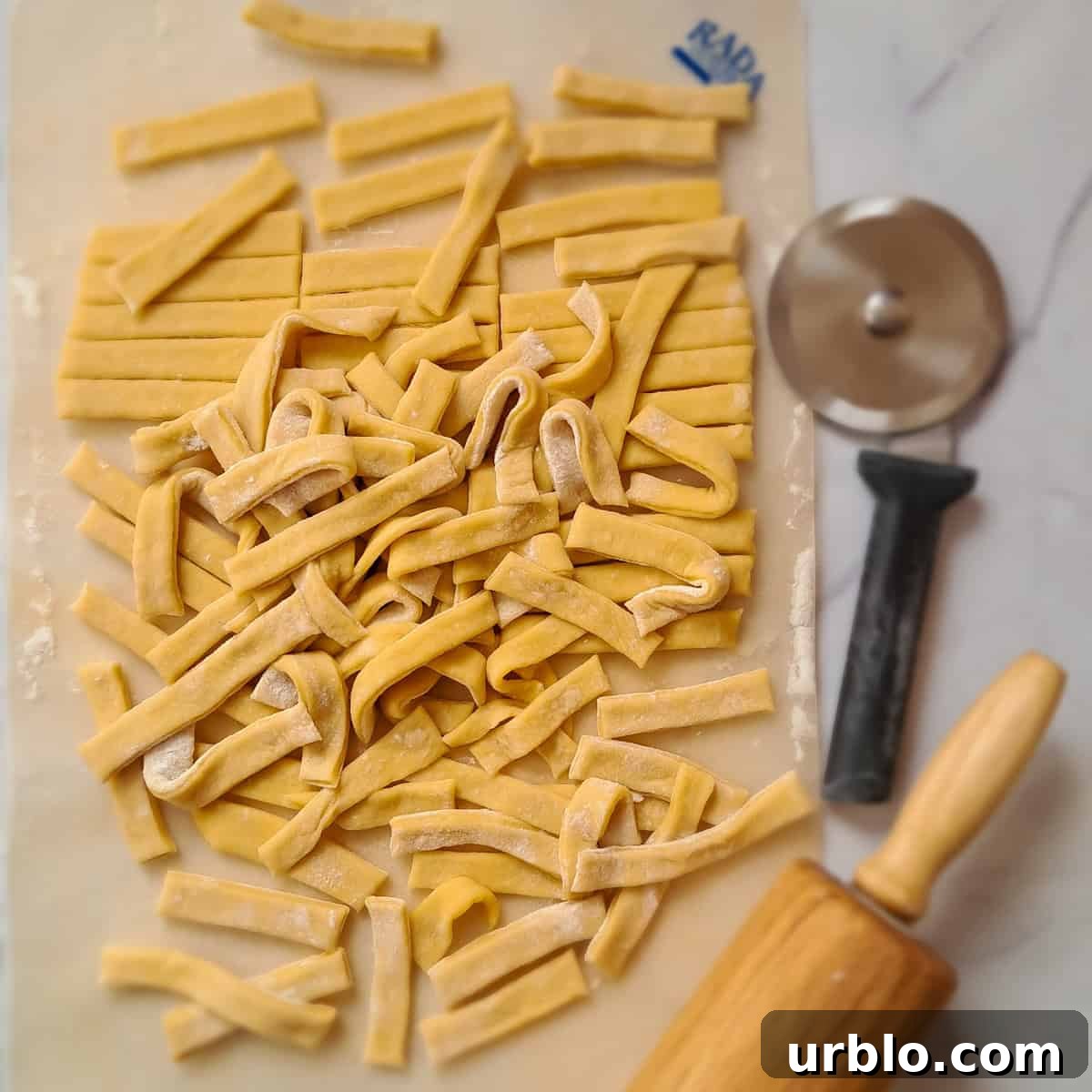
Amish Egg Noodles are a comforting, old-fashioned staple that’s easy to make at home. These homemade Amish noodles are tender with a slight chew and a rich, golden color. They work wonderfully in chicken and noodles, hearty soups, casseroles, or simply tossed with butter. With just a few pantry ingredients you likely already have, you can prepare noodles that taste fresher and richer than store-bought versions.
Making homemade egg noodles requires only simple steps: mix, knead, roll, and cut. You can cook them right away, let them dry for later use, or freeze them for convenience. They hold up well in broths and baked dishes when made at the right thickness.
[feast_advanced_jump_to]
Why Make Homemade Amish Noodles When You Can Just Buy Them?
- Budget-friendly: Eggs, flour, and a pinch of salt cost less than many packaged noodles.
- Fresh flavor: Fresh noodles simmered in a homemade chicken broth have a depth of flavor you won’t get from dried store-bought pasta.
- Customizable: Cut them thick or thin and adjust the dough richness by varying yolks and whole eggs to suit your dish.
How to Make Egg Noodles From Scratch
Step-by-step instructions and tips for beginners:
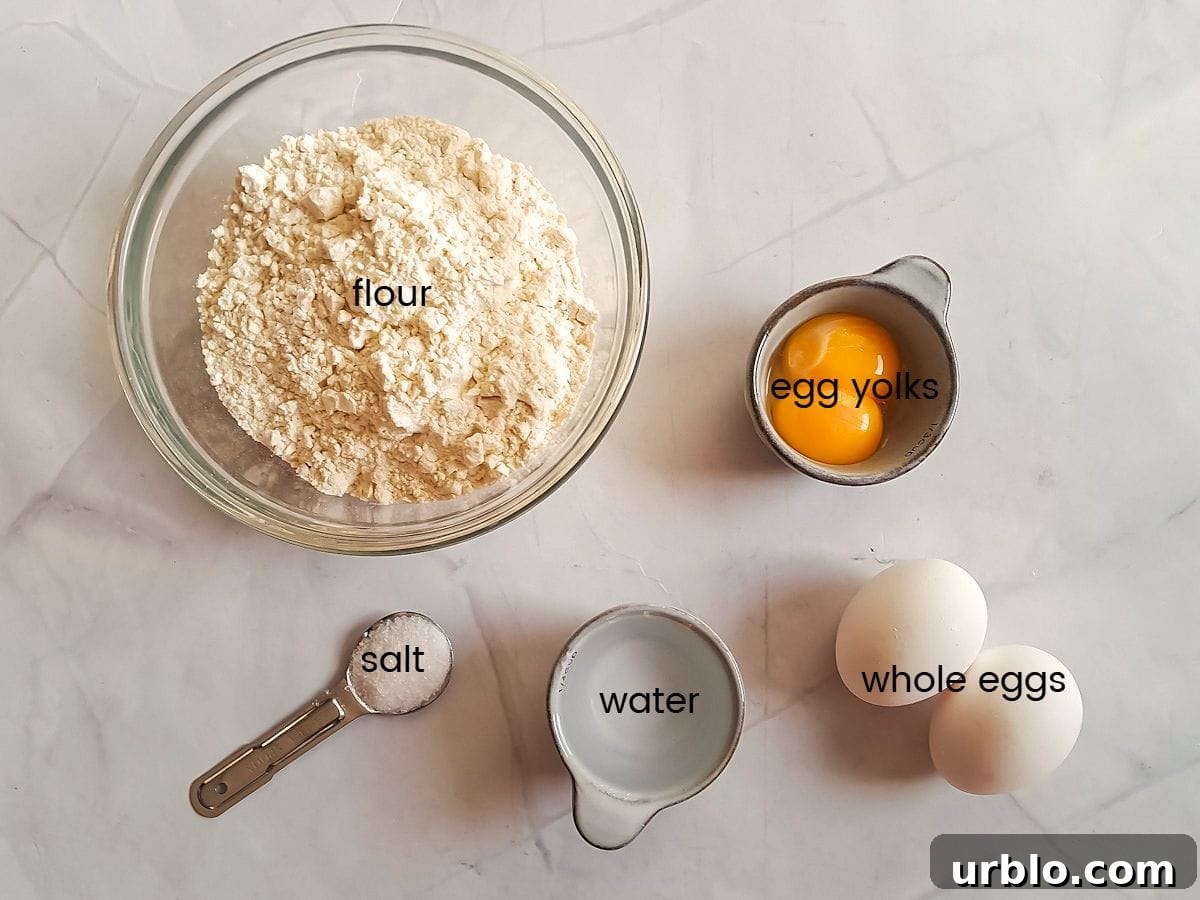
- Mix the wet ingredients
- Whisk the eggs, additional yolks, water, and salt in a large bowl until blended.
- Tip: Whisking thoroughly helps the dough come together more quickly.
- Using 2 whole eggs plus 2 extra yolks gives a nice balance of tenderness and richness. You can use all yolks for a firmer noodle or all whole eggs for a softer one.
- Whisk the eggs, additional yolks, water, and salt in a large bowl until blended.
- Add flour to form the dough
- Stir in about 1½ cups of flour to start with a wooden spoon until a shaggy dough forms. Add more flour gradually until the dough is soft but not sticky.
- Turn out and knead
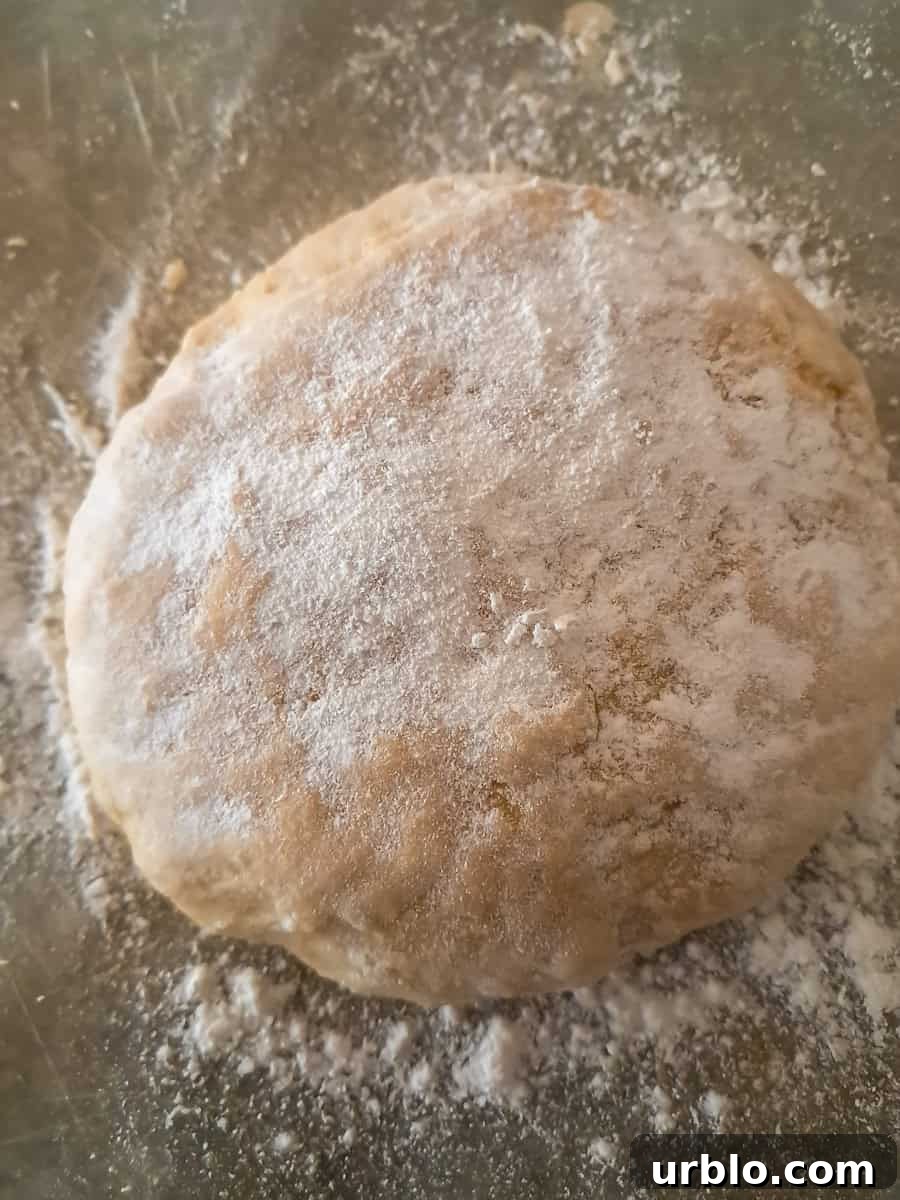
- Turn the dough onto a lightly floured surface and knead for a couple of minutes until smooth and slightly springy.
- Kneading develops gluten so the noodles hold together and have good texture.
- Tip: Avoid adding too much flour—over-flouring will make the noodles tough. If sticky, add a tablespoon of flour at a time; if too dry, dampen your hands and knead to bring it together.
- Kneading develops gluten so the noodles hold together and have good texture.
- Turn the dough onto a lightly floured surface and knead for a couple of minutes until smooth and slightly springy.
- Rest the dough
- Cover the dough with a clean towel or plastic wrap and let it rest 15–20 minutes.
- Why: Resting relaxes the gluten so the dough rolls out without tearing. In a dry kitchen, cover with a damp towel to prevent a crust.
- Cover the dough with a clean towel or plastic wrap and let it rest 15–20 minutes.
- Divide the dough (optional)
- Divide into two pieces for easier rolling. Keep unused portions covered while you work.
- Roll the dough
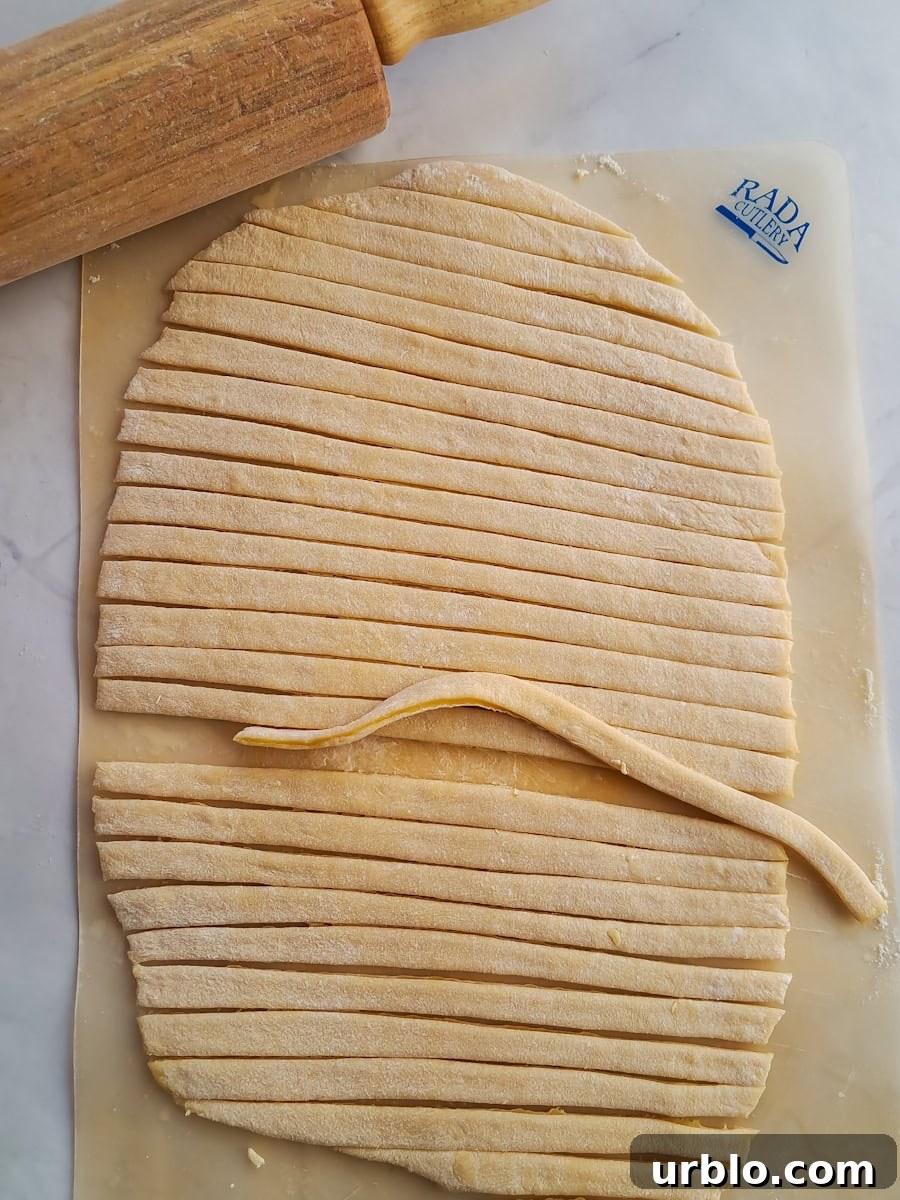
- Roll on a lightly floured surface to about 1/8 inch thick for classic Amish noodles. Too thin will turn mushy; too thick will be chewy. Aim for even thickness across the sheet.
- If using a pasta machine: Start at the widest setting and decrease one notch at a time until you reach the desired thickness.
- Cut the noodles
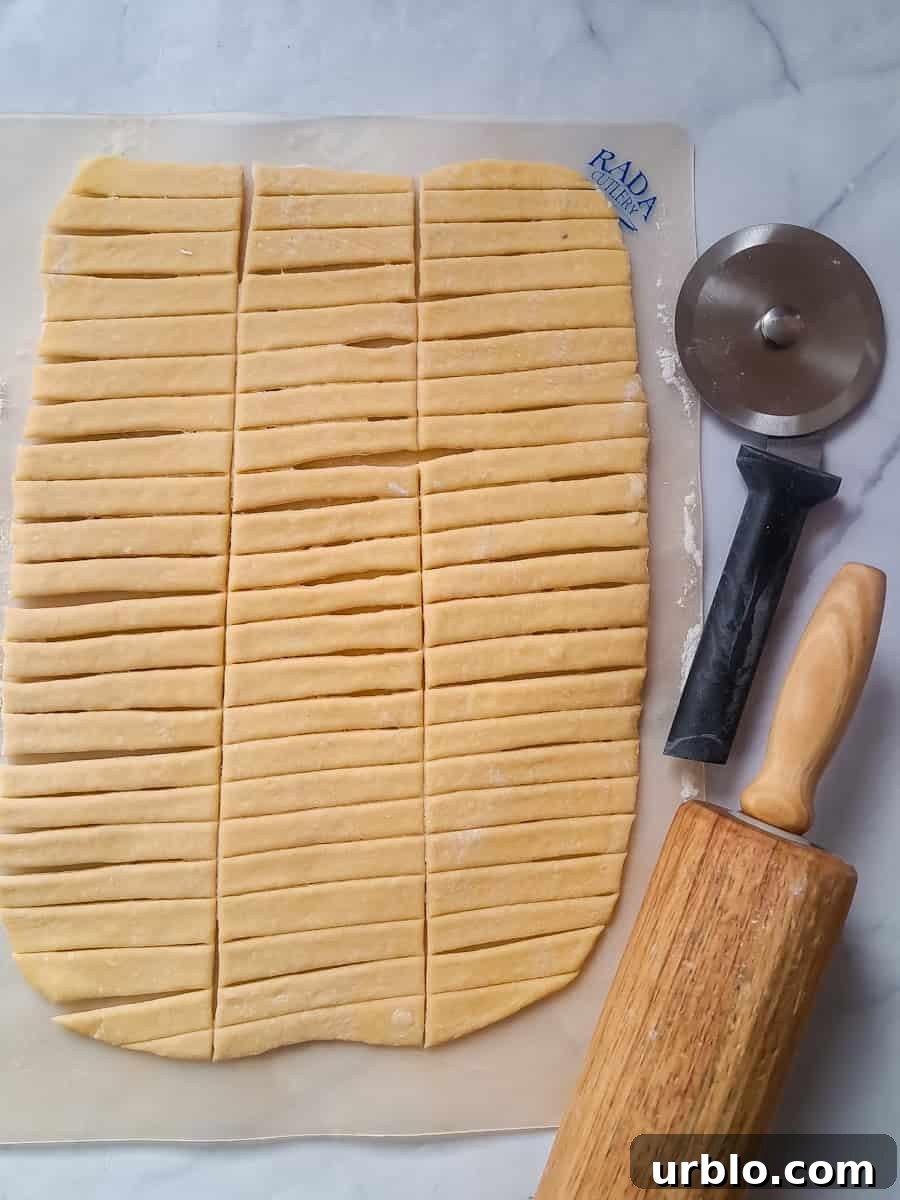
- Use a sharp knife or pizza cutter to slice even strips. Dust lightly with flour to prevent sticking.
- Dry slightly before cooking (optional)
- For immediate use, let cut noodles rest 10–30 minutes on a floured towel to lose surface tack.
- Cook
- Drop noodles into simmering broth or boiling water and cook 8–15 minutes depending on thickness, until tender but still slightly firm in the center.
How to Dry Amish Egg Noodles for Room-Temperature Storage
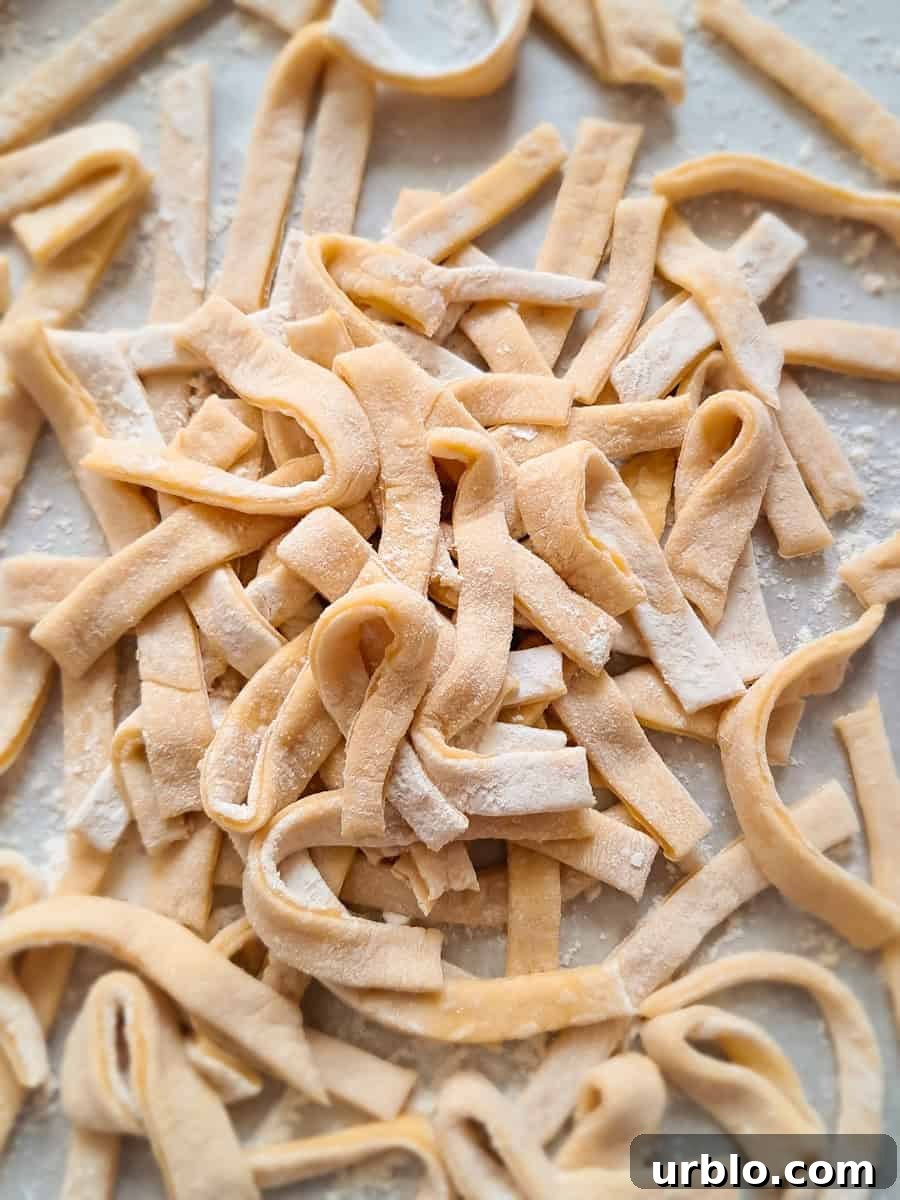
- Spread the noodles in a single layer
Place them on a clean tea towel, baking sheet, or drying rack so air can circulate and they dry evenly. - Let them dry completely
Drying usually takes 12–24 hours, depending on thickness and kitchen humidity.- They should feel brittle and snap cleanly when dry.
- If they bend instead of snapping, they need more time.
- Store in an airtight container
Once fully dry, keep noodles in a glass jar, airtight container, or zip-top bag. - Shelf life
Properly dried noodles will keep 2–3 months at room temperature.
Important notes:
- Dry in a well-ventilated area rather than a tight, warm spot—good airflow is essential.
- Ensure noodles are completely dry before storing to prevent mold.
Freezing Homemade Noodles
- Flash freeze the noodles by arranging them in a single layer on a parchment-lined baking sheet so they don’t stick together.
- Freeze for 30–60 minutes until firm.
- Transfer frozen noodles to an airtight bag or container, label with the date, and store up to 2 months.
- To use, drop frozen noodles directly into simmering broth—no thawing required; add a couple extra minutes to the cook time.
Tips for success:
- Ensure pieces are separated before flash freezing to avoid clumps.
- Lightly flouring the noodles before freezing helps prevent sticking.
Troubleshooting Guide for Perfect Amish Noodles
1. Rolling too thin
- Problem: Noodles become mushy and tear in soups.
- Solution: Roll to about 1/8 inch thick and dust lightly with flour to prevent sticking.
2. Rolling too thick
- Problem: Noodles cook slowly, stay chewy, and can thicken the soup.
- Solution: Roll more evenly and trim thicker sections before cutting.
3. Sticking together
- Problem: Noodles clump when cutting, storing, or cooking.
- Solution: Dust lightly with flour, separate pieces before freezing, and stir gently as you add them to boiling liquid.
4. Uneven cooking
- Problem: Some pieces are tender while others are undercooked.
- Solution: Cut uniform strips and check doneness by tasting a noodle before removing from heat.
Frequently Asked Questions
Yes. All-purpose flour gives the traditional texture. Pastry flour yields slightly softer noodles, while whole wheat adds a nutty flavor but can make them heavier. If you try gluten-free blends, you may need to adjust the liquid to achieve the right dough consistency.
A finished Amish noodle will be tender but still slightly firm in the center. Taste a noodle: it should slide off the fork without feeling mushy. If you’re adding them to a casserole, undercook slightly since they will finish cooking in the dish.
After draining, toss lightly with a bit of butter or oil if not serving immediately. For noodles that will sit in soup, keep them slightly undercooked so they don’t stick together while resting in the broth.
Yes. Flash freeze noodles in a single layer, then transfer to airtight bags so they stay separated. Frozen noodles can be added straight to simmering liquid, though they may need a couple extra minutes to cook.
Amish Housewives Sell Homemade Noodles for Extra Cash
In many Amish communities, making and selling homemade noodles is a simple way to earn extra income. Families often sell eggs, produce, baked goods, and dried noodles to neighbors and visitors. Noodles are rolled, cut, and spread out to dry on tables or racks before being packaged for sale. This traditional practice helps support household needs and keeps old-fashioned techniques alive.
Homemade vs. Store-Bought: Easy Amish Recipes to Try at Home
- Homemade yogurt
- Simple oats and honey granola
- Homemade bread
- Flaky pie crust
- Chewy homemade caramels
- Canned pasta or pizza sauce
- Canned apple pie filling
Making Amish-style egg noodles at home may feel intimidating at first, but with a bit of practice you’ll produce soft, flavorful noodles that outshine most store-bought options. Serve them in old-fashioned chicken and noodles, a hearty soup, or simply tossed with brown butter for a satisfying side. Try a batch today—your family will appreciate the homemade difference.
Check out my YouTube channel at My Amish Heritage
📖 Recipe Card
Amish Egg Noodles (Homemade Amish Noodles Recipe)
Pin Recipe
Ingredients
- 2 large whole eggs
- 2 large egg yolks
- ¼ cup water
- 1 teaspoon salt
- approx. 2 cups all-purpose flour
Instructions
-
Whisk the whole eggs, yolks, water, and salt together until well combined.
-
Gradually stir in about 1½ cups of flour until a rough dough forms, then add more flour a little at a time until the dough is soft but not sticky.
-
Place the dough on a lightly floured surface and knead for a couple of minutes, adding flour only if it’s too sticky.
-
Cover with a damp towel or plastic wrap and let rest 15–20 minutes to relax the gluten.
-
Roll the dough to about 1/8-inch thickness on a floured surface. Adjust thickness to preference—around 1/8″ is ideal for soups and casseroles.
-
Cut into strips with a pizza cutter or sharp knife and dust lightly with flour to prevent sticking.
-
To cook immediately: Drop noodles into simmering broth or boiling water for approximately 10–15 minutes, depending on thickness, until tender.
-
To dry for pantry storage: Spread in a single layer on a floured towel or drying rack and air-dry 12–24 hours until brittle. Store in an airtight container up to 2 months.
-
To freeze: Flash freeze on a tray, then transfer to airtight bags and keep up to 2 months.
Notes
*Nutrition is approximate.