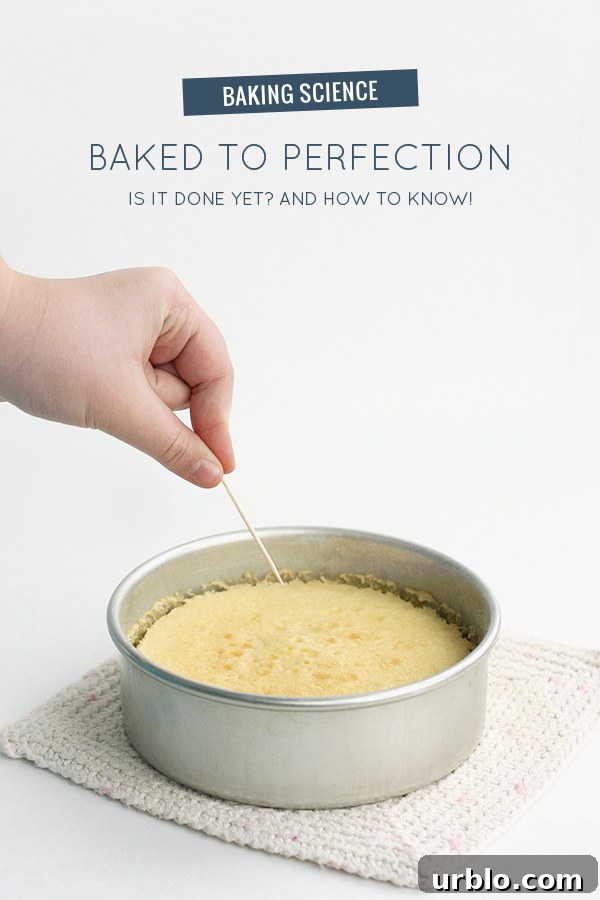
Baked to Perfection – how baking time affects cake moisture and structure.
A new baking science experiment by our contributor, Summer Stone-Polzel.
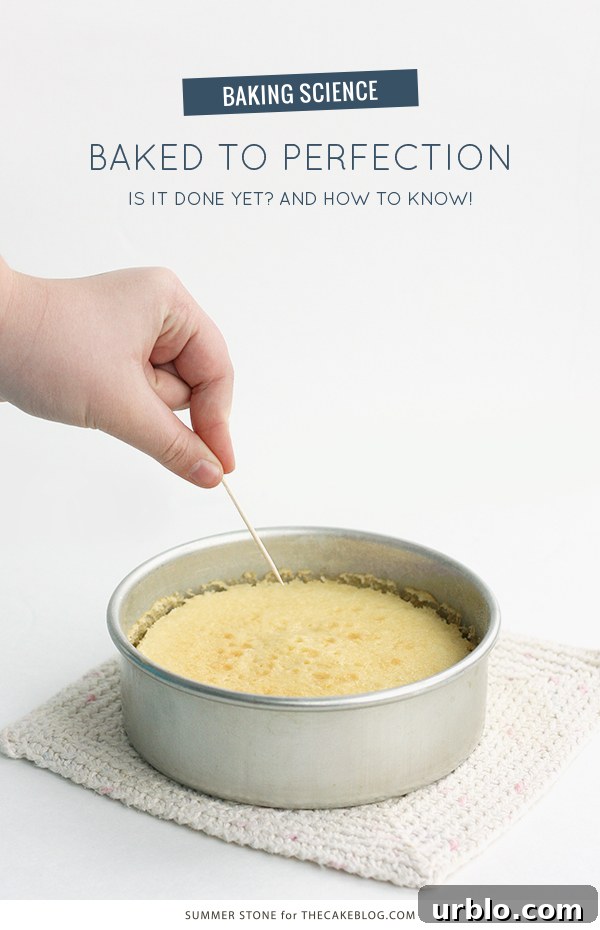
Do not overbake! That warning appears in countless cake recipes, but how dangerous is a few extra minutes in the oven? Curious about this, I tested the idea both practically and scientifically to determine how narrow the window is between underbaked and overbaked when it comes to moisture and structure.
Before diving into the experiment, it helps to understand what happens as a cake bakes. Cake baking is a series of overlapping chemical and physical changes that fall into three main phases: expansion, setting, and browning. Each phase depends on temperature and triggers distinct reactions that create rise, structure, and crust.
- Expansion Phase (around 140°F)
- Fats melt
- Gases expand
- Sugars dissolve
- Setting Phase (around 180°F)
- Proteins coagulate
- Starches gelatinize
- Browning Phase (surface temperatures near 250°F)
- Maillard reactions and caramelization create browning
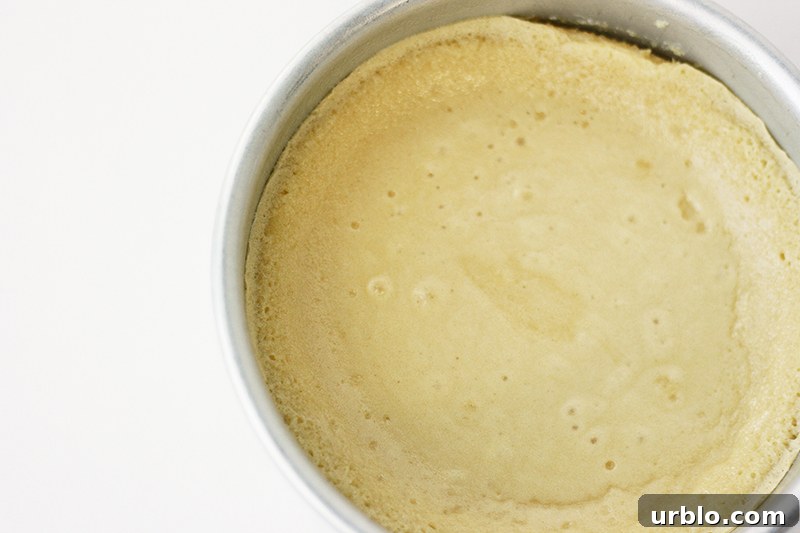
Early in baking, several critical processes occur even though the batter still looks runny. Fats melt and dissolved sugar coats proteins and starches, which helps tenderize and retain moisture. Air incorporated into the batter expands due to leaveners, and proteins begin to unfold—preparing them to form a stable network later.
During the setting phase the change is swift: unfolded proteins link together to form a scaffold while starches swell and fill spaces created by expanding gases. At this point the cake transitions from batter to a stable crumb. A toothpick inserted into the center will show minimal wet batter when the setting phase is complete.
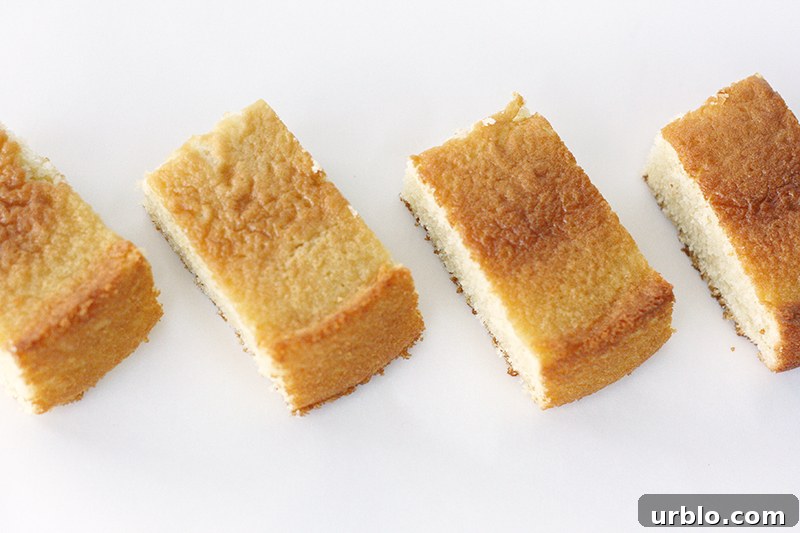
Browning is the final act and requires that surface moisture evaporate so the crust can climb to higher temperatures. Once surface temperatures reach roughly 250°F, Maillard reactions and caramelization begin, producing the familiar browned crust and associated flavors.
The Test
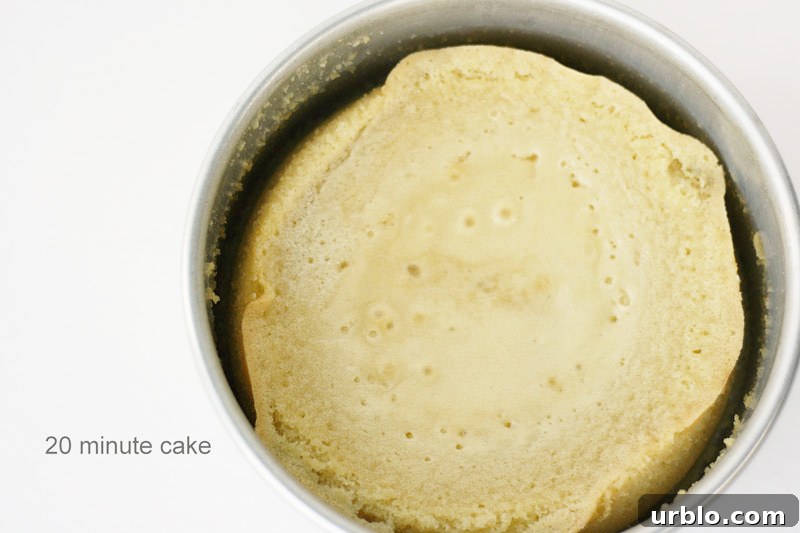
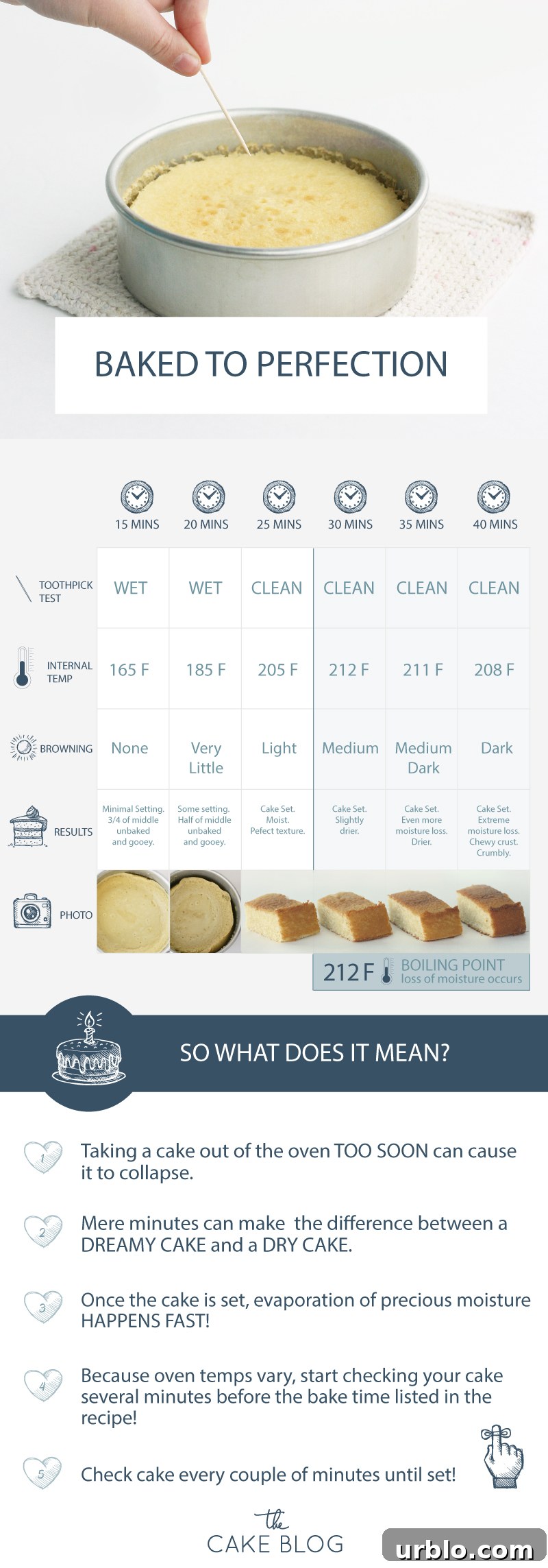
To pinpoint the best removal time, I baked six identical cakes, removing one every five minutes. The first cake came out after 15 minutes and the last at 40 minutes. For each cake I performed a toothpick test and recorded internal temperature to track structural and moisture changes.
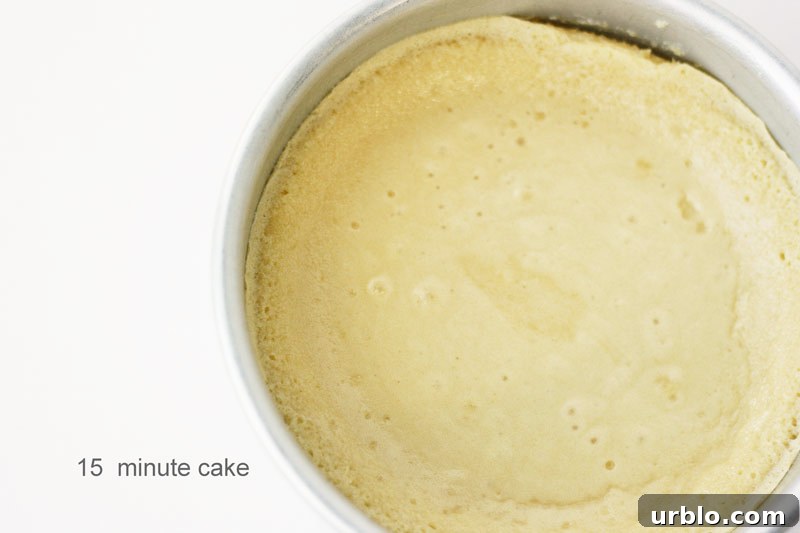
The earliest cakes (15 and 20 minutes) showed how slowly the initial mechanisms progress. While edges began to set, centers remained wet and in some spots still liquid. That wet center reflects melted fat, dissolved sugar, and unfolded proteins—but not yet the cross-linking and starch gelatinization that produce structure. Their internal temperatures—165°F and 185°F—confirmed they had not fully entered the setting stage.
At 25 minutes the cake’s structure had formed. Proteins had linked, starches had swollen to fill gaps, and the surface had dried enough for crust temperatures to start rising. This cake tested around 205°F—hot enough for structure but still below the boiling point of water, indicating retained internal moisture.
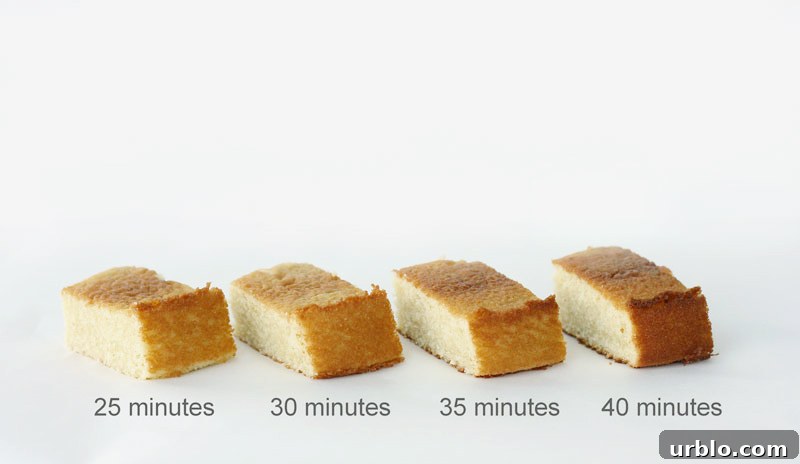
Because water boils at 212°F, a moist cake’s internal temperature will plateau near that point as water vaporizes. The cake at 30 minutes reached 212°F, signaling active internal moisture loss. Subsequent cakes showed slightly lower internal temperatures (211°F and 208°F), reflecting changes in composition as moisture escaped and the cake transitioned to a drier state.
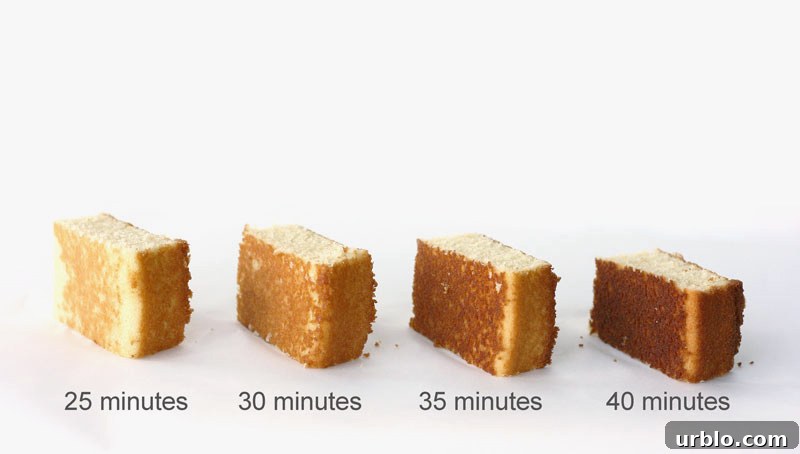
Moisture loss was also obvious to taste. The 25-minute cake was noticeably moist. Cakes removed later tasted progressively drier; the 40-minute cake had a dry, tough outer crust and a drier interior, with extra browning that lent a slightly bitter note typical of overcooking.
The Wrap Up
Does timing matter? Absolutely. This test showed that just five minutes can change a cake’s texture and moisture dramatically. Pull a cake too early and the structure is unstable and may collapse. Leave it in too long and evaporation quickly reduces moisture, producing a drier crumb and tougher crust.
Because oven temperatures vary, it’s wise to check cakes a few minutes before the recipe’s stated time and continue checking every couple of minutes until the cake shows signs of doneness: set edges, a springy center, and a toothpick that comes out with few crumbs. Paying attention to those cues is key to consistently baking moist, well-structured cakes.
YOU MAY ALSO ENJOY:
Is Your Oven Accurate? And Why It Matters!
Does Ingredient Temperature Matter?
Can You Overmix A Cake?
Does Sifting Make a Better Cake?
Mixing Up the Perfect Cake