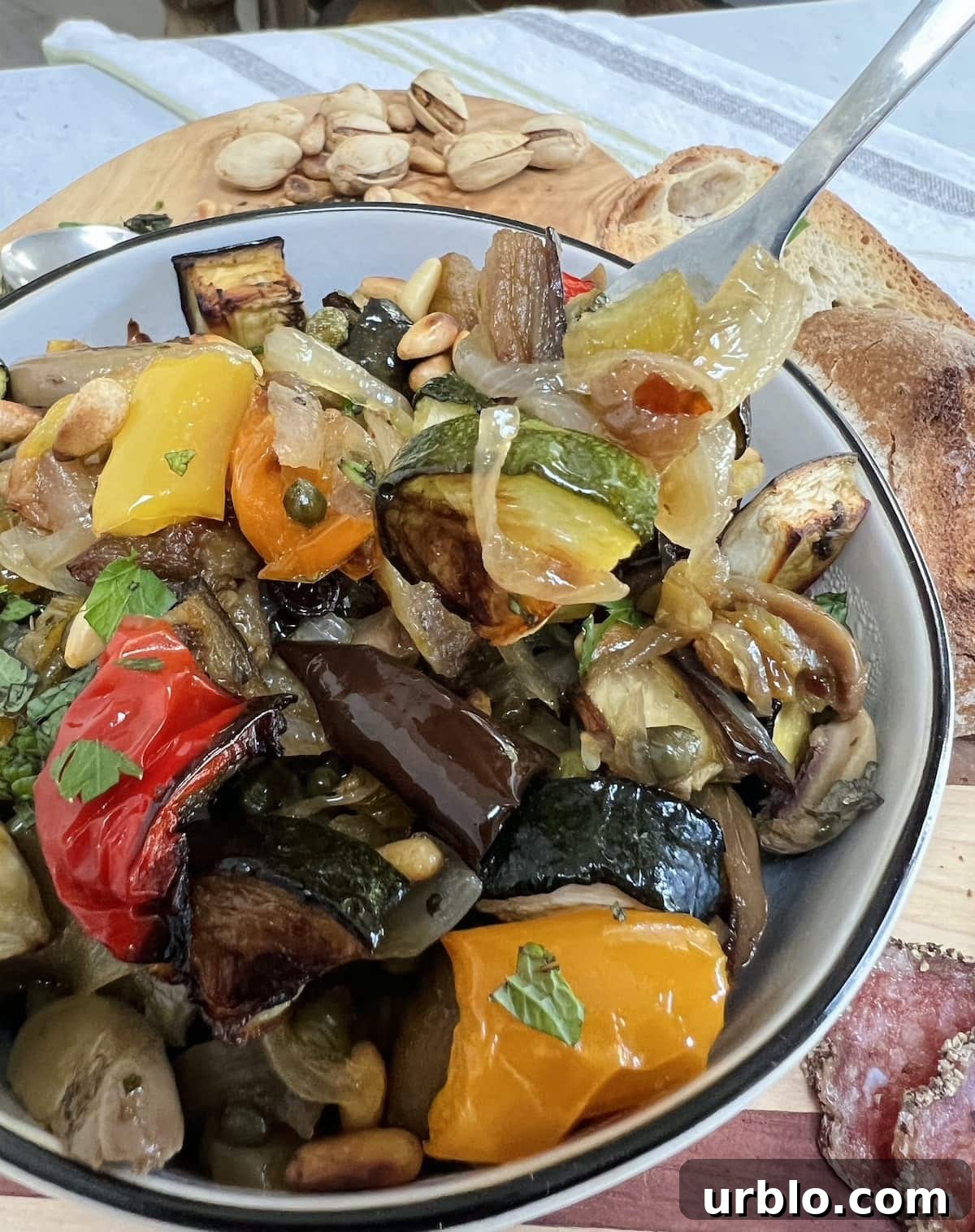
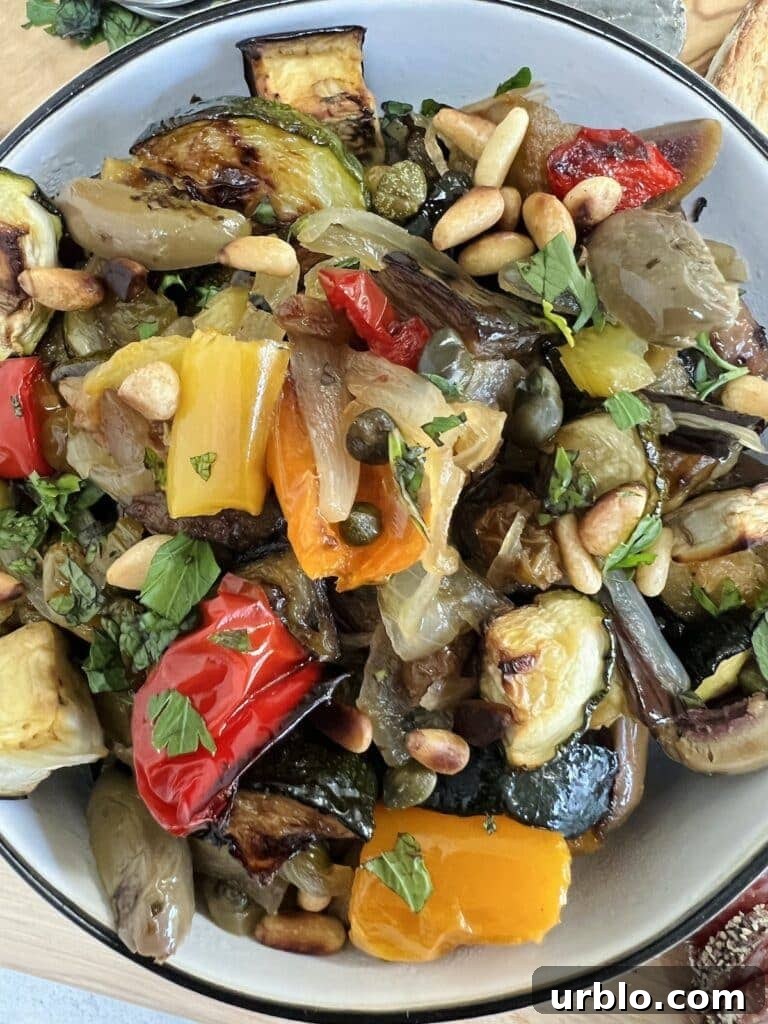
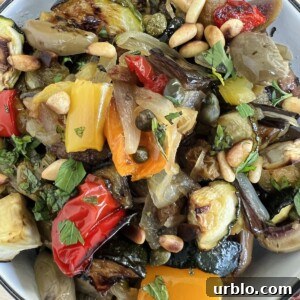
Vegetable caponata is a roasted take on the classic Sicilian sweet-and-sour relish, with a few thoughtful changes: zucchini and bell peppers are added while tomatoes are omitted. This flavorful blend of olives, capers, raisins and pine nuts develops even more depth as it rests, so consider making a generous batch.
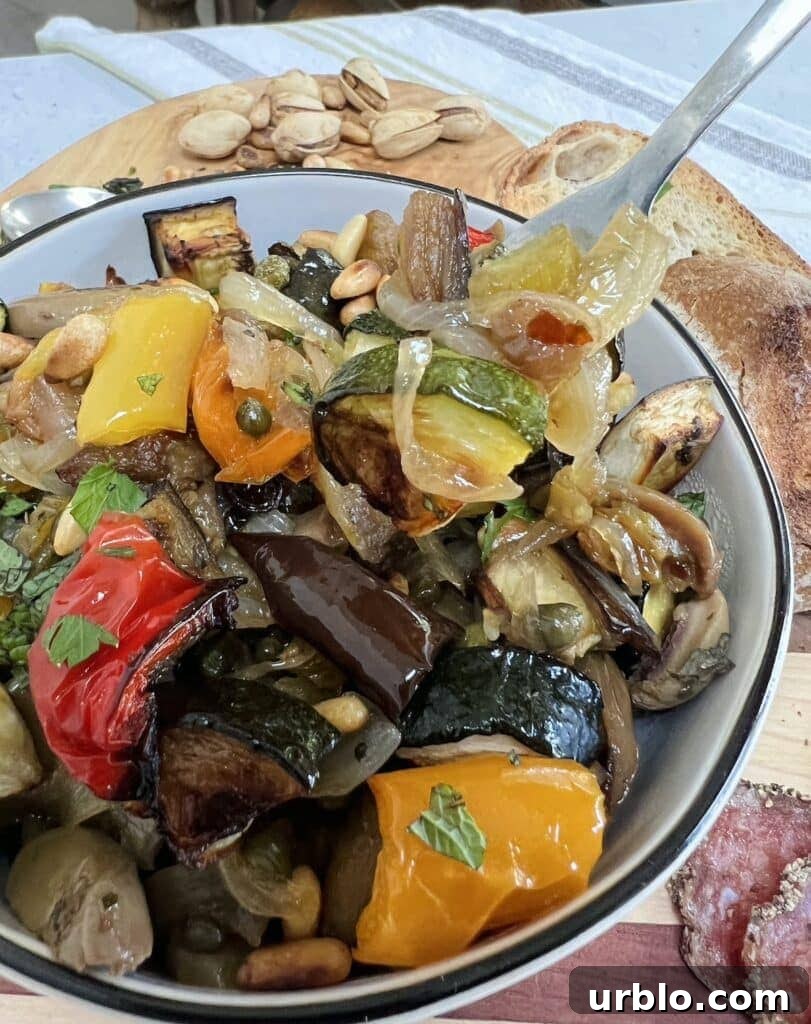
What is Caponata?
Caponata is one of Sicily’s signature dishes. Pronounced ka-po-naa-tah, it’s an eggplant-based antipasto that celebrates the island’s agrodolce tradition—sweet and sour flavors introduced to Sicily centuries ago. Variations are common across the region; many versions center on eggplant cooked in an onion, celery, vinegar-and-sugar base with capers, olives and raisins.
Traditionally the eggplant is fried, but this recipe roasts the vegetables for a lighter texture and easier clean-up. Caponata is typically served at room temperature as an appetizer, condiment or side—think antipasto platter material.
What Inspired This Recipe
I first tasted a tomato-free caponata at a restaurant in Rome, and its texture and balanced flavor stuck with me. Growing a vegetable garden abundant with eggplant, zucchini and peppers pushed me to adapt that version. Roasting the vegetables instead of frying reduces mess and calories while preserving great flavor and structure. This roasted vegetable caponata is best made at least a day ahead because the flavors meld and improve with time. Mangia!
Ingredients for Roasted Vegetable Caponata
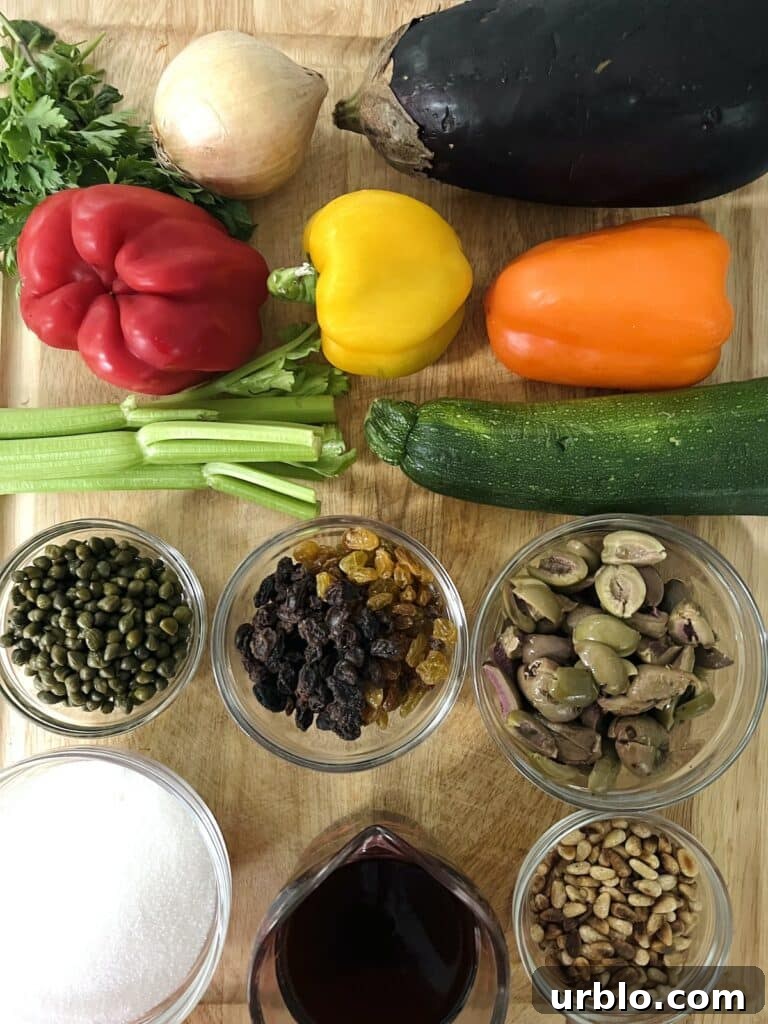
Key components of this Sicilian-style sweet-and-sour relish:
- Eggplant, zucchini (or yellow squash) and red/yellow/orange bell peppers: Use a mix of vegetables for balance. Avoid green peppers, which are bitter and change the flavor profile.
- Onion and celery: Aromatics that form the flavor base.
- Red wine vinegar and sugar: Equal amounts create the agrodolce base; adjust to taste. White wine vinegar or other sweeteners (maple syrup, honey) can be substituted but will alter the final flavor.
- Green olives and capers: Provide briny, salty contrast—large Sicilian or Greek-style olives work well.
- Raisins: Add pockets of sweetness and texture; black or golden work fine.
- Pine nuts: Toasted and folded in just before serving for crunch and richness.
- Fresh herbs: Optional at the end—parsley, mint or basil brighten the finished dish.
A complete ingredient list with quantities and step-by-step instructions is included in the recipe section below.
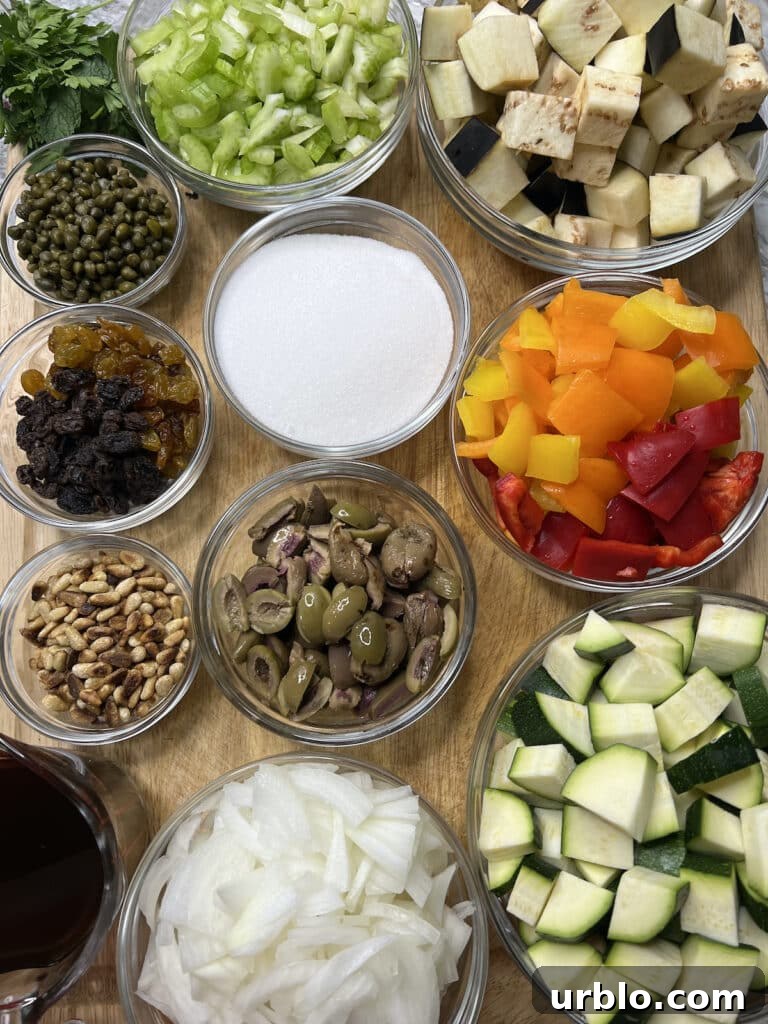
How to Make Vegetable Caponata, Step-by-Step
Overview of the main steps:
- Preheat the oven to 400°F and prep all ingredients. Toast the pine nuts in a small skillet until fragrant (2–3 minutes), watching carefully so they don’t burn.
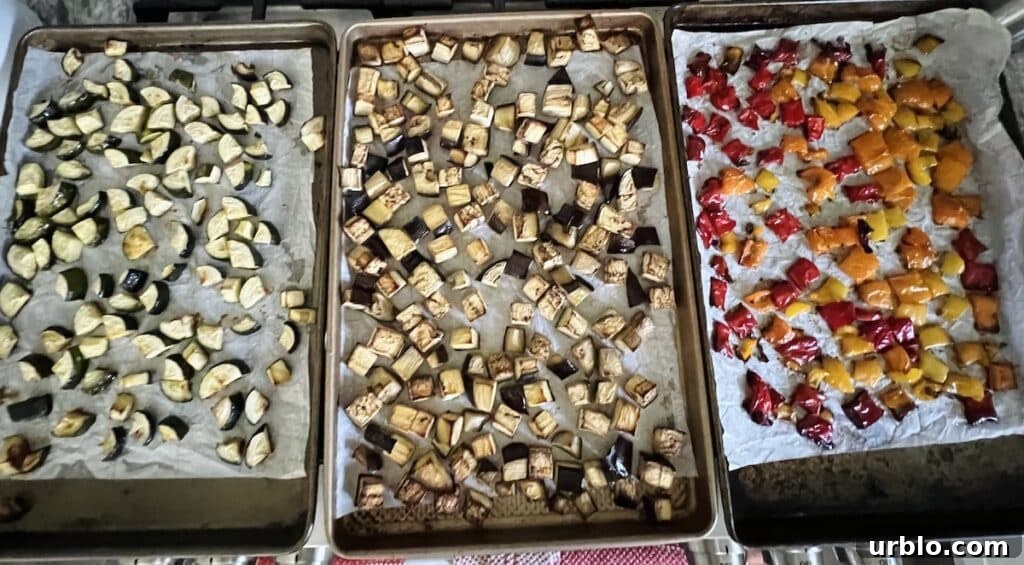
- Arrange the prepped bell peppers, zucchini/yellow squash and eggplant on separate parchment-lined sheet pans in a single layer. Roast until tender and lightly browned, turning pans halfway through. Keeping vegetables on separate pans prevents uneven cooking; do not salt before roasting, as salt draws out moisture and prevents browning.
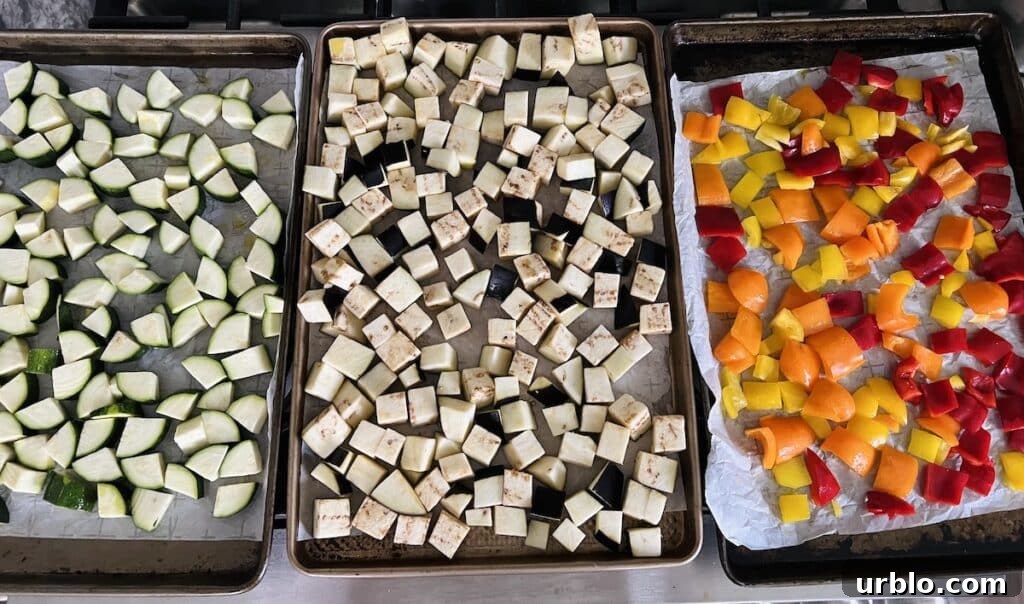
- While the vegetables roast, gently sautée onions with olive oil and optional crushed red pepper for about 5 minutes, add the celery and cook another 4–5 minutes until just tender but still slightly crisp.
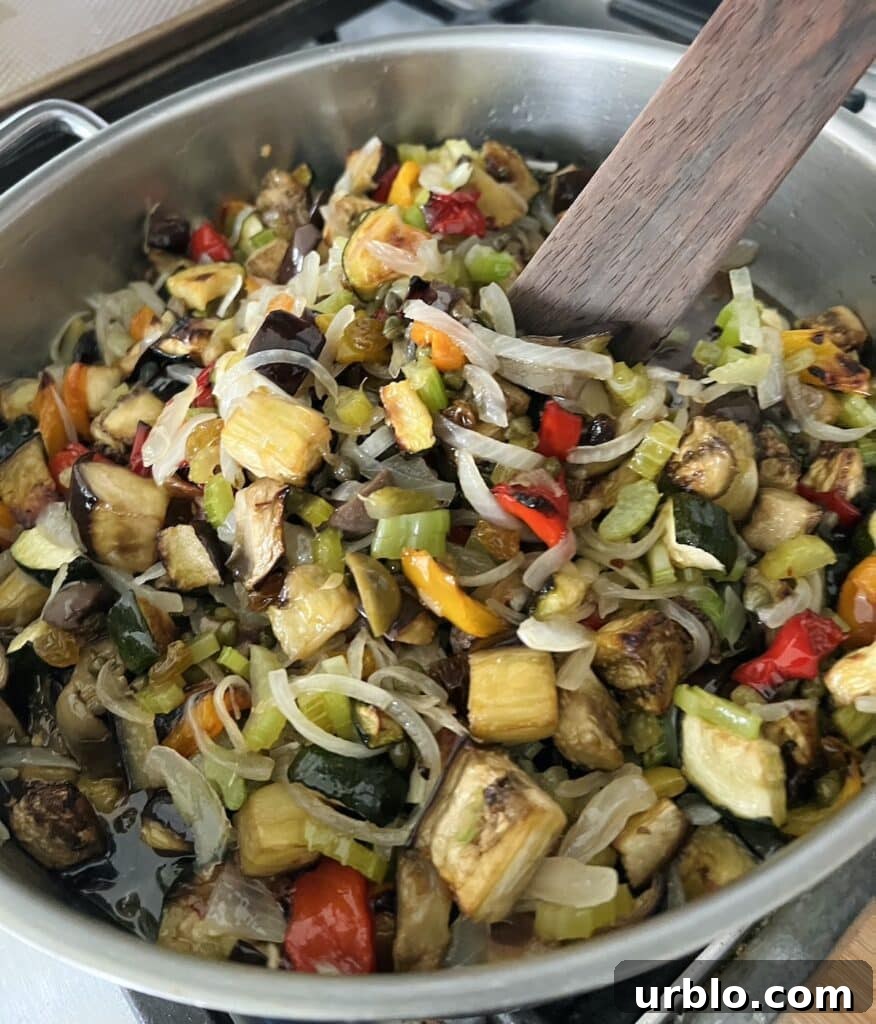
- Return the onion–celery mixture to medium heat, whisk together the vinegar and sugar and add them to the pan along with olives, capers, raisins, salt and pepper. Bring to a brief simmer, 3–5 minutes.
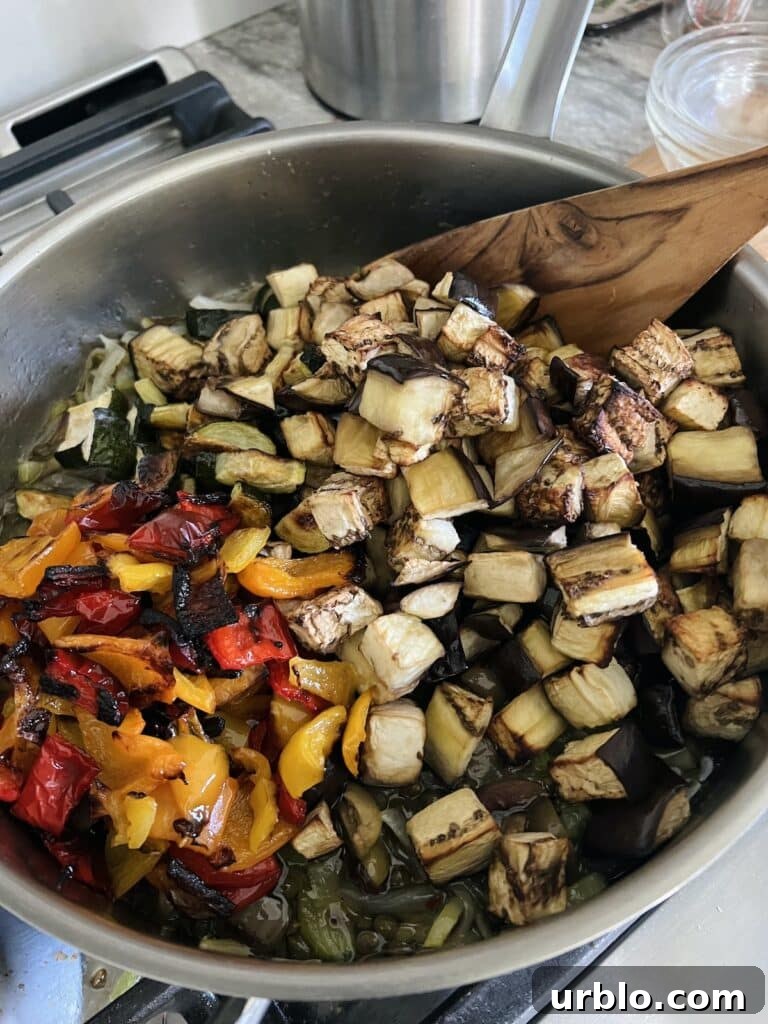
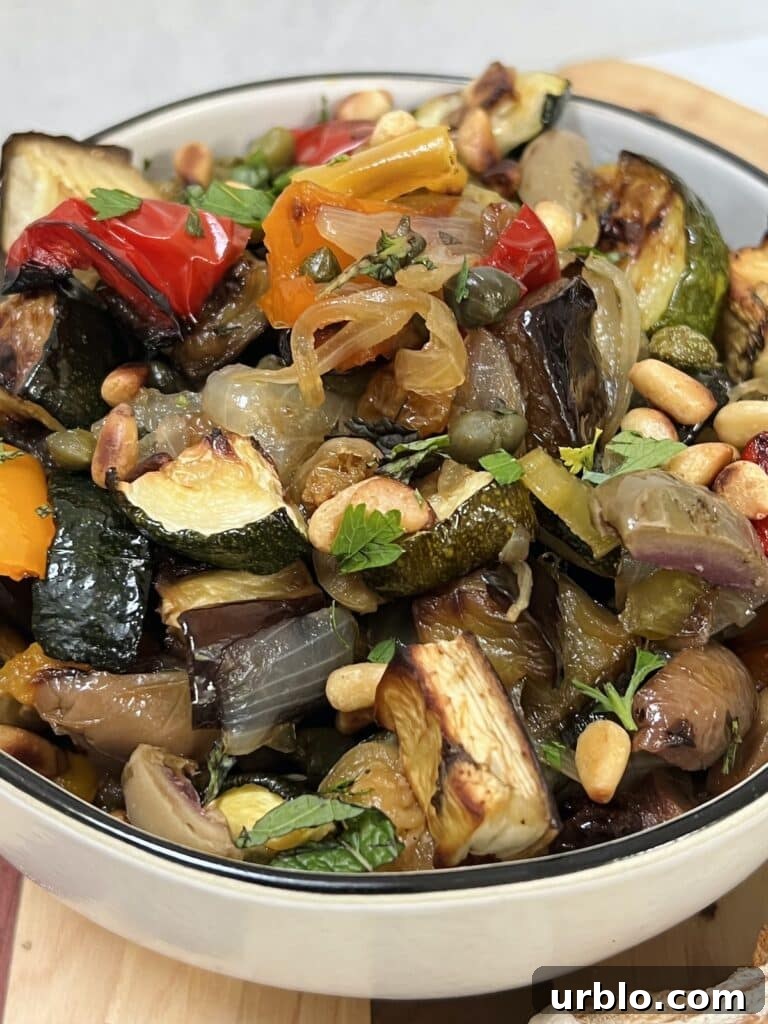
- Gently fold the roasted vegetables into the pan, taking care not to break them up. Simmer 5–8 minutes so everything is coated in the agrodolce sauce; taste and adjust vinegar or sugar to balance sweet and sour.
- Turn off the heat, let cool slightly and transfer the caponata to a bowl or container with a slotted spoon. You may keep any residual cooking liquid to let the mixture continue marinating (strain if you prefer less intense flavor when serving).
- Serve immediately or chill and serve at room temperature—the flavors deepen over time. Fold in toasted pine nuts and fresh herbs just before serving.
More Eggplant Recipes
If you enjoy eggplant, try other favorites such as roasted eggplant with garlic and herbs, fried eggplant Milanese cutlets, Sicilian eggplant “meatballs,” or pasta with ricotta and slow-roasted eggplant.
Serving Suggestions and Storage
This roasted vegetable caponata is versatile. Serve it:
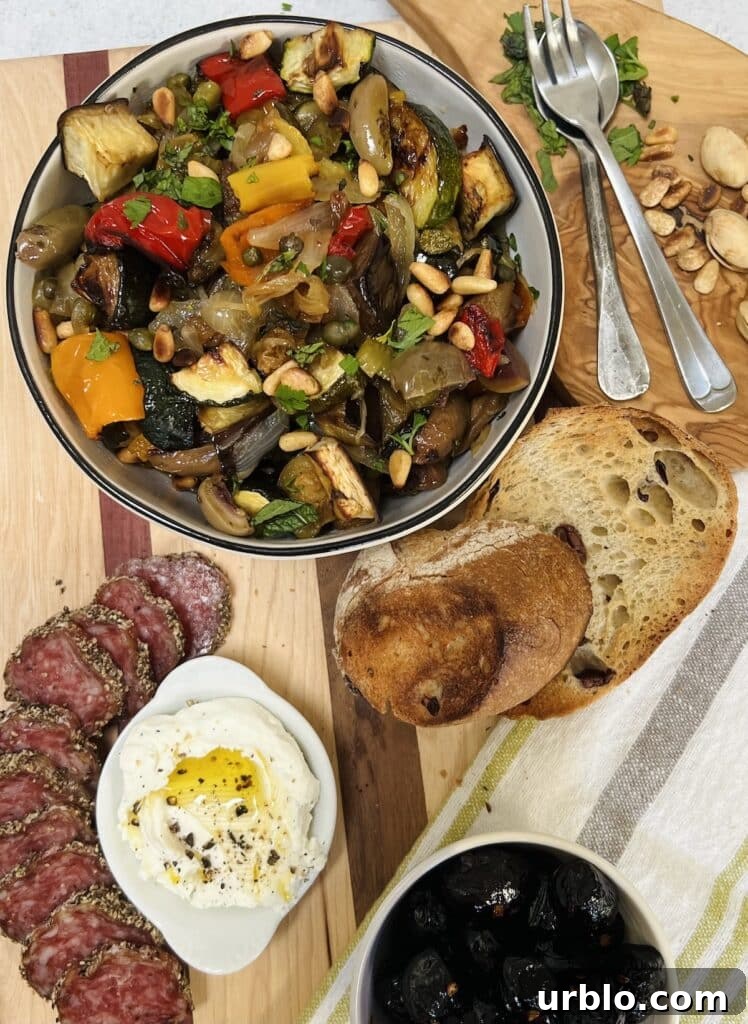
- As part of an antipasto platter with cured meats, cheeses and olives;
- On toasted bread with ricotta or goat cheese for crostini;
- Alongside grilled proteins like chicken, steak or salmon, or with barbecue;
- In sandwiches—caponata adds a tangy, savory lift similar to a slaw or pickle;
- With pasta, especially simply dressed ravioli, tortellini or capellini.
Store refrigerated in an airtight container for up to 5 days, or freeze for up to 3 months. Bring to room temperature before serving and stir gently. Fold in pine nuts and herbs just before serving for the best texture and brightness.
Frequently Asked Questions
Answers to common questions about this Sicilian vegetable caponata:
Yes. Traditional caponata is made with eggplant alone, and this variation works perfectly with just eggplant.
For most modern eggplants it’s not necessary. Many varieties bred today lack the bitterness that older varieties had. Salting can still be used for specific varieties or personal preference, but it’s often optional unless you’re pickling eggplant.
Refrigerate the caponata in an airtight container for about a week. It freezes well for up to three months. Thaw and bring to room temperature before serving.
They share many of the same vegetables, but ratatouille is a French, warm vegetable stew, while caponata is a Sicilian relish served at room temperature with a characteristic sweet-and-sour and briny profile from vinegar, sugar, olives, capers and raisins.
Variations and Substitutions
Ways to adapt the recipe:
- Adjust vegetable ratios: go all-eggplant, mix eggplant and zucchini, or add mushrooms for more depth.
- Swap vinegars or sweeteners: white wine vinegar, maple syrup or honey can be used—each changes the flavor slightly.
- Add heat: increase crushed red pepper or add Calabrian chile paste for a spicier caponata.
- If you prefer a tomato element, stir in 1–1½ cups canned tomatoes or a few tablespoons of tomato paste to the sautéed onions and celery and simmer briefly.
Kitchen Tools
Helpful equipment includes: measuring cups and spoons, cutting board and sharp chef’s knife, multiple bowls for prep, parchment-lined sheet pans, a large skillet or Dutch oven, wooden or silicone spoons, a slotted spoon or skimmer, and oven mitts.
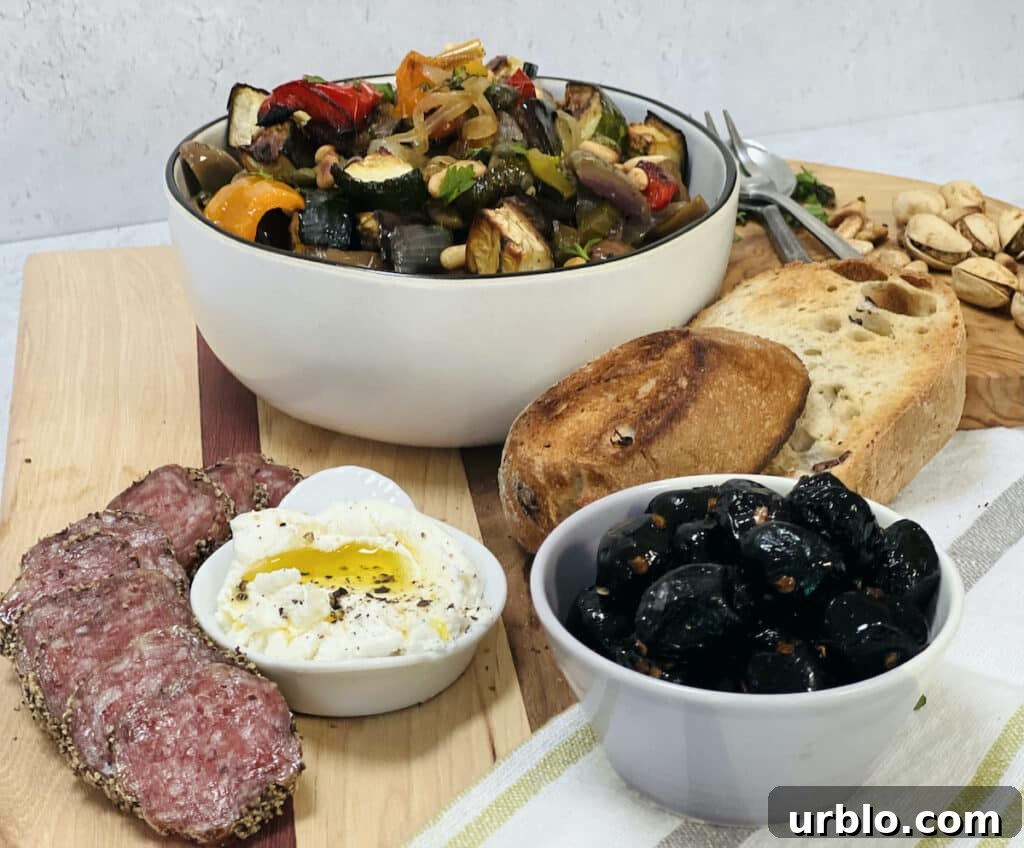
If you try this Roasted Vegetable Caponata, I’d love to hear how you serve it and what variations you prefer. Enjoy!
Roasted Vegetable Caponata without Tomatoes
Ingredients
- 2 pounds eggplant, unpeeled, ¾” chunks
- 1½ pounds zucchini or yellow squash, ¾” thick, quartered or halved
- 1½ pounds red, yellow or orange bell peppers, ¾” chunks
- 1 pound yellow onion, large dice or thin slices (about 3 cups)
- ½ cup extra virgin olive oil
- Pinch crushed red pepper (optional)
- 5 large celery stalks, medium dice (about 2 heaping cups)
- ¾ cup red wine vinegar
- ¾ cup sugar
- ¾ cup pitted large green olives, cut into quarters
- ½ cup capers, drained
- ½ cup raisins (black, golden or mixed)
- ½ tsp salt
- Pinch freshly ground black pepper
- ½ cup pine nuts, toasted
- ⅓ cup chopped mixed herbs (optional: parsley, mint, basil)
Instructions
- Preheat oven to 400°F and arrange a rack in the middle. Prep all ingredients as listed.
- Toast pine nuts in a small skillet over medium-low heat until lightly browned and fragrant, 2–3 minutes. Remove and cool.
- Line three sheet pans with parchment and lightly spray with oil. Spread peppers, zucchini and eggplant each on separate pans in a single layer and lightly spray the tops with oil. Do not salt.
- Roast for about 20 minutes, then rotate pans and continue roasting until tender and lightly browned—approximately 20–30 more minutes depending on the vegetable. Vegetables should be tender but not mushy; a bit of caramelization is good.
- While roasting, sautée onions with olive oil and crushed red pepper (if using) over medium heat for 5 minutes. Add celery and cook another 4–5 minutes until the celery is slightly crisp. Turn off heat.
- When roasted vegetables are done, return the onion–celery mixture to medium heat. Whisk vinegar and sugar together, pour into the pan, then add olives, capers, raisins, salt and pepper. Bring to a simmer for 3–5 minutes.
- Gently stir in the roasted vegetables to coat, taking care not to break them up. Simmer 5–8 minutes, stirring occasionally. Taste and adjust vinegar or sugar to balance flavors.
- Turn off heat and let cool slightly. Transfer caponata with a slotted spoon to a bowl or container. You can keep or discard any residual liquid depending on how intense you want the marination.
- Serve at room temperature. Fold in toasted pine nuts and chopped herbs just before serving. The caponata keeps well in the fridge for several days and often tastes better after a day or two.
Notes
- This recipe yields about 6 cups. Halve it for a smaller batch.
- Roast each vegetable on its own pan since they cook at different rates.
- Avoid green bell peppers for this recipe; their flavor is markedly different.
- Aim for tender vegetables that still hold their shape rather than mushy pieces.
- If residual liquid remains, keeping the caponata in it will intensify the flavors over time; strain when serving if desired.
- Fresh herbs are optional but add brightness—use flat-leaf parsley, mint and/or basil.
- Store refrigerated up to one week or freeze for later use. Bring to room temperature before serving.