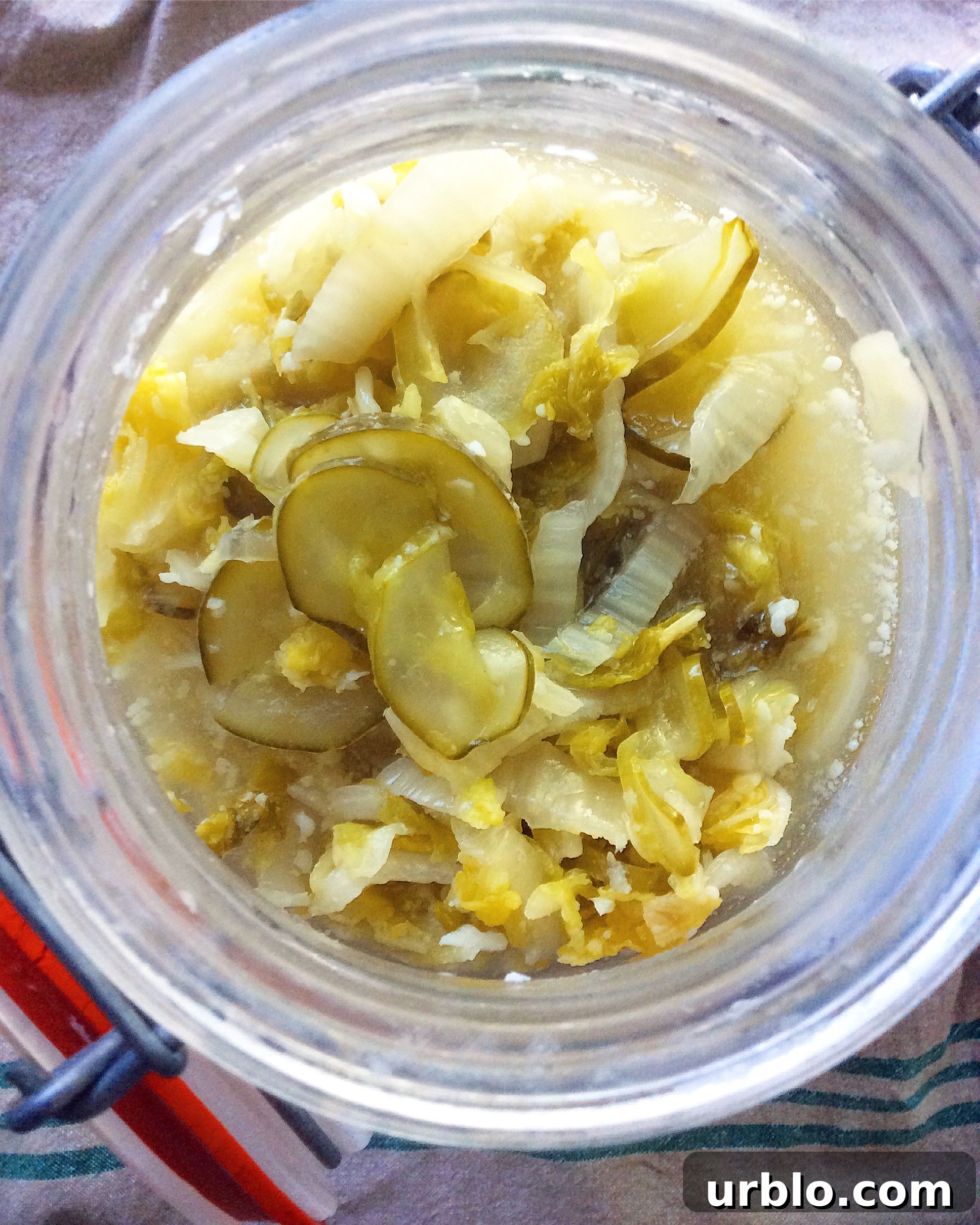
Back before anyone knew raw fermented foods were packed with gut-friendly bacteria — long before it became commonplace to buy an $8 jar of raw sauerkraut at the grocery store — people simply salted vegetables to preserve them for winter. Today we’re going back to that simple, effective method.
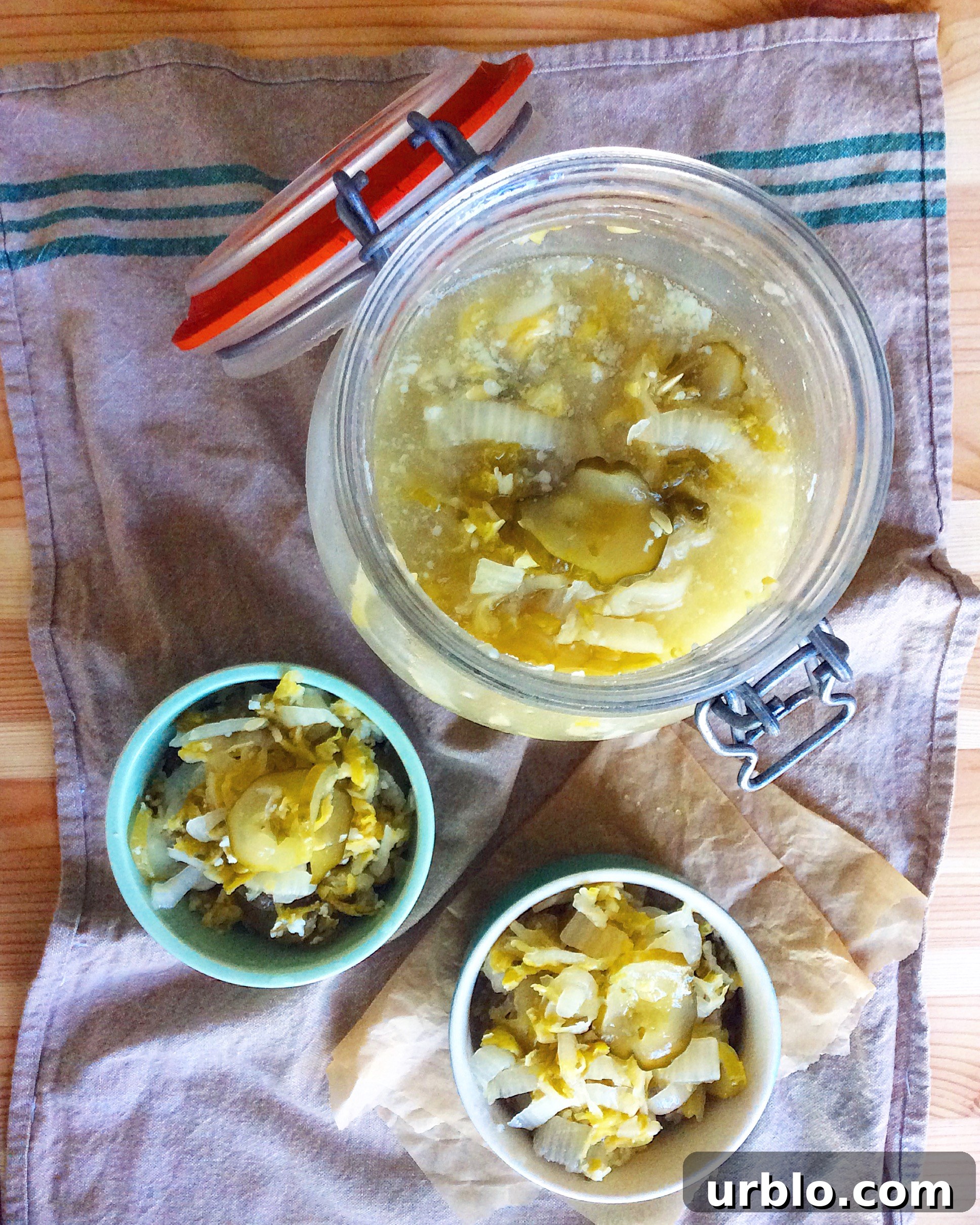
This post is about making raw, fermented sauerkraut the easy way. Fermentation can sound intimidating — you salt cabbage and leave it at room temperature for days or weeks — but after the initial chopping, salting, and packing into jars, there’s very little hands-on work until you refrigerate and enjoy the tangy, probiotic-rich results.
I made this sauerkraut almost by accident. I had a head of Napa cabbage intended for kimchi, but I kept buying jarred raw sauerkraut from the store instead. Eventually I realized those pricey jars were essentially just cabbage, cucumbers, and salt. A bit of reading and a few experiments later, I confirmed you don’t need special equipment or complicated techniques to make great sauerkraut at home.
One historical detail changed my approach: ancient food preservers would sometimes pour a few inches of oil over salt-preserved vegetables to keep out oxygen and pests. That simple oil layer creates an anaerobic environment, which helps prevent mold during fermentation. Inspired by that idea, I adapted it for my own sauerkraut — but with a twist.
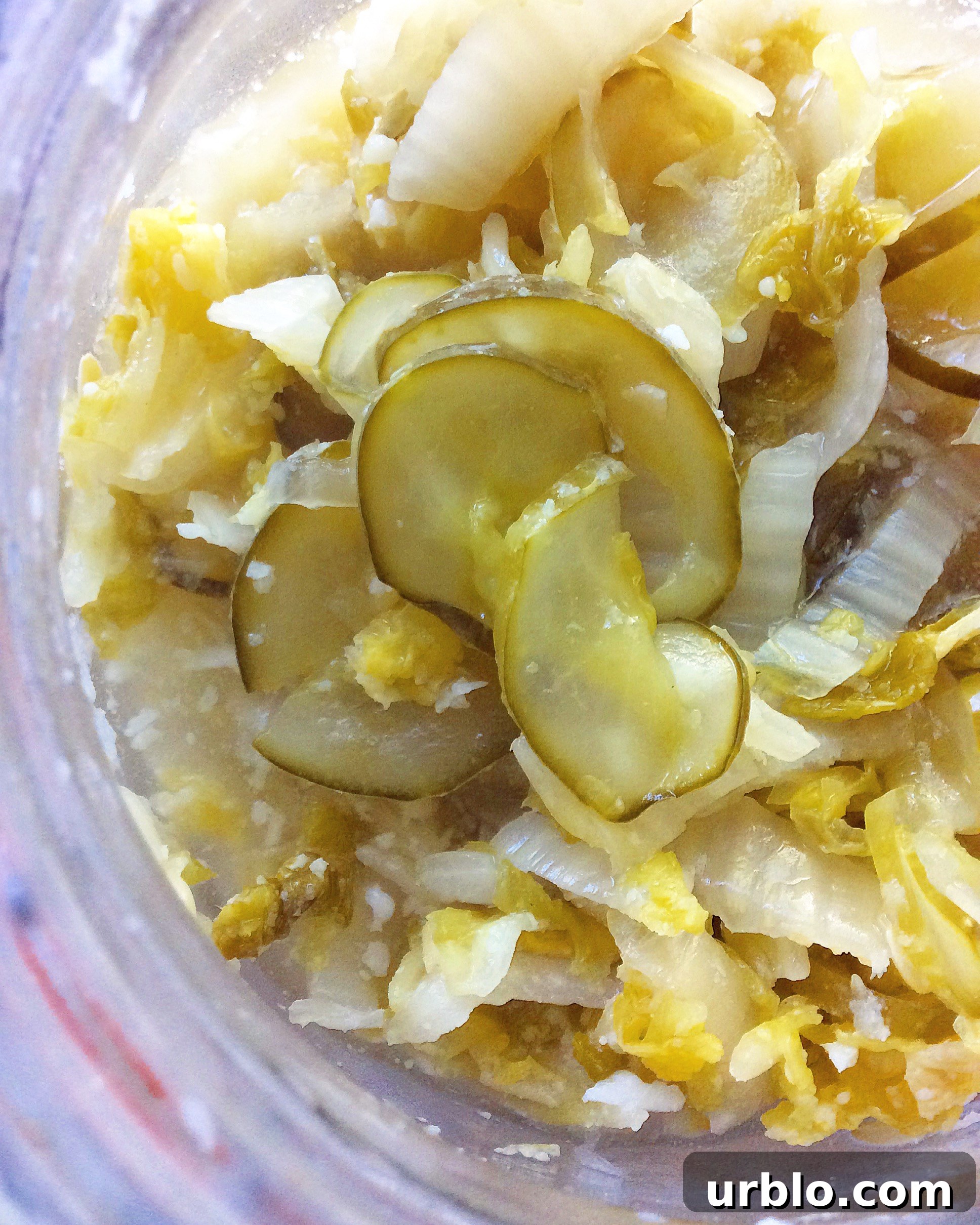
Instead of olive oil, I use coconut oil. It doesn’t alter the flavor noticeably and it solidifies when chilled, so when fermentation is done you can simply remove the hardened disk of oil from the top of the jar. The result is clean, crisp sauerkraut without an oily finish.
What you need:
- Cabbage — Napa, green, or purple cabbage all work.
- Sea salt — Salt draws moisture from the cabbage and preserves the mixture while it ferments.
- Pickling cucumbers — Optional, but they add a nice crunch. Shredded carrots or thinly sliced onion are fine alternatives.
- Extra flavors — Garlic, chili flakes, or fresh dill are all optional but delicious additions.
- Coconut oil — Melted and poured on top to form a protective layer; this is optional but helpful.
Method overview: thinly slice the cabbage (and cucumbers if using), toss with salt in a large bowl, and let sit at room temperature for at least an hour. The salt will draw out liquid from the cabbage; this brine will submerge the vegetables during fermentation. Stir in any flavorings, then pack the cabbage tightly into a half-gallon jar or several quart jars, pouring the released liquid into the jar as you go. Pour a thin layer of melted coconut oil on top to form a seal, cover the jar with a paper towel or cheesecloth secured with a rubber band, and let it ferment at room temperature.
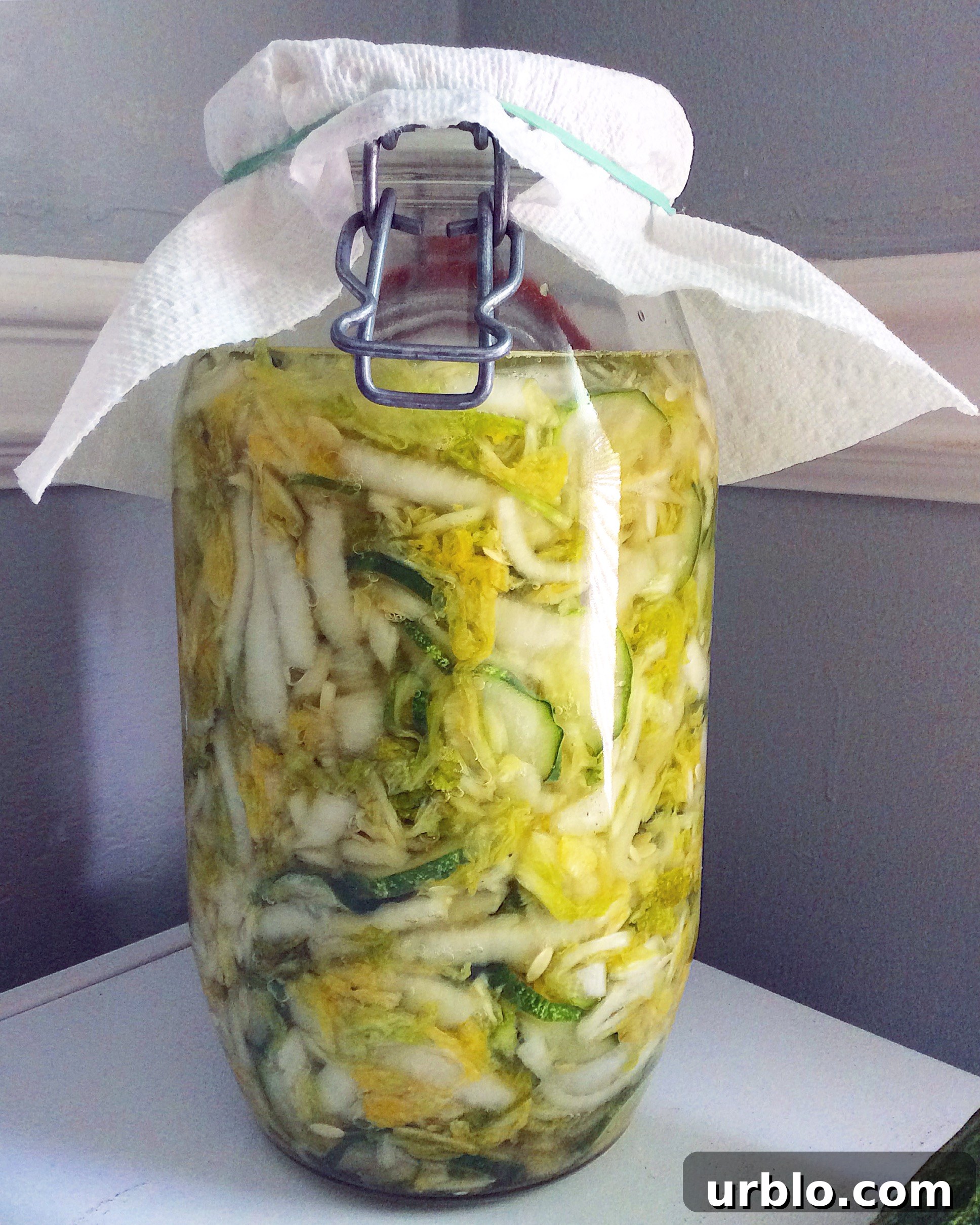
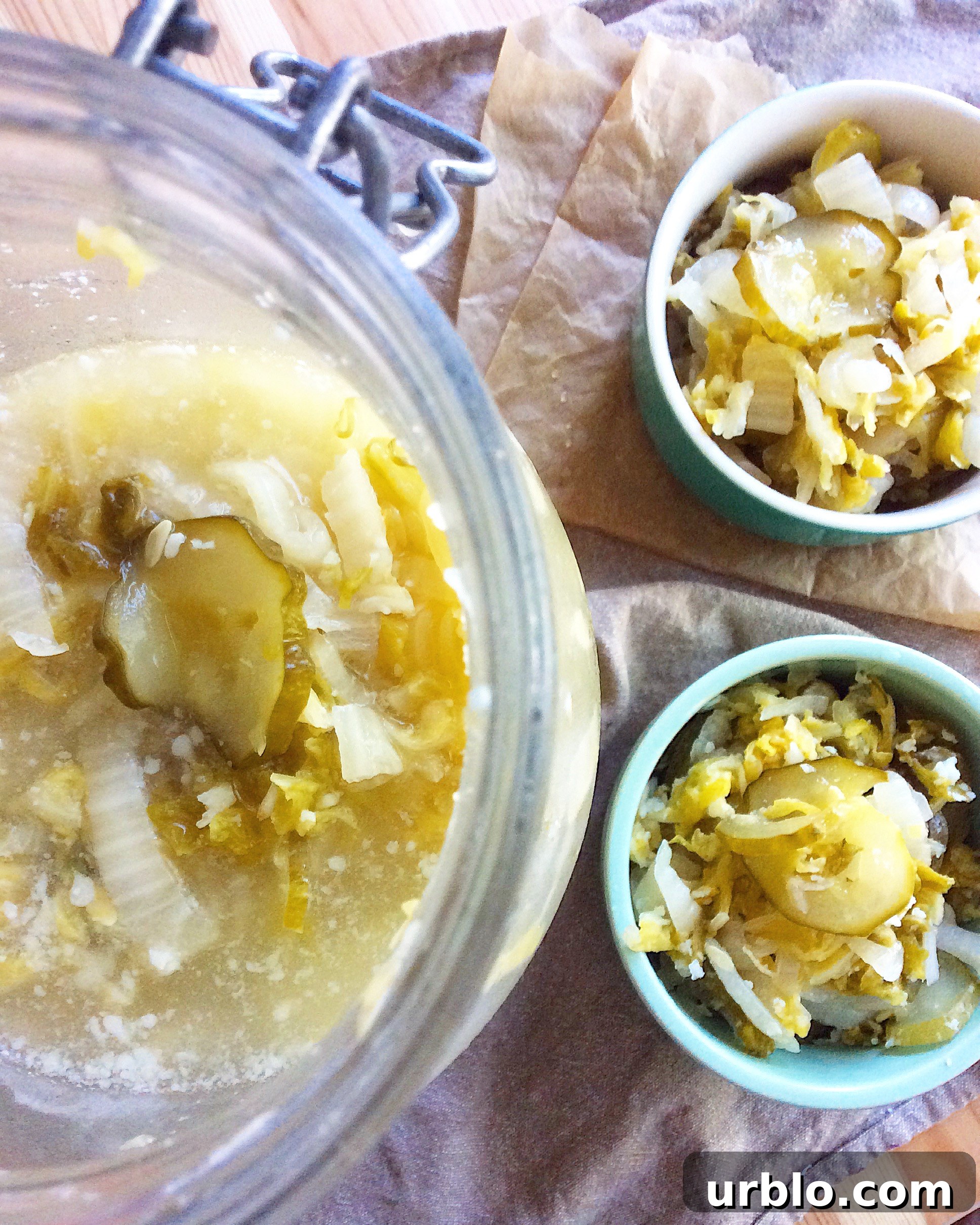
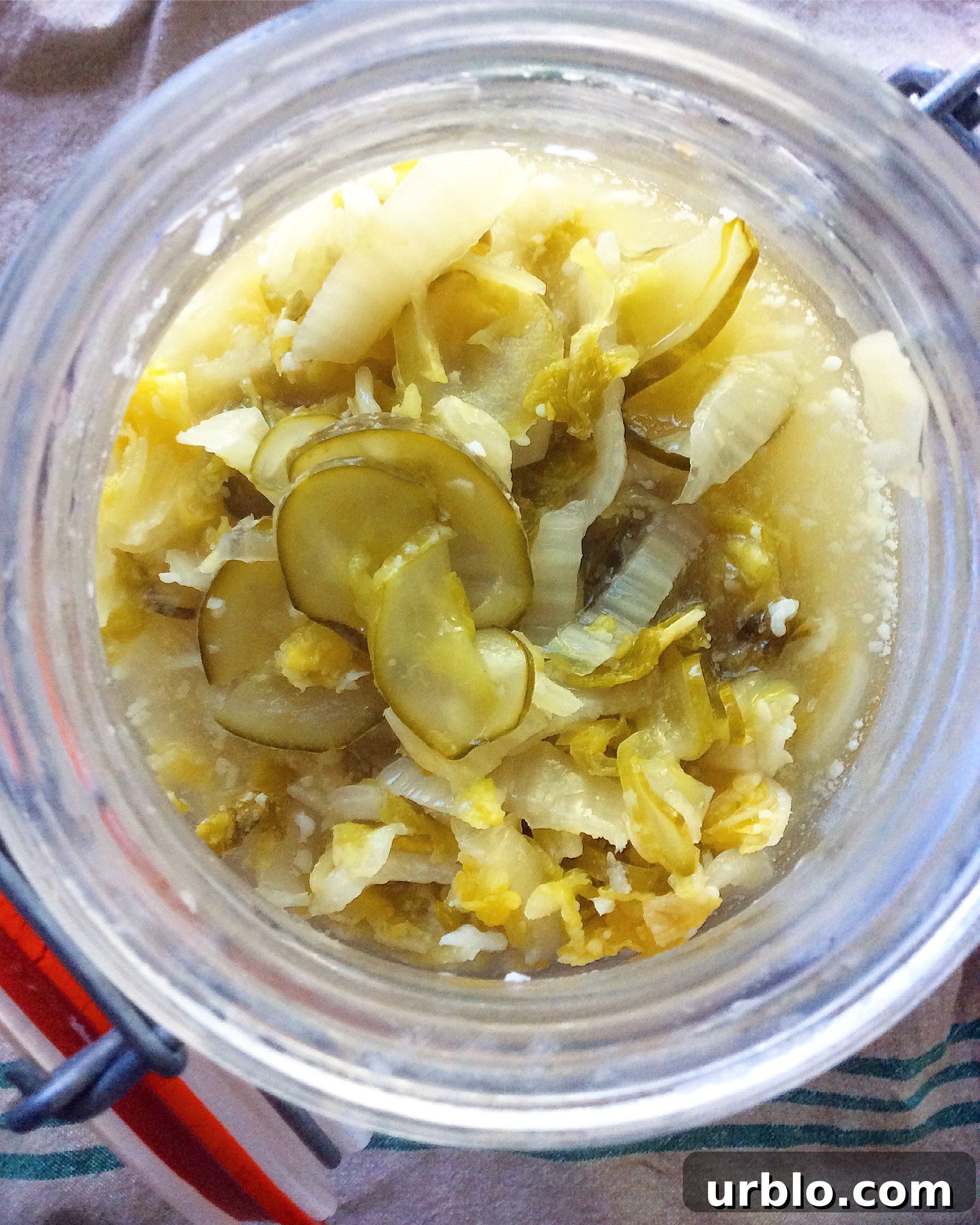
Fermentation time depends on taste and room temperature. Historically, sauerkraut was fermented for months as a preservation method, but for everyday eating 1–3 weeks at room temperature is a common range. I let this batch ferment for 12 days before refrigerating. When you like the tanginess, put a lid on the jar and move it to the fridge. Once chilled, remove the solidified coconut oil and enjoy. Properly stored, sauerkraut keeps for months in the refrigerator.
The process takes patience, but the payoff is worth it: homemade sauerkraut is flavorful, economical, and full of beneficial bacteria. If you’ve never tried fermenting, this is a simple, low-stress place to start. Purple cabbage or shredded beets can make beautiful, colorful variations.
Easy Homemade Sauerkraut (Raw, Fermented)
Chelsea Colbath
1 hour
Ingredients
-
1
medium-sized head of cabbage
green, purple, or Napa -
2 1/2
Tablespoons
sea salt -
1/4
cup
virgin coconut oil
melted (optional)
Optional
-
3-4
pickling cucumbers
or carrots or onion -
2
cloves
garlic
or 2 tsp chili flakes, or 1/4 cup fresh dill
Equipment
-
1
large wide-mouth jar
at least 1/2 gallon (or several quart jars) -
1
paper towel or clean cheesecloth -
1
rubber band
Instructions
-
1. Thinly slice the cabbage and cucumbers (if using) and place in a large bowl. Add the salt and massage or toss with your hands until the cabbage is evenly coated. Cover and let sit at room temperature for at least an hour, until the cabbage softens and releases liquid. It can sit up to 12 hours if needed.
-
2. While the cabbage wilts, clean and dry your jar(s) and finely chop any flavor additions like garlic or dill.
-
3. When the cabbage has released enough liquid, mix in garlic or other spices, then pack the mixture tightly into the jar, pouring all the brine in as well. The brine should fully submerge the vegetables; add a splash of water only if necessary.
-
4. Pour melted coconut oil over the top to form a layer (some oil may mix in initially but will rise back up). Secure a paper towel or cheesecloth over the jar with a rubber band. Aim for roughly a half-inch layer of oil, adjusted for jar size.
-
5. Let the jar ferment at room temperature for 1–3 weeks. If the cabbage rises above the brine or oil, gently press it back down and continue fermenting. Taste occasionally with a clean utensil; when it is tangy enough for your preference, it’s ready.
-
6. Seal the jar with a lid and refrigerate. Once chilled, remove the hardened coconut oil from the top and enjoy. Properly stored, sauerkraut keeps in the fridge for at least six months.
Notes
Email Subscribers: get the recipe HERE!